

Can smart lenses be removed? Certain patients can have their implanted lens exchanged surgically. Symptoms, capsule support and visual goals guide the decision.
Here, smart lenses are presbyopia-correcting intraocular lenses, or IOLs, implanted to replace the natural lens. They are designed for long-term use. They differ from removable contact lenses and from phakic implants that leave the natural lens in place.
This article explains what doctors assess before recommending an exchange. During an individual consultation with Doç. Dr. Muhammed Mustafa Kurt, previous surgical records, current eye health and everyday visual needs should be considered together.

When Can A Smart Lens Be Replaced?
An exchange may be considered when a problem attributable to the implant significantly affects daily activities. Dissatisfaction alone does not establish the cause. The clinician first investigates whether another condition explains the symptoms and whether treatment without replacing the lens could help.
Persistent Halos, Glare And Poor Visual Quality
Halos are rings around lights. Glare from headlights, light scatter and reduced contrast can relate to multifocal optics. A trifocal intraocular lens supports vision at different distances, but its optical effects can trouble some people, particularly at night.
Adjustment to the new visual input is called neuroadaptation. Symptoms should be followed rather than automatically dismissed as adjustment or treated with immediate exchange. Describing specific difficulties, such as reading under dim lighting or driving after dark, helps the clinician assess their impact.
Problems With Lens Power, Position Or Clarity
A substantial difference from the intended prescription, lens decentration or tilt, and clouding of the implant itself can justify considering exchange. Repositioning may be an alternative for a displaced lens. Clouding within the lens material differs from clouding of the capsule behind it.
What Checks Are Needed Before Smart Lens Removal?
Assessment includes corrected vision, the cornea, tear film, eye pressure, implant position and retina. Corneal mapping, biometry or macular imaging may be needed. The purpose is to identify what limits vision and whether a replacement lens could address that limitation.
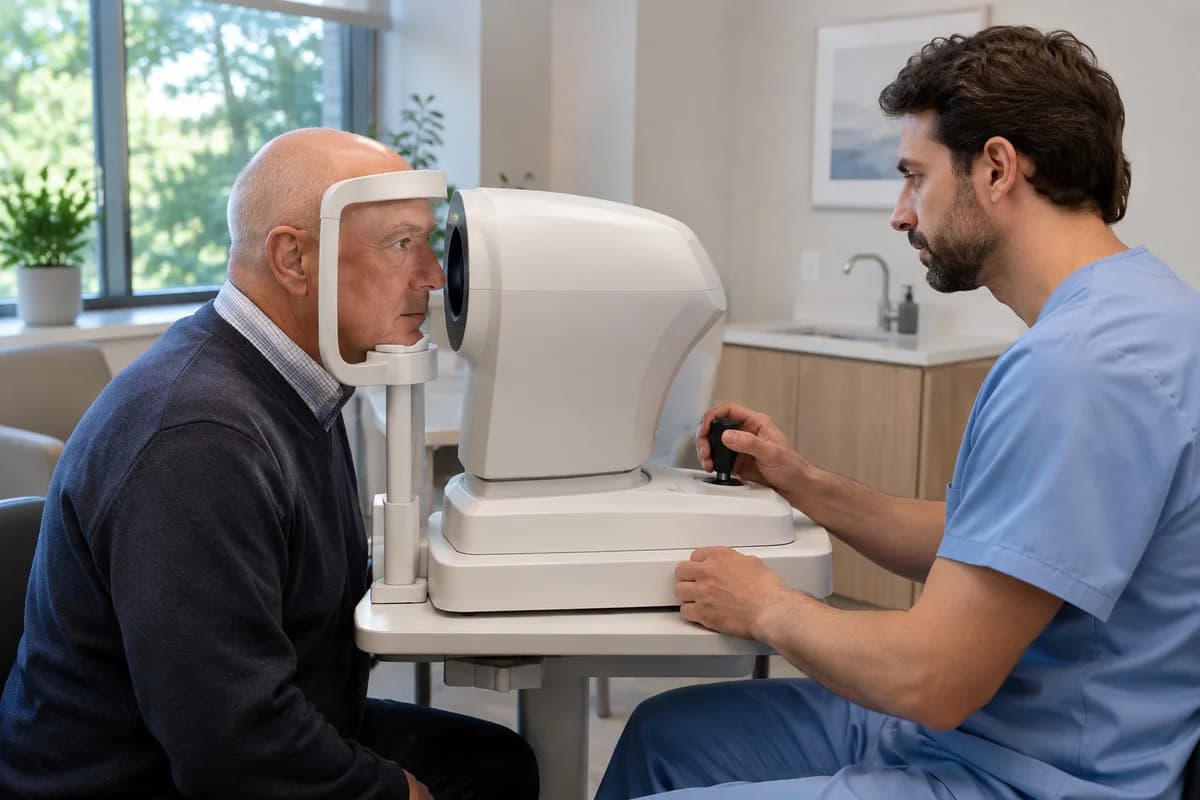
Distinguishing Lens Symptoms From Other Eye Problems
Dry eye, residual astigmatism, posterior capsule opacification and retinal disease can cause overlapping complaints. Clarity that changes after blinking may suggest tear-film instability, but no single symptom confirms a diagnosis. Treatable causes should be assessed before the implant is blamed.
Bring the implant card, operation date and previous examination results to an eye doctor in Samsun. These records help establish the lens model, power and surgical history. Explain whether one eye or both eyes are affected and when symptoms began.
Assessing Capsule Support After YAG Laser Treatment
YAG laser capsulotomy creates an opening in a cloudy posterior capsule. It can help confirmed capsule opacification, but a possible need for lens exchange should be considered first. An opened capsule can change the surgical approach and available support for the replacement.
Previous YAG treatment does not automatically make exchange impossible. The surgeon assesses remaining capsule support and its supporting fibres. Additional treatment involving the vitreous gel or a different method of securing the new implant may be necessary.
When Can A Smart Lens Be Removed?
There is no universal deadline. Early assessment considers healing, symptom severity and adaptation. Later exchange can also be possible, although adhesions between the capsule and implant may make removal more difficult. The date alone does not determine suitability.
Timing depends on examination findings, previous YAG treatment and the response to treatment of other causes. Sudden visual loss, substantial pain or new flashes require prompt assessment rather than waiting for adaptation.
How Is Smart Lens Removal And Exchange Performed?
Exchange is an operation inside the eye. The surgeon separates the existing implant from surrounding tissue and removes it through an appropriate incision. The replacement position depends on capsule support; every eye cannot be treated with the same technique.
A sufficiently intact capsule may support a new lens within the capsular bag. Otherwise, another position or fixation method may be needed. Anaesthesia and additional procedures are planned individually. This operation cannot simply reverse the original removal of the natural lens.
What Are The Risks Of Smart Lens Exchange?
Possible complications include capsule or supporting-fibre damage, corneal problems, pressure changes, inflammation, infection and retinal complications. Macular swelling may affect central vision. Further treatment or another operation can be necessary, depending on the complication.
Individual risk depends on the eye and the extent of surgery. Small retrospective studies describe additional complexity with an open posterior capsule. Their complication rates cannot predict every patient's risk. Exchange cannot guarantee improved vision or the disappearance of all unwanted optical effects.
Which Lens Can Replace A Smart Lens?
The choice depends on support structures, corneal and retinal health, and the intended focusing distance. How the two eyes work together also matters. Discuss which options fit the eye and their effects on everyday vision.
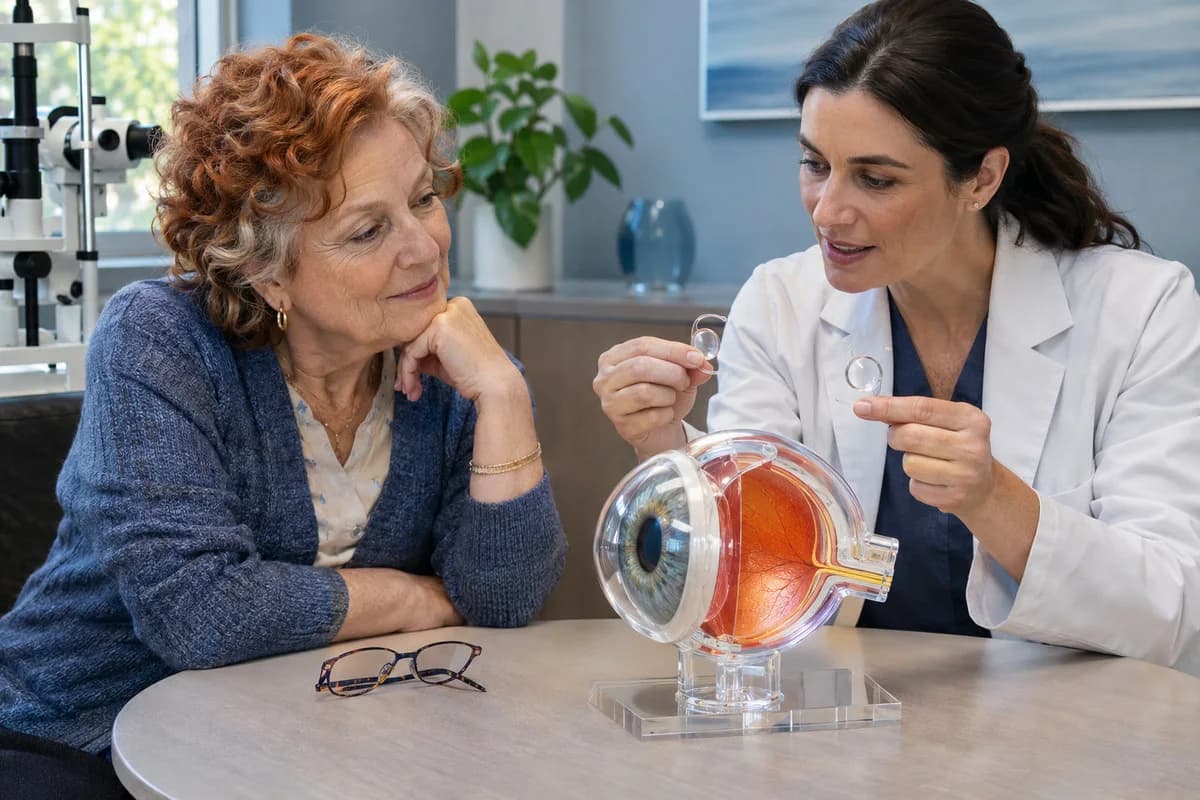
Switching To A Monofocal Lens
A monofocal intraocular lens is planned around one focusing distance. Changing the optical design may reduce multifocal-related symptoms, while increasing the need for reading glasses. Residual prescription or astigmatism may also require glasses for distance tasks.
Al-Shymali and colleagues' small 2022 study reported improved optical symptoms alongside reduced near spectacle independence. Discuss this trade-off before surgery. Better distance comfort does not guarantee satisfaction with unaided reading. The study cannot predict individual results.
Considering A Different Multifocal Design
Another multifocal design may be considered in selected eyes. Halos or glare may still occur with the replacement. Discuss night driving, reading distance and willingness to wear glasses; changing the brand alone should not be assumed to solve the problem.
Can Symptoms Be Treated Without Removing The Lens?
Treatment targets the identified cause. Ocular-surface care and suitable glasses may improve symptoms. Selected patients may be considered for correction of residual refractive error by another method or repositioning of a displaced implant. These options require individual assessment.
Confirmed posterior capsule opacification may warrant YAG treatment after considering whether exchange could be needed. Medication should follow the examination findings. Avoid trying prescription eye drops based on online advice or changing an existing treatment plan without discussing it with the clinician.
Conclusion
Can smart lenses be removed? Exchange is possible in selected eyes after identifying the cause of symptoms. The natural lens cannot be restored. Decisions should balance potential visual benefit, likely glasses needs and surgical risk. This information supports discussion and does not replace an individual eye examination.
Frequently Asked Questions
Can the original natural lens be put back after smart lens removal?
No. The natural lens removed during the original operation cannot be put back. Cataract surgery replaces it with an artificial intraocular lens. An exchange therefore cannot restore the eye to its original natural-lens state.
Does previous YAG laser treatment prevent lens exchange?
Not necessarily. An opening in the posterior capsule may make surgery more complex and require additional procedures. Suitability depends on remaining support, implant position and other examination findings. Provide the laser treatment date and report if available.
Will glasses be needed again after smart lens exchange?
They may be needed. Switching to a monofocal lens can increase dependence on reading glasses. Residual refractive error or astigmatism can also require distance glasses. Discuss which tasks you would accept wearing glasses for before deciding.
Does exchanging the lens definitely eliminate halos and glare?
No. Effects arising from the implant may decrease, while symptoms from the tear film, cornea or retina may remain. The replacement can also have optical effects. Expectations should reflect the demonstrated cause of the symptoms.
How long does recovery take after smart lens exchange?
Recovery varies with the operation, additional procedures and the eye itself. Follow-up checks assess vision, pressure and implant position. Sudden vision loss, increasing pain, new floaters or a curtain-like shadow require prompt assessment rather than waiting for a scheduled appointment.
About this article
Last updated 
Examination and individual assessmentAssoc. Prof. Muhammed Mustafa Kurt, MD
Ophthalmologist · Atakum, Samsun
- Content preparation
- Editorial information prepared using medical sources.
- Medical review
- The content update date does not indicate that a medical review has been performed by the physician.
This article is for general information and does not replace a medical examination. Diagnosis, suitability for treatment and follow-up are determined individually after an eye examination.