

How to choose the right glasses for myopia? Start with an up-to-date prescription, then match the lenses, frame fit and precise lens measurements to your needs.
Glasses correct blurred distance vision caused by myopia, also called short-sightedness. In children, correcting vision and trying to slow myopia progression are distinct goals that should be discussed separately.
Bring your current glasses, previous prescriptions and examples of everyday visual difficulties to the appointment. An assessment with Doç. Dr. Muhammed Mustafa Kurt should consider eye health, the prescription and how the glasses will be used.
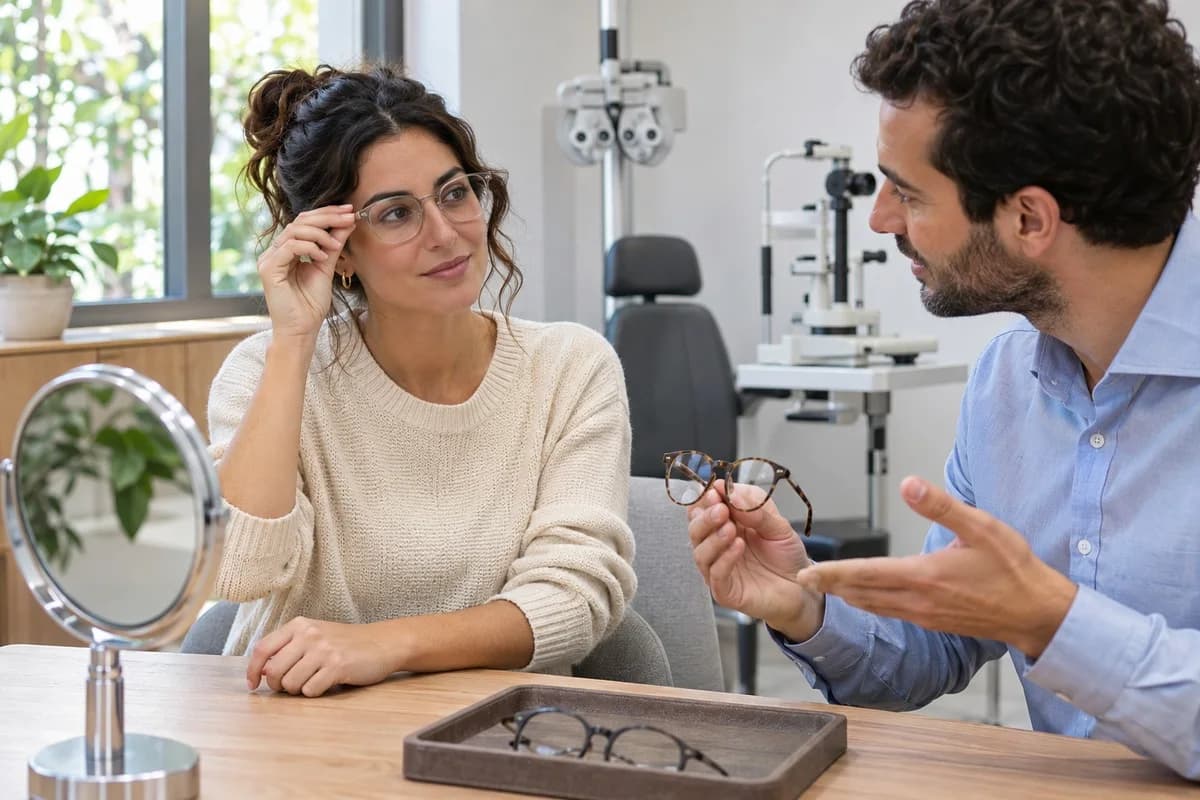
What Should Guide The Choice Of Glasses For Myopia?
Start with a current eye examination. Age, vision in each eye, prescription changes and the distances that cause difficulty matter. An automated measurement alone does not provide the complete prescription or assess eye health.
Assessing The Prescription And Astigmatism Together
When astigmatism accompanies myopia, the cylinder power and axis matter alongside the minus prescription. A substantial difference between the eyes may also affect comfort and how they work together. Trying someone else's spectacles cannot establish your correct prescription.
Children may need drops that temporarily relax focusing so that the prescription can be measured more reliably. The ophthalmologist decides when this is appropriate. Planning myopia treatment also requires checking for other causes of blurred vision; a changing prescription is not the only possibility.
How Do Standard Lenses Differ From Myopia Control Lenses?
Standard single-vision lenses help focus the image on the retina and improve clarity. Clear sight through these lenses does not demonstrate that myopia progression has slowed. Evidence-based myopia control spectacle designs aim to reduce progression while also correcting vision.
Standard single-vision lens: Corrects blurred vision.
Evidence-based myopia control lens: Corrects vision while aiming to slow progression.
When Should Myopia Control Lenses Be Considered For Children?
Age, age at onset, family history and prescription changes inform the discussion. Eye length may also be monitored. A children's eye examination helps establish the correction and follow-up plan.
Results depend on the lens design, appropriate fitting and consistent use. A particular result cannot be promised for every child. Ask what the treatment aims to achieve, what evidence supports the design and how the clinician will assess the response.
Which Needs Matter When Choosing Lenses For Adults?
Driving, computer work and reading distance help guide adult lens selection. Age-related difficulty focusing up close may require a different solution for near tasks. Findings from childhood myopia control studies should not automatically be applied to every adult choosing glasses.
How Should Frames Be Chosen For Myopia Glasses?
The frame must suit the prescription and lens design. The dispensing professional should check that it provides the required space for the lenses and can be adjusted comfortably before measurements are taken.
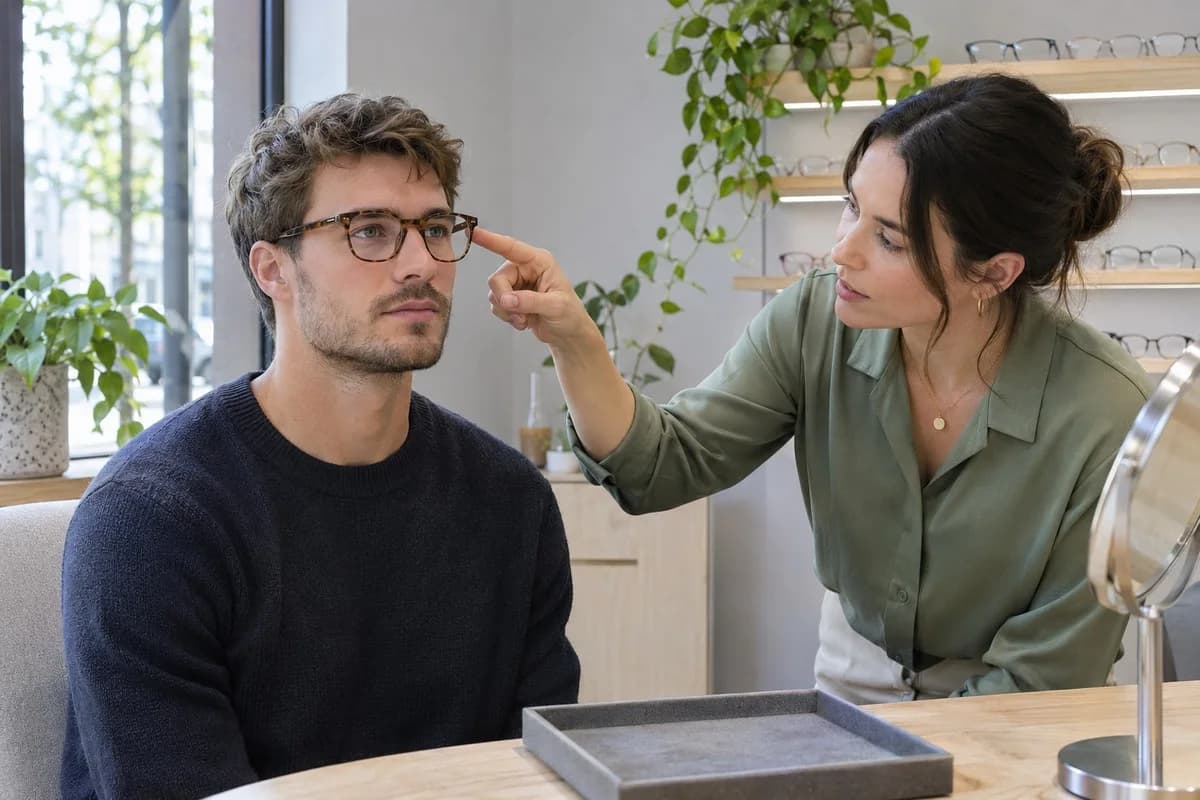
Comfortable Fit, Lens Size And Preventing Slippage
The bridge should rest comfortably on the nose, while the sides should avoid pressure at the temples and behind the ears. Glasses that slide whenever you look down need adjustment. Try turning your head and looking down during fitting rather than assessing the frame only in a mirror.
Large frames can make the edges of higher minus lenses more noticeable. However, choosing the smallest frame simply to reduce thickness may leave insufficient room for a particular design. Frame and lens selection should therefore be considered together.
Why Do Pupil Distance And Lens Centration Matter?
Pupil distance is one measurement used to position lenses correctly in front of the eyes. Separate measurements for each eye and fitting heights may be required. The same prescription fitted into a different frame can require different positioning and adjustments.
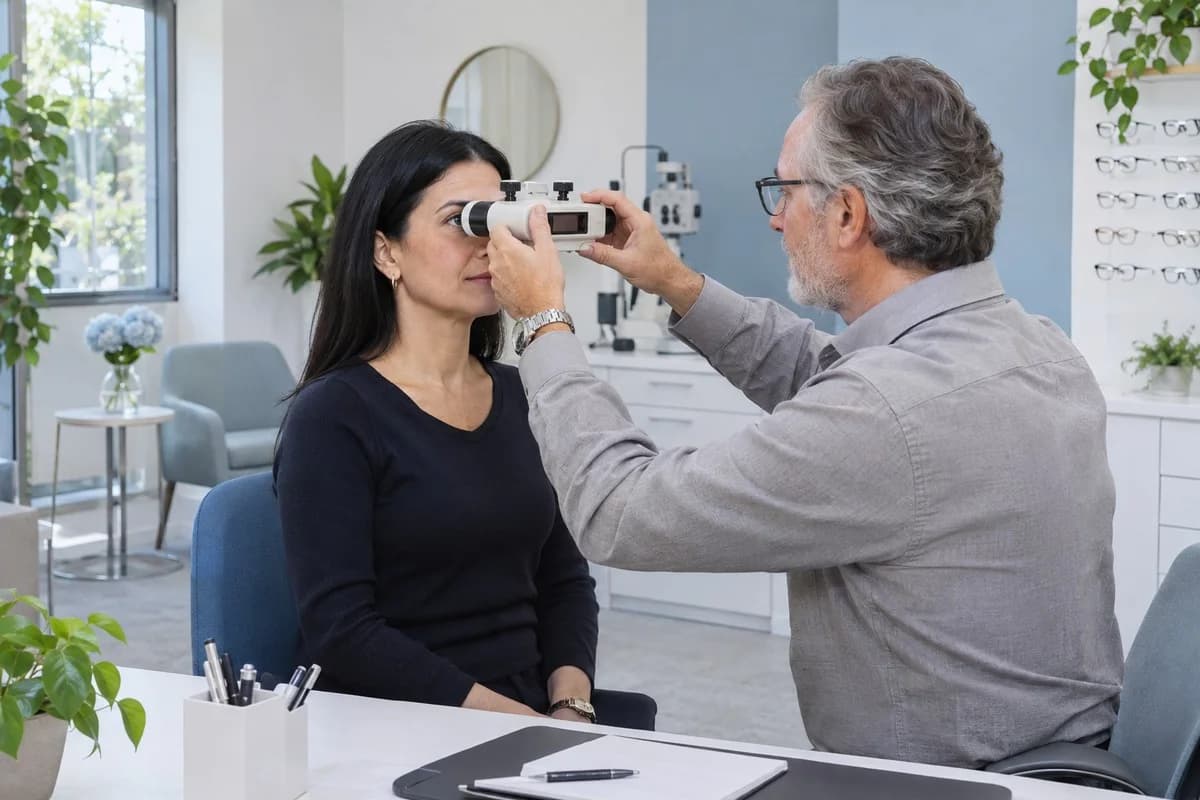
Measurements should reflect the adjusted frame position and the lens design, particularly with specific optical zones. Measurements from old glasses should not be transferred to a new frame without checking their suitability.
How Are Lens Thickness And Material Selected For Myopia?
Thickness depends on prescription, refractive index, frame dimensions and centration. A thinner appearance should be balanced against weight, optical properties and impact resistance. No single material is the right choice for every prescription or activity.
Choosing Thinner Lenses For Higher Prescriptions
Higher-index materials can reduce thickness for suitable prescriptions, but the index number does not determine the result alone. The same prescription can look different in small and large frames. Ask the optician to explain the expected edge thickness in your chosen frame and the available alternatives.
Impact Resistance For Children And Sports
Children benefit from a secure, comfortable frame and suitably impact-resistant lenses. Polycarbonate is one option considered for protection. Impact resistance does not make spectacles immune to damage. Activities involving a risk of eye injury may require purpose-designed sports eye protection rather than ordinary glasses.
What Do Anti-Reflective Coatings, UV Protection And Photochromic Lenses Do?
Anti-reflective coatings reduce reflections from lens surfaces. UV protection concerns ultraviolet radiation. Photochromic lenses change their tint as light conditions change. These features address different needs and should not be confused with a lens design intended to slow myopia progression.
Darkening inside a car varies with the product because windscreens block much of the UV that activates many photochromic lenses. Ask about suitability for driving. A dark tint alone does not establish adequate UV protection; the lens specifications and intended use should be checked.
How Can You Check Whether New Glasses Are Suitable?
At collection, check clarity at the relevant distances, frame comfort and lens positioning. A different sensation from the previous pair does not automatically mean the prescription is wrong. Persistent blur, headaches or double vision should nevertheless be assessed rather than dismissed indefinitely as adjustment.
Explain which eye is affected and which tasks trigger symptoms. Bring both pairs to an eye doctor in Samsun so that the prescriptions and fitting can be compared. The assessment may involve the prescription, dispensing measurements and eye health. Sudden loss of vision or substantial eye pain requires prompt attention.
Follow-up intervals depend on age, prescription changes and the treatment approach. A child seeing clearly can still have progressing myopia. If the frame loosens or keeps slipping, arrange an optical fitting check rather than waiting for the next routine eye examination.
Conclusion
How to choose the right glasses for myopia? Combine an accurate prescription with the appropriate lens purpose, comfortable frames and correct fitting. Assess progression control separately in children. The thinnest or most expensive option is not necessarily the most suitable; examination findings and everyday visual needs should guide the choice.
Frequently Asked Questions
Does wearing glasses increase myopia?
Correctly prescribed glasses do not worsen myopia or make the eyes lazy. A child’s prescription may change as the eyes grow. Progression while wearing glasses does not show that the glasses caused it; follow-up measurements are needed.
Can a weaker prescription slow myopia progression?
No. Deliberately leaving myopia undercorrected is not an established control treatment and has not been shown to slow progression. Do not reduce the prescribed power yourself; discuss vision and monitoring results with the clinician.
Should myopia glasses be worn all the time?
The wearing schedule depends on age, visual needs and the treatment goal. Children with myopia are generally advised to wear their correction full time. Follow the schedule provided for any prescribed myopia control lens design.
Are the thinnest spectacle lenses always the best choice?
No. Optical quality, frame fit, weight and durability also matter. A higher index may offer little practical benefit for some prescriptions. Compare suitable options in the chosen frame rather than selecting by thinness alone.
Do blue-light filtering glasses stop myopia?
A blue-light filter is not equivalent to an evidence-based myopia control lens design. If a lens is recommended for progression control, ask which clinical evidence supports it and how its effect will be monitored.
About this article
Last updated 
Examination and individual assessmentAssoc. Prof. Muhammed Mustafa Kurt, MD
Ophthalmologist · Atakum, Samsun
- Content preparation
- Editorial information prepared using medical sources.
- Medical review
- The content update date does not indicate that a medical review has been performed by the physician.
- IMI: Definitions Of Myopia Correction And Control
- IMI: Clinical Myopia Management Guidelines
- AAPOS: Glasses For Children
- WSPOS: Myopia Consensus Statement
- National Eye Institute: Myopia
- NHS: Short-Sightedness
- ZEISS: Eyeglass Selection Checklist
- ZEISS: Choosing Lenses And Frames
- ZEISS: Photochromic Lens Properties
This article is for general information and does not replace a medical examination. Diagnosis, suitability for treatment and follow-up are determined individually after an eye examination.