

Double vision after cataract surgery may affect one eye or occur with both eyes open. An eye examination is vital to find the cause and decide on suitable care.
Seeing two images is different from having a blurred view. The timing, whether covering either eye changes the symptom, and any accompanying problems help guide assessment. This article on the website of Doç. Dr. Muhammed Mustafa Kurt, an eye doctor in Samsun, explains possible causes and what to discuss at your examination.

Is Double Vision After Cataract Surgery Normal?
Double vision can develop after surgery, but it should not automatically be treated as a harmless part of recovery. Temporary changes at the eye surface may contribute, while other patients have problems with how their eyes work together. Tell your operating surgeon about a new symptom. [1, 2]
During phacoemulsification cataract surgery, the cloudy natural lens is replaced with an artificial lens. However, seeing two separate images should not simply be explained as getting used to the implant. An examination helps distinguish causes related to surgery from unrelated conditions.
How Do Double Vision, Blurring And Ghosting Differ?
With blurred vision, an object looks unclear. With double vision, the same object appears twice, side by side, vertically or diagonally. Ghosting may look like a faint second outline rather than a fully separated image.
Double Vision In One Eye (Monocular Diplopia)
Monocular diplopia remains when the affected eye looks on its own. An uneven tear film, astigmatism or another optical problem may be involved. Ghosting that changes after blinking can suggest an eye surface issue, but this observation does not establish the diagnosis or exclude other causes. [1, 3]
Double Vision With Both Eyes Open (Binocular Diplopia)
Binocular diplopia occurs when both eyes are open and disappears whichever eye is covered. It can result from the eyes pointing in slightly different directions. Assessment considers eye muscles, the nerves controlling them and any previous squint. [3]
Which Symptoms With Double Vision Need Urgent Assessment?
Sudden double vision needs same-day medical assessment. Seek emergency help if it comes with a severe headache, a new difference in pupil size, speech difficulty or weakness of an arm or leg. Having recently undergone cataract surgery does not exclude another urgent cause. [1]
Increasing pain, marked redness or a sudden reduction in vision in the operated eye also require prompt attention. New flashes, a sudden increase in floaters or a curtain across the view should not wait for a routine appointment. [4]
What Causes Double Vision After Cataract Surgery?
Possible causes involve the eye surface, glasses prescription, implant position or coordination between the eyes. More than one factor may be present.
Dry Eye, Corneal Swelling And Astigmatism
An unstable tear film may produce fluctuating clarity or a second outline. Corneal swelling affects the clear front layer of the eye and can cause blur or scattered light; this is not always true double vision. Residual astigmatism also needs to be considered when checking optical causes.
If dryness contributes, dry eye treatment can be reviewed. Brief improvement after a drop does not prove that dryness is the only explanation. Do not stop or change prescribed postoperative drops on your own.
Differences In Prescription And Image Size Between The Eyes
After surgery on one eye, its prescription may differ from the other eye. This is called anisometropia. A difference in perceived image size is called aniseikonia. Either can make combining the two views difficult. However, a prescription difference does not always cause diplopia; measurements need to be assessed alongside symptoms. [2]
Problems With The Position Of The Intraocular Lens
An artificial lens that moves away from its intended position may contribute to optical symptoms. The clinician examines the implant and the structures supporting it. Halos or glare around lights alone do not prove that the lens has moved. Lens replacement is not a decision to make before investigating the cause. [5]
Previous Squint And Eye Muscle Coordination
A previously controlled squint may become noticeable after visual conditions change. Mention childhood eye turning, patching treatment or previous squint surgery. Conditions affecting the eye muscles or their nerves may also require assessment. Double vision noticed after cataract surgery does not necessarily mean the implant itself is responsible. [2]
How Long Does Double Vision After Cataract Surgery Last?
There is no single recovery period that applies to everyone. Surface-related fluctuations and misalignment-related double vision can follow different courses. Some symptoms improve during healing; others need glasses, surface treatment or another approach. The cause must be established before a useful estimate can be discussed. [3]
Being advised to attend follow-up does not mean waiting when symptoms become worse or change suddenly. Report whether the problem is improving and how it affects reading, walking or daily activities. Intermittent double vision still deserves assessment, even if your vision seems comfortable between episodes.
How Is The Cause Of Postoperative Double Vision Identified?
The clinician asks about the onset, which eye was operated on, old glasses and current drops. Examination may include visual acuity, prescription, tear film, cornea, implant and retina. Eye movement testing and measurements of alignment are particularly relevant when symptoms occur with both eyes open.
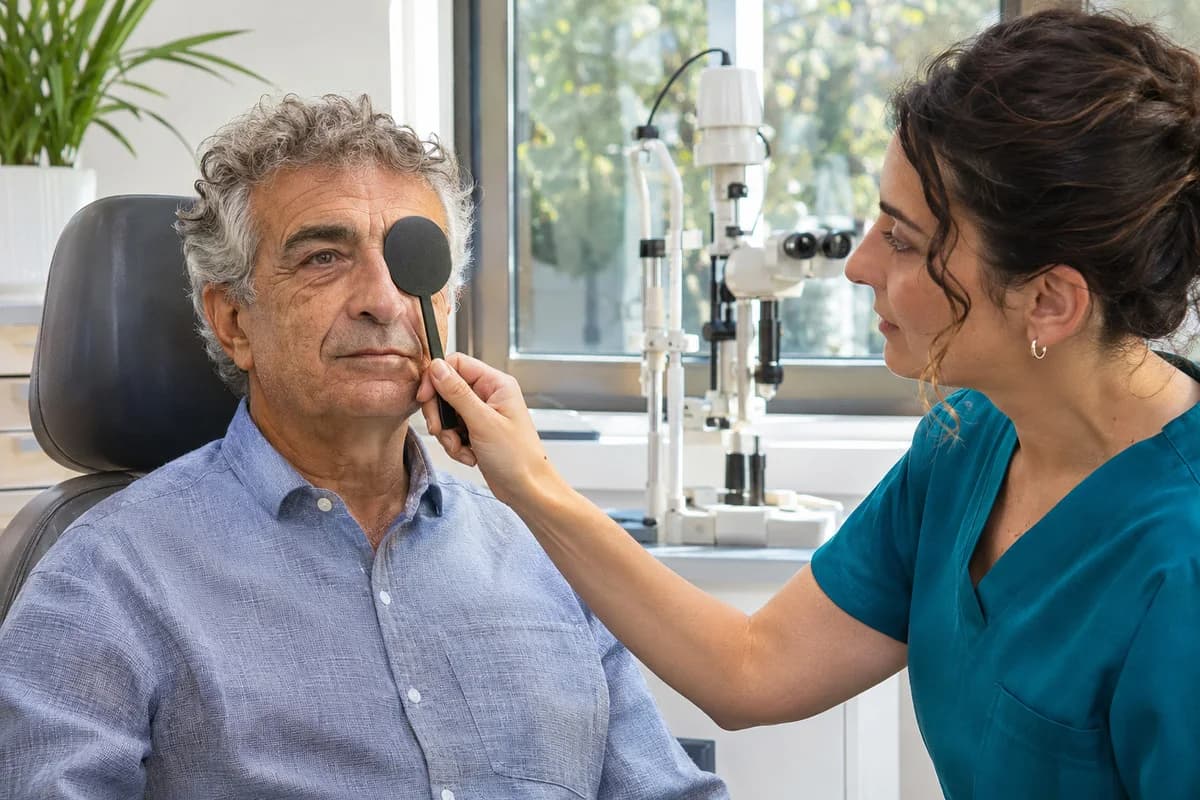
Explain whether near or distance viewing is harder, whether head position changes the images and whether symptoms vary through the day. Not everyone needs the same investigations. Findings may lead to further imaging, specialist alignment assessment or neurological review. Bring earlier prescriptions and available surgical records to the appointment.
How Is Double Vision After Cataract Surgery Treated?
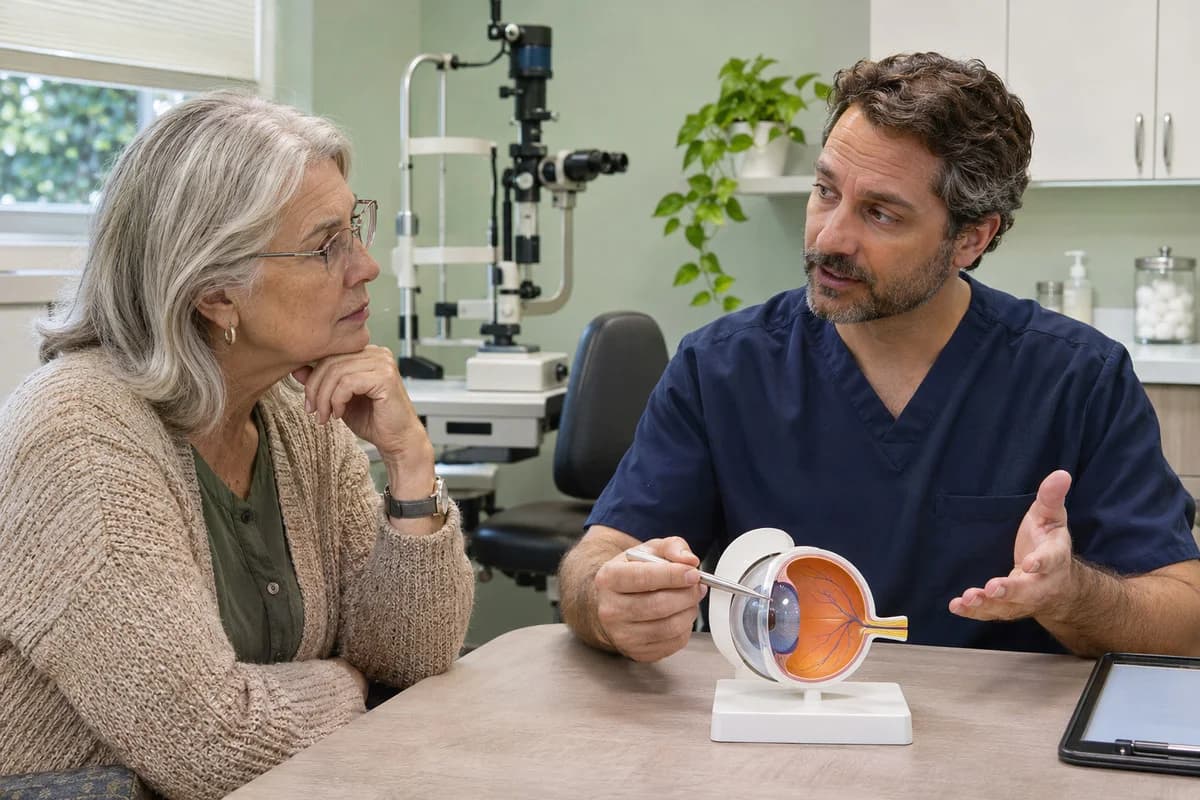
Treatment depends on the identified cause. No single drop, exercise programme or further operation suits every patient. Any temporary method of symptom control should be discussed with the treating team.
Eye Surface Treatment And Prescription Adjustment
The clinician may adjust eye surface care if dryness is found. Glasses, or contact lenses in selected patients, may help with refractive error or differences between the eyes. The timing of a new prescription depends on healing. Ask whether your existing glasses are appropriate while measurements and vision are settling.
Prism Glasses And Surgery In Selected Cases
Prism glasses may help combine images in suitable cases of binocular diplopia. They do not suit every alignment problem and may work differently across directions of gaze. Temporary or permanent options depend on changing measurements. Surgery on the implant or eye muscles is considered only when indicated for the individual cause. [2, 3]
Conclusion
Double vision after cataract surgery needs assessment of its cause. Ghosting in one eye and difficulty coordinating both eyes require different approaches. Report new symptoms to your surgeon, and seek prompt care for sudden onset or accompanying warning signs.
Frequently Asked Questions
What does it mean if covering one eye stops the double vision?
Double vision disappearing whichever eye is covered suggests a binocular problem. Improvement after covering only one particular eye does not establish that distinction. Each eye needs to be checked separately, and the observation is not a diagnosis.
Will surgery on the second eye always correct double vision?
No. Second-eye planning may help when a difference in prescription contributes. It cannot be assumed to resolve a squint, nerve problem or displaced implant. The reason for double vision should be investigated before making that decision.
Can I drive while I have double vision?
Double vision can interfere with judging distance and depth. Do not drive with the symptom; arrange for someone to accompany you for assessment. Discuss returning to driving with your clinician in the context of your vision and applicable licensing requirements.
Do eye exercises help every type of double vision?
No. Exercises may help selected coordination problems, but do not correct dryness, an implant position problem or other optical causes. Follow advice based on your examination rather than choosing exercises from the internet without knowing the cause.
Can double vision starting months later still be related to surgery?
It can, but timing alone does not establish the cause. Implant position, prescription and unrelated eye or nerve conditions may need assessment.
About this article
Last updated 
Examination and individual assessmentAssoc. Prof. Muhammed Mustafa Kurt, MD
Ophthalmologist · Atakum, Samsun
- Content preparation
- Editorial information prepared using medical sources.
- Medical review
- The content update date does not indicate that a medical review has been performed by the physician.
This article is for general information and does not replace a medical examination. Diagnosis, suitability for treatment and follow-up are determined individually after an eye examination.