

Astigmatism Treatment in Samsun includes correction of the focusing error that blurs near and distance vision, using glasses, contact lenses or surgery in suitable eyes.
Correcting astigmatism involves more than prescription strength: corneal shape and the method that improves vision matter too. Approaches to regular and irregular astigmatism may differ. Assoc. Prof. Muhammed Mustafa Kurt, MD : assessment can examine prescription measurements, daily visual needs and accompanying eye conditions together.
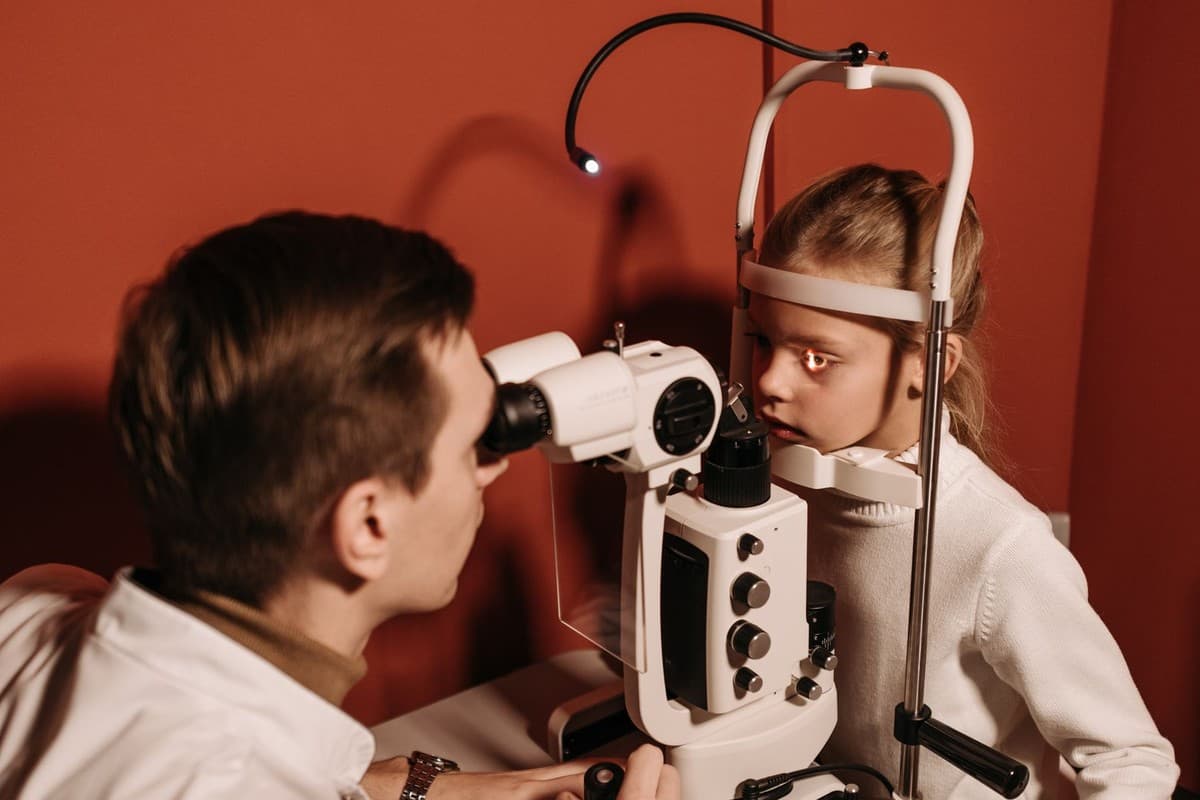
Why is vision unclear with astigmatism?
Astigmatism prevents a sharply focused image because the cornea or natural lens has different refractive power in different directions. The cornea is the clear front layer; the lens is the light-focusing structure inside the eye. Forming a sharp image on the light-sensitive retina becomes more difficult.
Astigmatism may occur alongside myopia or hyperopia. Both near and distant details may appear blurred or shadowed. Corneal shape cannot be reliably assessed by looking at the eye from outside; a photograph or the person’s symptoms cannot replace a measurement of refractive error.
Symptoms and causes
Blurred vision, difficulty seeing in dim light, and eye fatigue during prolonged visual tasks are among the symptoms of astigmatism. Some individuals may find it difficult to discern details at night. Mild astigmatism may not produce noticeable symptoms. Headaches alone do not indicate the presence or degree of astigmatism.
Astigmatism can be present from birth, or can change during development. It can be caused by hereditary factors, eye injuries, certain surgeries, and corneal diseases. Reading in low light or using a computer is not, by itself, the cause of astigmatism. Changes in vision that occur quickly should not be dismissed simply by replacing new lenses.
What do cylinder and axis measurements mean?
The astigmatism prescription indicates the amount of cylinder correction, and the axis specifies the direction of that correction. These are determined separately for each eye during examination. Visual tests with different lenses and automated measurements are interpreted together; a prescription for two people with the same cylinder value may differ.
Visual acuity, as well as the condition of the eye surface and lens, are examined. Drops that temporarily relax focusing in children may be included as part of the measurement. Keratometry, which measures the curvature of the cornea, or corneal topography, which generates a surface map, can be used, especially when investigating irregularities and surgical suitability. The necessary tests are selected based on the findings.
Earlier prescriptions and the history of prescription changes help with Samsun eye doctor assessment. Because contact lenses can affect corneal measurements, ask whether a break from wearing them is needed before the examination. The duration depends on the lens type and the investigation planned.
Regular astigmatism and corneal irregularity
Regular astigmatism is often correctable with glasses, but in cases of corneal irregularities, further evaluation may be necessary. In irregular astigmatism, corneal curvature exhibits a more complex change. If the expected visual acuity cannot be achieved with glasses, a detailed examination of the cornea may be required.
Keratoconus is a disease in which the cornea thins and steepens forwards. It may be associated with increasing astigmatism and vision that glasses cannot fully correct; not all astigmatism is keratoconus. Once diagnosed, correcting vision with lenses and managing disease progression are separate goals.
In suitable cases showing progression, corneal cross-linking aims to strengthen corneal tissue. It is not performed to eliminate all astigmatism. Standard laser suitability must not be assumed in a person with corneal disease; keratoconus needs separate assessment.
Correct lens orientation and adjustment to glasses
Astigmatism eyeglasses require the correct cylinder power and axis for achieving clear vision. The placement and centering of the lens within the frame, as well as the lens thickness and frame model, are all considered. The suitability of correction cannot be determined solely by examining the lens thickness or frame model.
When getting used to new eyeglasses, a difference in the vision may be noticed. If there is any difficulty with near vision, or a distinct feeling of discomfort, the prescription is reviewed, and the glasses are prepared, as well as the eye health is re-examined. Not all mild astigmatism requires glasses; the decision depends on the level of vision and the individual’s needs.
Toric contact lenses and specialist lenses
Toric contact lenses are lenses that provide different optical power in different directions to correct astigmatism. It is important that they fit well in the eye and maintain their position during use. If there is blurred vision, which is specified in the prescription, the fit and rotation of the lens are evaluated.
For an irregular cornea, rigid gas-permeable lenses or scleral lenses that rest over a wider area may be considered. The lens type depends on the eye surface as well as the prescription. Patients should be taught lens care, hand hygiene, avoidance of water contact and the follow-up schedule. If vision decreases with pain or redness, remove the lenses and seek assessment.
Why is astigmatism monitored in children?
A prominent astigmatism in childhood can interfere with visual development by preventing the formation of clear images. Amblyopia, in its developmental stage, is a condition where vision does not reach the expected level. A child who does not complain about blurriness does not necessarily indicate that their eyes are seeing clearly and equally.
Two eyes are measured separately; the need for glasses and any additional treatment required are explained based on this. The difficulty experienced during reading or studying is not solely due to astigmatism. The vision with the glasses used during examinations and the changes in the prescription are compared. The usage pattern and follow-up intervals are determined according to the patient’s findings.
Options in laser and cataract surgery
Astigmatism surgery is planned for suitable adults after assessing corneal structure and visual needs. Laser vision correction : beforehand, corneal thickness and shape, prescription stability and dryness are assessed. Astigmatism correctable with glasses does not make surgery mandatory.
If the natural lens is being replaced for cataract, suitable corneal astigmatism may be addressed with toric intraocular lens options may be considered. A cataract is a loss of transparency in the natural lens. A toric intraocular lens differs from a contact lens that is put on and removed from the eye; it is implanted surgically and must remain on the intended axis.
Residual refractive error, dryness, discomfort around lights or other complications may occur after surgery. Rotation of a toric intraocular lens may require additional correction. Follow-up depends on the method. Increasing pain, redness or reduced vision after surgery should be assessed without waiting for the routine follow-up date.
Astigmatism Treatment Costs in Samsun in 2026
The cost of evaluating and correcting astigmatism depends on the measurements required and the scope of the method used. Options include spectacle lenses, toric contact lenses, custom lens fitting, and surgical procedures. The scope can also be affected by the examination and monitoring of additional corneal diseases; cost information is clarified through individual assessments.
Conclusion
Astigmatism Treatment in Samsun involves establishing the correct prescription and axis and selecting correction suited to the eye’s structure. Corneal irregularity, visual development in children and surgical suitability require different assessments. The aim of clear vision is considered together with the method’s limitations and follow-up needs.
Frequently Asked Questions
Does the axis on a prescription show the severity of astigmatism?
The axis indicates the direction of correction, not the severity of astigmatism. The amount is expressed by the cylinder value. Its effect on vision is assessed alongside other measurements and eye structure.
Not all astigmatism means keratoconus. An increasing prescription, vision that cannot be corrected with glasses and findings on corneal maps may require detailed assessment.
Not all astigmatism means keratoconus. An increasing prescription, vision that cannot be corrected with glasses and findings on corneal maps may require detailed assessment.
Why can blurring fluctuate with a toric contact lens?
Rotation or poor fit of a toric contact lens can affect clarity. Ocular surface problems are also investigated. Do not change the lens model or prescription without an examination.
Can astigmatism also be corrected during cataract surgery?
A toric intraocular lens may be considered for suitable corneal astigmatism. The same lens is not appropriate for everyone. Glasses may still be needed at some distances after surgery.
About this article
Last updated 
Examination and individual assessmentAssoc. Prof. Muhammed Mustafa Kurt, MD
Ophthalmologist · Atakum, Samsun
- Content preparation
- Editorial information prepared using medical sources.
- Medical review
- The content update date does not indicate that a medical review has been performed by the physician.
Source: the article “Astigmatism Treatment in Samsun” on the practice’s existing website. No additional medical references were specified in the original article.
This article is for general information and does not replace a medical examination. Diagnosis, suitability for treatment and follow-up are determined individually after an eye examination.