

Intracorneal Ring Segment Implantation in Samsun is surgery that reshapes the corneal surface by placing ring segments within the cornea in conditions such as keratoconus.
The main aim is to establish the appropriate diagnosis or treatment plan from the person’s eye examination findings. Samsun eye doctor : an examination is the first step in assessing the eye’s structure, the existing condition and possible risks together.
Assoc. Prof. Muhammed Mustafa Kurt, MD : assessment considers the patient’s symptoms, examination findings and necessary measurements together. After explaining expected benefits and possible risks, treatment is planned individually.

What is corneal ring implantation?
Corneal ring implantation is a surgical procedure in which semi-circular, transparent segments are placed within the cornea. It is most commonly evaluated for patients with keratoconus, with the aim of regularizing corneal shape, reducing irregular astigmatism, and improving vision achieved with spectacles or contact lenses.
Ring segments do not remove corneal tissue. They are placed in a tunnel within the cornea to change its geometry mechanically. The aim is to contribute to visual rehabilitation, not to eliminate the disease completely.
Do Corneal Rings Stop Keratoconus?
The main aim of corneal rings is to regularise corneal shape and try to improve visual quality. Progressive keratoconus requires a separate assessment to control biomechanical progression; rings alone should not be assumed to replace cross-linking treatment.
Who is Corneal Ring suitable for?
It can be evaluated in selected keratoconus patients, who cannot achieve sufficient vision with spectacles, cannot tolerate contact lens use, and have a cornea with a thickness and topographic characteristics suitable for ring placement.
The procedure may not be suitable if there is central corneal scarring, very advanced corneal thinning or structural features that prevent safe tunnel creation. Patient selection is one of the most important determinants of surgical success.
Examination and Measurements Before Corneal Ring Implantation
Corneal topography and tomography, along with pachymetry, measurements of visual acuity, and refractive error measurements, form the basis for planning. The thickness, length, and axis of the ring are determined according to corneal shape abnormalities.
Because contact lens wear can alter corneal mapping, a break from lenses may be requested before measurements. The duration should be determined by the lens type and clinical assessment.
Why is Corneal Thickness Important?
A segment is implanted into a tunnel created at a specific depth within the cornea. Sufficient corneal thickness must be present in the implantation area for the tunnel to be prepared safely.
How is corneal ring implantation performed?
The surface of the eye is anesthetized with eye drops. A tunnel can be created mechanically or with femtosecond laser, within which ring segments will be placed. Previously selected segments are placed within these tunnels and their positions are checked.
Although the procedure may often be short, the preparation and verification of measurements can increase the total time. The surgical plan may include one or multiple segments according to the asymmetry of the cornea.
Recovery After Corneal Ring Implantation
Stinging, watering, light sensitivity and fluctuating vision may occur in the first few days. Vision can change as the cornea adapts to its new shape. The final refractive error should not be assessed too early.
The need for glasses or contact lenses may not disappear completely after ring implantation. For some patients, the main benefit may be better tolerance of previously intolerable contact lenses or improved corrected vision.
When does vision become clear after corneal ring surgery?
Vision may vary in the initial days, and corneal stabilization can take weeks. The person’s initial corneal shape and the characteristics of the segments placed will affect the time of stabilization.
What should be paid attention to after corneal ring surgery?
Do not rub the eye. Use prescribed drops regularly and attend follow-up examinations. Protection from water, dust and injury is important in the early period.
In patients with keratoconus, it is also important to discontinue the habit of rubbing the eyes. If there is itching related to allergies, an appropriate eye treatment plan should be established for its control.
What are the risks of corneal ring implant?
Infection, movement or proximity of the segment to the surface, light scattering, inability to achieve the desired visual effect, or rarely, the need for segment removal may be observed. Risks are associated with corneal structure and surgical planning.
If severe pain, progressively increasing redness, discharge, or sudden vision loss develops, immediate consultation with an ophthalmologist should be sought.
How to Select Corneal Ring Segments
The thickness, length, and placement of the segments are planned according to the position and asymmetry of the cone in corneal topography. It is not necessary to use two equal segments in every patient. In some eyes, a single segment or even two segments with different characteristics may be more suitable.
What is the role of creating tunnels with femtosecond lasers?
Segments of the ring are placed within the cornea at a specific depth. A femtosecond laser can assist in creating the tunnel to the planned depth and diameter. Mechanical tunnel creation methods can also be used; the technique selection is made according to the surgeon’s plan and available technology.
How does astigmatism change after corneal ring segments?
Ring segments aim to reduce irregular astigmatism by flattening steep areas of the cornea. The amount of change cannot be guaranteed precisely beforehand. The aim is usually to obtain a more regular optical surface and improve corrected vision, rather than eliminate the prescription.
Is it possible to completely get rid of glasses due to corneal ring?
Some individuals may be able to see better with the naked eye; however, it cannot be guaranteed that glasses or contact lens requirements will be completely eliminated. Keratoconus visual rehabilitation is often a process that involves the use of multiple methods and long-term monitoring together.
Can ring segments be seen from the outside?
Corneal segments are produced from transparent material and placed within the cornea tissue. They can be observed under close and specific lighting conditions; however, the purpose is not cosmetic appearance, but to alter corneal geometry.
Does Keratoconus Follow-up Continue After Ring Implantation?
Yes. Placing a ring alters the optical shape of the cornea, but the risk of the disease progressing must also be monitored separately. Serial topography and tomographic measurements help to determine whether the corneal shape remains stable over time.
Samsun Corneal Ring Implant Prices for 2026
The prices for corneal ring implantation in Samsun can vary depending on the segments to be used, their specifications, measurements, and the scope of the surgical plan, for use in 2026. It is not accurate to provide individual prices without a thorough examination.
This content does not include information on prices, promotions, or discounts. The scope of the procedure must be explained by the relevant healthcare facility following the examination.
Conclusion
Intracorneal Ring Segment Implantation in Samsun is an eye care service that requires appropriate patient selection and regular follow-up. Suitability should be determined by assessing all structures of the eye, rather than symptoms or a single measurement alone.
This content is intended for general informational purposes only and should not be used as a substitute for personal diagnosis or treatment. Results and the healing process may vary from person to person. If you have any concerns or require treatment, it is essential to consult with an eye specialist.
Frequently Asked Questions
Does a corneal ring eliminate spectacle prescription?
No. The aim is to regulate corneal shape and to improve visual quality. The need for spectacles or contact lenses may continue.
Can the corneal ring be removed?
Segments can be surgically removed or replaced if necessary; however, this decision is only made following a comprehensive eye examination.
Are Corneal Rings and Cross-linking the Same Procedure?
No. Rings aim to reshape the cornea, whereas cross-linking aims to strengthen a progressing cornea biomechanically.
Can contact lenses be used after the procedure?
If the cornea has stabilized, contact lenses can be replanned. The appropriate lens type and timing are determined through a thorough examination.
About this article
Last updated 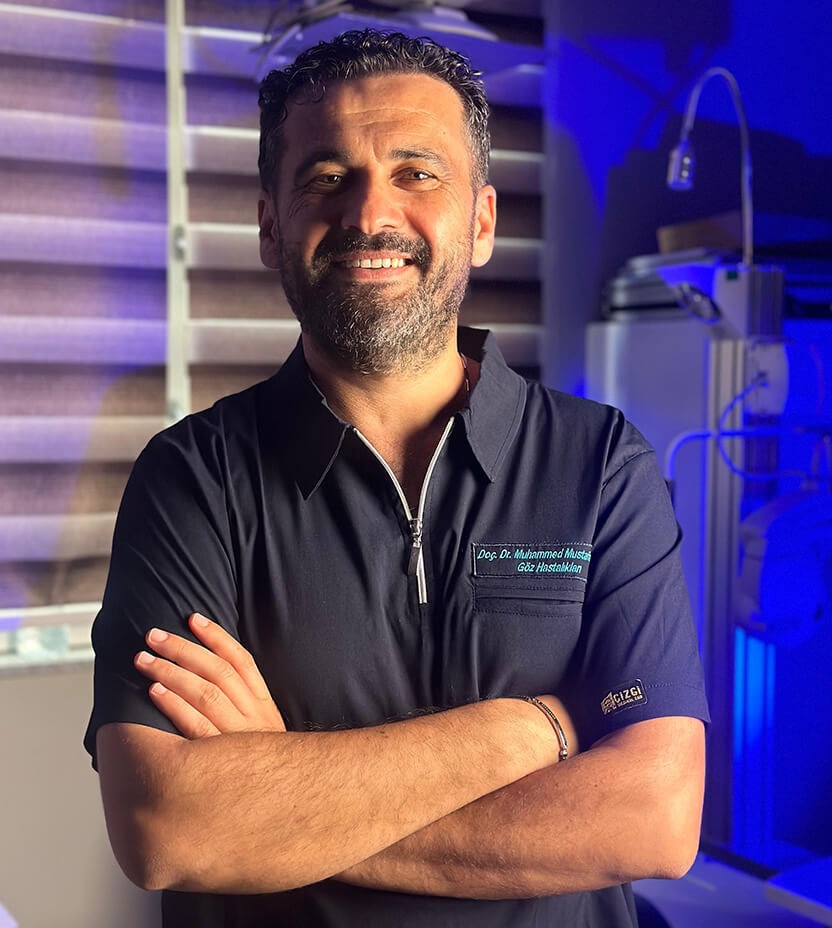
Examination and individual assessmentAssoc. Prof. Muhammed Mustafa Kurt, MD
Ophthalmologist · Atakum, Samsun
- Content preparation
- Editorial information prepared using medical sources.
- Medical review
- The content update date does not indicate that a medical review has been performed by the physician.
This article is for general information and does not replace a medical examination. Diagnosis, suitability for treatment and follow-up are determined individually after an eye examination.