

Uveitis Treatment in Samsun includes selecting medication according to the cause and location of inflammation inside the eye, monitoring vision and assessing the risk of recurrence.
Uveitis is not a disease with a single cause; it can affect different parts of the eye and follow different courses. Prompt assessment helps identify problems affecting vision. Assoc. Prof. Muhammed Mustafa Kurt, MD : examination can assess the location of inflammation, its possible cause and follow-up needs together.
Which part of the eye does uveitis affect?
Uveitis is a term used for inflammatory conditions that develop within the eye. The uvea includes the iris, ciliary body, and choroid, and inflammation can also affect adjacent tissues. Types of uveitis that involve one, multiple, or different sections of the eye require different evaluations.
While noticeable pain and light sensitivity can be present with anterior uveitis, floaters and blurred vision may be prominent in some posterior area issues. The absence of external redness does not rule out internal inflammation. The location of the disease can only be determined from examination findings, not solely from the patient’s description.
Which symptoms should not be left waiting?
Eye pain, sensitivity to light, or a sudden decrease in vision require prompt evaluation. The reporting of new floaters and noticeable blurriness should also be reported. These symptoms can arise due to other causes besides uveitis, such as corneal infections or retinal problems.
Increasing pain and vision loss after eye surgery or an intraocular procedure are urgent. Uveitis and a severe intraocular infection are not managed in the same way. Corticosteroid drops without a diagnosis can worsen some infections; do not start a previous prescription for a new episode.
Infection and the immune system
Uveitis can occur alongside inflammatory diseases, infections, or other conditions related to the immune system. Conditions such as Behçet’s disease and certain rheumatological presentations may be considered in this evaluation. In some individuals, a specific cause may not be identified despite detailed examination.
The presence of joint and back symptoms, mouth sores, skin findings, or prior infections should be reported during examination. In each uveitis patient, it should not be assumed that all of these conditions are present. Blood tests, imaging, or other specialist evaluations are selected based on the findings in the eyes and the patient’s history.
Examination and additional investigations
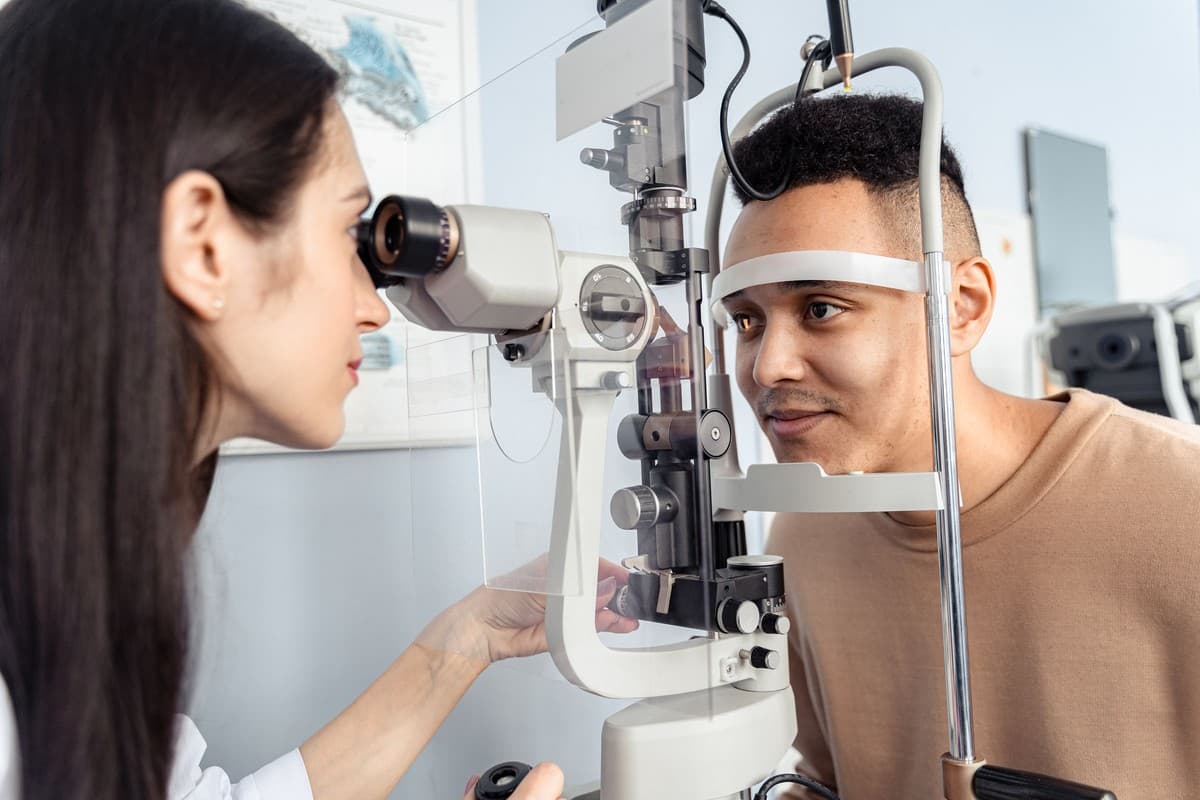
The examination assesses vision, intraocular pressure and the location of inflammation. A slit lamp examines the front of the eye, while a dilated fundus examination assesses the back. OCT or other imaging may be used to assess the retina and macula when needed.
Samsun eye doctor : provide the dates of previous episodes and all medicines used at the consultation. It is important to distinguish inflammation from infection or other problems with similar findings. Test results are interpreted alongside clinical findings rather than in isolation; the same test list is not appropriate for every case.
When are eye drops used?
In some types of uveitis, eye drops to control inflammation may be part of the foundational treatment. Corticosteroid eye drops and medications that widen the pupil are used for different purposes. The frequency of use and reduction plan are determined by examination; general information does not replace an individual prescription.
Drops that widen the pupil can temporarily affect near vision. This should be evaluated based on the individual’s driving and the effect of the medication. It should not be assumed that the inflammation has completely resolved when symptoms decrease; the duration of treatment and the manner of discontinuation should be determined by the eye care team.
Systemic medicines and treatment of the cause
When involvement is in the central or posterior region, or in severe cases, a single drop may not be sufficient. Oral medications or other appropriate methods of administration may be considered. In infections associated with inflammation, treatment directed at the specific causative microbe may be required; all types are not managed solely with anti-inflammatory medication.
Medicines that regulate the immune response may be used in selected recurrent or long-term non-infectious cases. Blood tests and general health monitoring may be needed depending on treatment. Medical eye treatments : selection weighs the expected benefit against the risk of side effects; the same medicine is not suitable for everyone.
Recurrent episodes and treatment monitoring
Uveitis may be limited to a single attack, or it may recur. Monitoring involves comparing the level of inflammation, vision, pressure, and response to treatment. The frequency of follow-up depends on the extent of involvement, the course of the disease, and the medications used.
Uveitis itself, or some of the medications used in its treatment, may be associated with cataracts and increased pressure. Problems such as edema (in the Macula) can also affect vision. Surgery, particularly when specific complications develop, may be considered; however, surgery is not necessarily required in every uveitis diagnosis.
Silent disease and screening in children
Some children develop uveitis without pain or obvious redness. Eye screening is therefore important in associated conditions such as juvenile idiopathic arthritis. An eye that looks normal from outside does not make scheduled examination unnecessary.
The child’s eye and overall health teams can monitor the medications being used and their development together. The scope of observation is determined according to the child’s condition and risk factors. Any visual impairments or light sensitivities at school should be reported, and the implementation of treatment should be planned in consultation with the family and relevant teams.
Light sensitivity in daily life and safe use
Sensitivity to light may provide temporary comfort with appropriate sunglasses. This support does not treat inflammation within the eye. Use of contact lenses should be evaluated in consultation with an eye doctor, alongside any active symptoms and with medication.
It is important to keep the tip of the eye drop bottle clean and not to share medications. If symptoms in the eye make it difficult to work or read, temporary adjustments can be discussed. Any new pain, changes in vision, or significant problems related to the medication must be reported to the relevant healthcare team without waiting for the scheduled follow-up appointment.
Uveitis Treatment Costs in Samsun in 2026
The scope of uveitis evaluation is related to the location of inflammation, the reasons being investigated, and the follow-up plan. Examinations require different imaging and medication monitoring. The purpose of the examinations and the control plan should be explained; a fixed fee or definite treatment duration should not be provided before diagnosis and progression are established.
Conclusion
Uveitis Treatment in Samsun is planned according to the cause of inflammation and the part of the eye involved. Timely examination, appropriate medication and monitoring of complications affecting vision are all important. Follow-up should not stop when symptoms improve; new visual changes require prompt assessment.
Frequently Asked Questions
Does uveitis always cause a red eye?
No. In some types or in children, there may not be obvious redness. Diagnosis and monitoring are not performed based on the external appearance of the eye.
Does having uveitis mean I must have a rheumatic condition?
It is not always the case. Related diseases are investigated based on the findings; in some cases, a specific cause cannot be determined.
Can I restart my previous steroid drops for a new episode?
It should not be assumed that new complaints are due to the same cause. In particular, it is necessary to differentiate between infections; previous treatment plans should not be applied without examination.
Can I skip uveitis screening if my child has no symptoms?
In specific risk situations, uveitis can proceed silently. It is essential to adhere to the screening schedule determined by the general and eye health team.
About this article
Last updated 
Examination and individual assessmentAssoc. Prof. Muhammed Mustafa Kurt, MD
Ophthalmologist · Atakum, Samsun
- Content preparation
- Editorial information prepared using medical sources.
- Medical review
- The content update date does not indicate that a medical review has been performed by the physician.
Source: the article “Uveitis Treatment in Samsun” on the practice’s existing website. No additional medical references were specified in the original article.
This article is for general information and does not replace a medical examination. Diagnosis, suitability for treatment and follow-up are determined individually after an eye examination.