

No-Touch Laser Eye Surgery in Samsun is a surface laser surgery technique in which the epithelium and refractive error are treated with an excimer laser without surgical instruments touching the corneal surface.
The main aim is to establish the appropriate diagnosis or treatment plan from the person’s eye examination findings. Samsun eye doctor : an examination is the first step in assessing the eye’s structure, the existing condition and possible risks together.
Assoc. Prof. Muhammed Mustafa Kurt, MD : assessment considers the patient’s symptoms, examination findings and necessary measurements together. After explaining expected benefits and possible risks, treatment is planned individually.
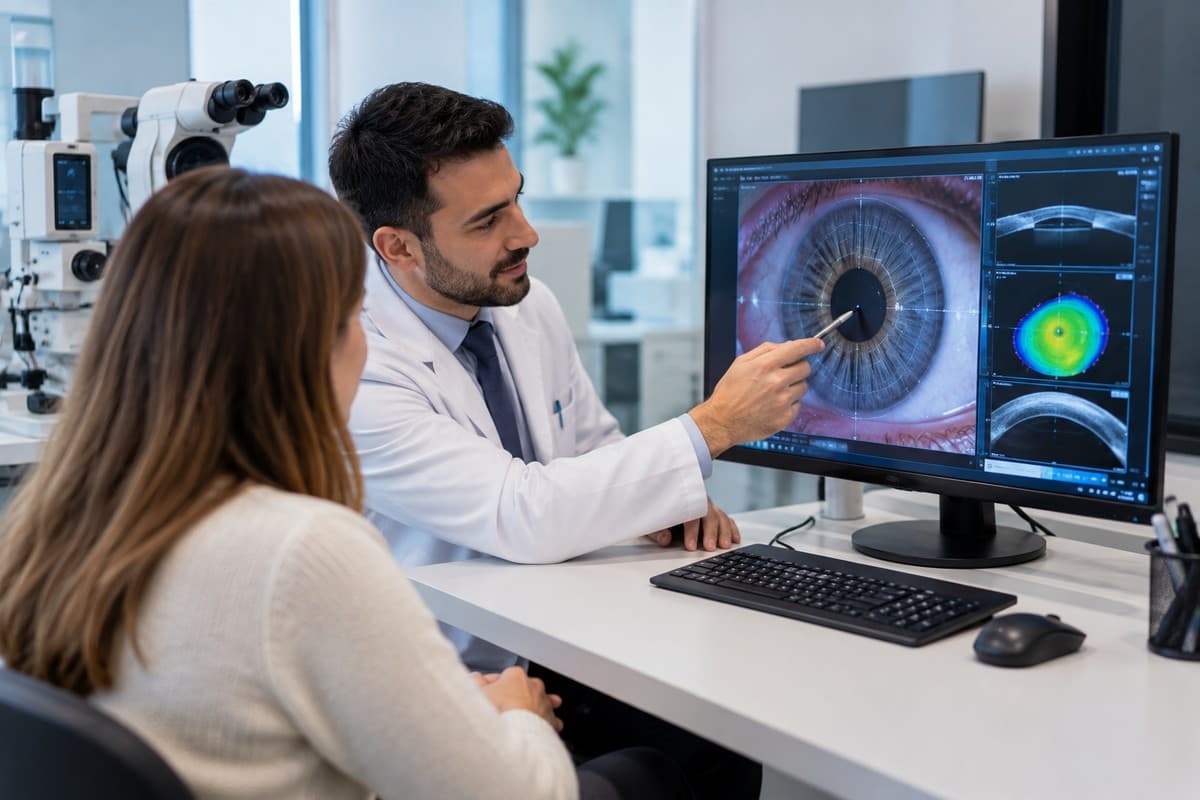
What is No Touch Laser?
No Touch Laser, also known as TransPRK, is a surface laser approach. It involves using an excimer laser to reshape the corneal tissue, targeting the epithelial layer and refractive errors on the surface of the cornea. Unlike LASIK, it does not create a flap on the cornea.
“No Touch” means the laser treatment is performed on the corneal surface without mechanical scraping or creating a flap. Examination beforehand, positioning the eye and a protective contact lens afterwards are still part of medical care.
What Is the Difference Between No Touch Laser and PRK?
In traditional PRK surgery, the epithelial layer is surgically removed, followed by excimer laser treatment. With TransPRK, the removal of the epithelium and correction of refractive errors are planned using a laser system. Due to the need for the epithelium to heal, both methods may result in similar surface recovery periods in the initial days.
Who is the “No Touch Laser” suitable for?
Adult patients with stable refractive error, suitable corneal topography, and no contraindications identified during a thorough examination can be considered for surface laser vision correction. Corneal thickness, the degree of refractive error, and overall corneal health are all evaluated together.
Because no flap is created, surface laser treatment may be considered for some people who play contact sports or face a risk of eye injury at work. This alone does not establish suitability; corneal biomechanical safety is the key determinant.
Who May Be Unsuitable for No Touch Laser?
The following procedure may not be suitable for individuals with keratoconus or suspected corneal irregularity, active eye infections, pronounced dry eyes, insufficient corneal thickness, or unstable refractive error. The timing should also be carefully evaluated during pregnancy and breastfeeding.
No Touch Laser Pre-Examination and Measurements
Corneal topography and tomography, pachymetry, refraction, tear film assessment and a retinal examination are central to planning. Assessment includes not only prescription strength but also corneal shape and how much tissue will remain after laser treatment.
Because contact lens use can affect corneal measurements, you may be asked to stop wearing lenses for a period before the examination. The interval should be determined according to lens type and clinical findings.
How Is No Touch Laser Performed?
The eye surface has been numbed with drops, and then the patient is placed in the laser device. The device first shapes the epithelial layer, and then, using laser, it reshapes the stromal tissue to correct refractive errors.
A bandage contact lens can be applied to protect the cornea and promote epithelial healing after the procedure. These lenses are removed under the supervision of a physician once the epithelium has sufficiently healed.
How long does the No Touch Laser procedure last?
Even if the laser treatment itself is brief, the preparation time, adjustments to the device, and evaluation of both eyes add to the overall time. Ensuring the patient is positioned safely and verifying the treatment protocol is just as important as the treatment time itself.
No Touch Laser – First Few Days
As the surface epithelium heals, stinging, burning, watering, light sensitivity and blurred vision may occur during the first few days. Symptom severity varies between people, and the bandage contact lens provides protection during this period.
Visual reorganization can be slower than LASIK. There may be fluctuations in vision during the first few weeks, and time is needed to achieve stable vision and a final assessment of refractive error.
When should a bandage lens be removed?
Removal of the bandage contact lens depends on epithelial closure. Patients should not remove it themselves. The corneal surface is assessed at follow-up to determine when it can be removed.
What Should I Consider After No Touch Laser?
Use drops as recommended, do not rub the eye and avoid contact with water, soap, dust or dirty environments during the first days. Sunglasses may be used if sunlight causes discomfort.
Sports, swimming, driving, and commute times should be planned according to individual recovery progress. Examinations are important to assess corneal surface healing and whether vision is progressing as expected.
What are the risks associated with No Touch laser?
Risks include temporary pain and light sensitivity, surface clouding known as haze, dry eye symptoms, a result that differs from the intended refractive target, infection and temporary fluctuations in visual quality. These risks vary according to the individual’s corneal characteristics.
If you experience increasing pain, intense redness, discharge, or noticeable vision loss, it’s important to see an eye doctor without delay, and without scheduling an appointment beforehand.
How does the epithelium heal after TransPRK?
The corneal surface epithelium closes again after No Touch laser. While nerve endings are exposed, stinging, watering and light sensitivity may be more noticeable in the first days. A bandage contact lens helps protect the surface until closure. Optical stabilisation of the cornea may take longer even after the epithelium has healed.
What is laser haze after non-touch laser treatments?
Haze is a temporary visual disturbance that can develop on the cornea following laser treatments. Its occurrence and severity can be influenced by factors such as the amount of correction performed, the patient’s response to treatment, and exposure to ultraviolet light. Regular check-ups and consistent use of recommended eye drops are important for monitoring this process.
Why is it important to protect oneself from the sun?
It is advisable to avoid significant exposure to ultraviolet light, especially in the early months following a laser treatment on the surface. Wearing UV-protective sunglasses outdoors can help reduce light sensitivity and limit unnecessary UV exposure during the cornea’s healing process.
How to Choose Between No Touch Laser and LASIK?
The choice is not based on recovery speed alone. Corneal thickness, topography, occupation, contact sports, dry eye and the refractive error are considered together. Avoiding a flap may be an advantage of No Touch laser, but more surface discomfort and slower visual recovery may occur in the first days.
Can Dry Eye Occur After No Touch Laser?
Following laser eye surgery, temporary dryness or fluctuating vision may be experienced. The tear film is assessed before surgery, and a surface treatment plan is established afterward. If dry eye symptoms persist or become increasingly severe, a follow-up examination is necessary.
Can laser treatment be performed on both eyes in a single session?
Many patients suitable for the treatment can be treated in both eyes in a single session. However, treatment plans are made considering individual eye findings, expected recovery, and the patient’s daily living circumstances.
Samsun No Touch Laser Prices for 2026
The prices for Samsun No Touch Laser can vary depending on the scope of the examination, tests, and treatment plan in 2026. It is not advisable to make a decision solely based on price without determining if the procedure is suitable.
This page does not include information about fees, discounts, or promotions. Personalized plans and processes should be explained by the relevant healthcare institution following the examination.
Conclusion
No-Touch Laser Eye Surgery in Samsun is an eye care service that requires appropriate patient selection and regular follow-up. Suitability should be determined by assessing all structures of the eye, rather than symptoms or a single measurement alone.
This content is intended for general informational purposes only and should not be used as a substitute for personal diagnosis or treatment. Results and the healing process may vary from person to person. If you have any concerns or require treatment, it is essential to consult with an eye specialist.
Frequently Asked Questions
Is “No Touch Laser” truly performed without touching?
The procedure is planned in advance, without requiring any mechanical scraping of the cornea during the laser phase. However, the examination includes medical procedures such as keeping the eye open and using bandage lenses.
Will there be pain after No Touch laser treatment?
Stinging, watering, light sensitivity and pain may occur in the first few days as the epithelium heals. The level of discomfort varies between people.
When Does Vision Become Clear?
Expect some initial haziness, which should gradually improve; full stabilization may take weeks, or even longer for some individuals.
Will I Need Glasses After No Touch Laser?
The aim is to reduce refractive error, but a zero prescription cannot be guaranteed. Glasses may still be needed because of residual refractive error or changes that develop over time.
About this article
Last updated 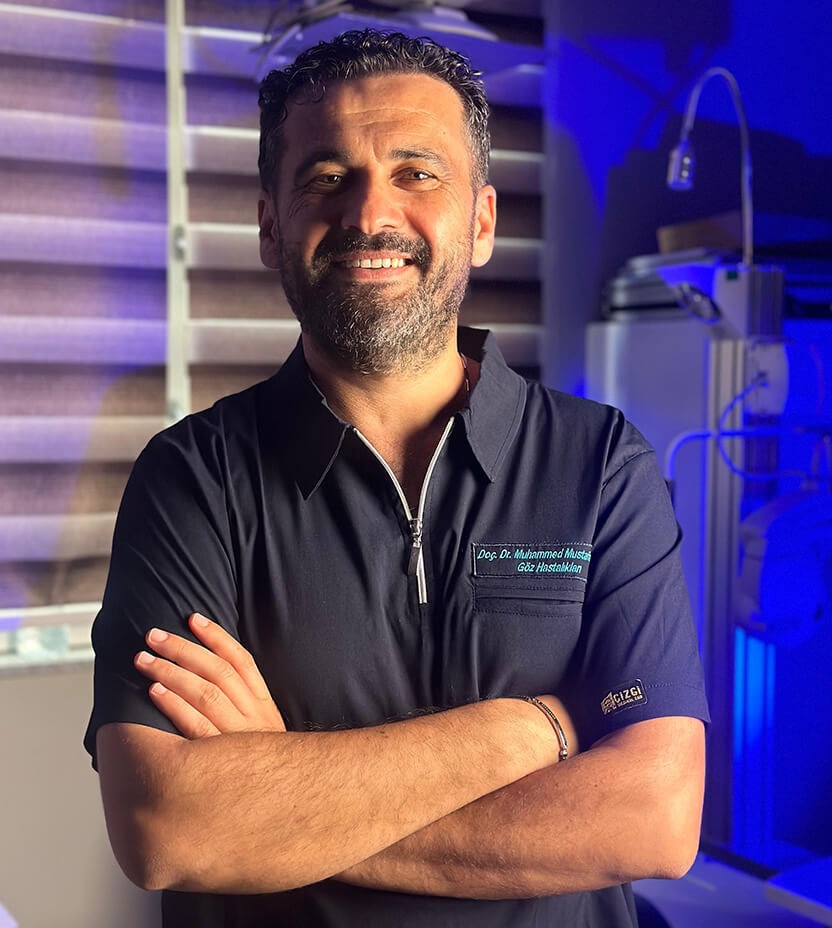
Examination and individual assessmentAssoc. Prof. Muhammed Mustafa Kurt, MD
Ophthalmologist · Atakum, Samsun
- Content preparation
- Editorial information prepared using medical sources.
- Medical review
- The content update date does not indicate that a medical review has been performed by the physician.
This article is for general information and does not replace a medical examination. Diagnosis, suitability for treatment and follow-up are determined individually after an eye examination.