

Hyperopia Treatment in Samsun assesses focusing difficulty and supports near or distance vision with suitable glasses, contact lenses or surgery.
Hyperopia can make close work difficult; higher prescriptions can also affect distance vision. A child’s focusing ability may conceal the condition for a time. Assoc. Prof. Muhammed Mustafa Kurt, MD : assessment can consider visual acuity, how the eyes work together and the need for age-appropriate correction.
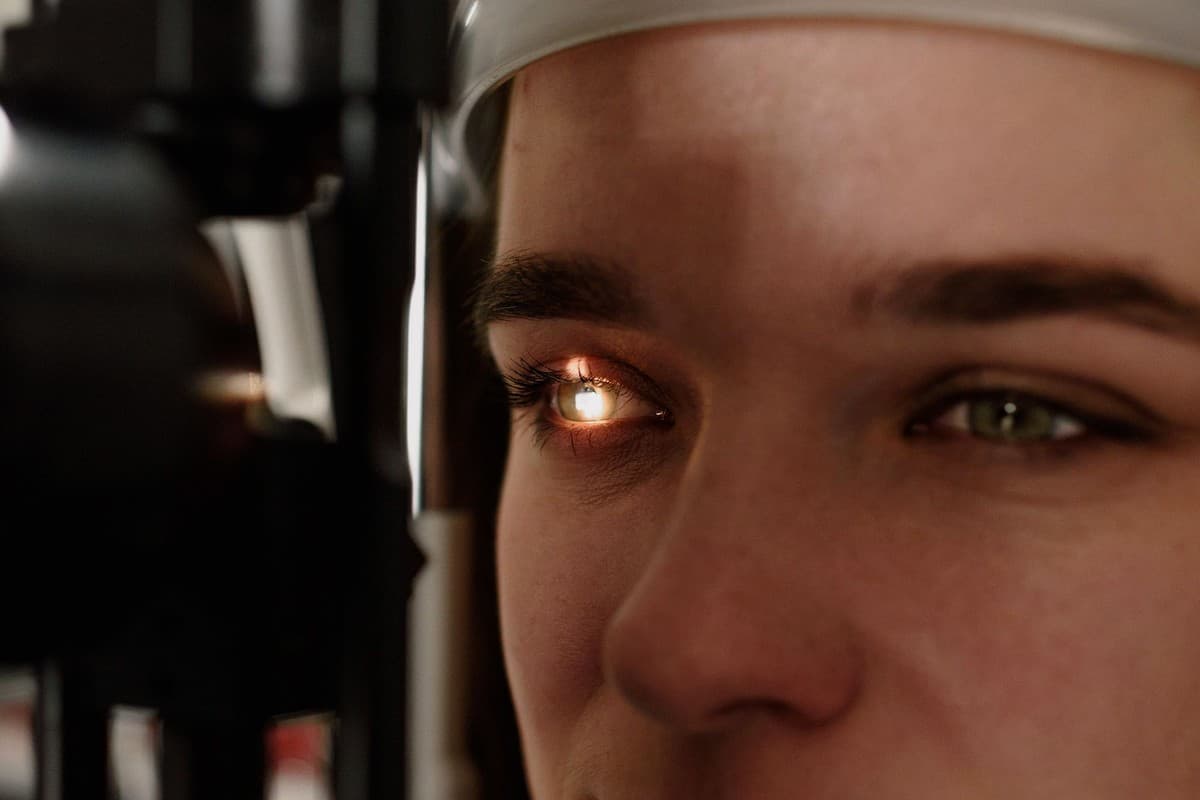
How does hyperopia arise?
Hyperopia is a refractive error in which light tends to focus behind the retina when the eye is not actively focusing. The retina is the light-sensitive layer at the back of the eye. This may occur because the eye is too short from front to back or because the cornea and lens do not bend light sufficiently. The cornea is the clear surface at the front of the eye.
The eye’s own lens changes its shape to focus on near objects. This process is called accommodation. Young people can use this mechanism to also use it to compensate for hyperopia. Therefore, simply stating that a person “sees far clearly” does not alone rule out a refractive error.
Which symptoms occur during near work?
Reading with blurred vision, eye fatigue, and difficulty with close-up work can be associated with hyperopia. Looking at text for extended periods can lead to headaches, or a feeling of needing to take frequent breaks. Because these symptoms are also seen in other eye problems, diagnosis is not solely based on the complaints.
There may not be a reported description of obvious blurred vision in children. Evaluation may be required regarding avoidance of near activities or assessment of one eye turning inward. The presence of a refractive error within the family and previous measurements are part of the examination history. Viewing screens alone is not considered as the sole cause of hyperopia.
How is the prescription measured with dilation drops?
Hyperopia assessment checks whether focusing effort is masking the prescription. Distance and near vision are measured separately in each eye, and different lenses are used to find the best vision. Eye alignment and structures are also examined; an automated printout alone is not a prescription.
Specifically in children, measurements can be taken using drops that temporarily relax the focusing muscle. This evaluation, called cycloplegic refraction, helps to determine hidden hyperopia. These drops can cause temporary blurred vision and light sensitivity; instructions regarding a return to daily activities should be followed.
Sharing information about previous glasses, prescriptions and contact lenses during an eye examination consultation helps compare changes. Samsun eye doctor : assessment considers differences between the eyes, near vision symptoms and a history of eye misalignment together.
Amblyopia and misalignment in children
High hyperopia or a significant difference in refractive error between the two eyes can increase the risk of amblyopia in a child. Amblyopia is defined as a failure of vision to develop adequately during the period of visual development. Whether additional treatment is required besides glasses is determined by whether each eye can see properly.
Some children may develop inward eye movement when trying to see clearly. This is called accommodative esotropia, which refers to an inward deviation associated with focusing. Appropriate glasses may reduce this movement. When glasses are worn, the remaining movement needs to be evaluated differently; the presence of hyperopia alone does not necessitate eye muscle surgery.
Mild hyperopia can be part of development in young children. A measurement does not automatically mean glasses are needed. Refractive error, vision, eye alignment and age are considered together. Avoiding delays in any necessary correction and attending recommended check-ups are important for visual development.
What do plus-powered glasses provide?
Hyperopia glasses, with lenses having a plus diopter, help light focus on the retina. The aim is to support both near and distance vision, and to reduce focusing strain in appropriate situations. The regularity of use and whether it is used in specific activities varies from person to person.
A glasses prescription cannot be selected solely from age or computer use. The needs of both eyes and any astigmatism are calculated together. Proper frame fit is important in children. If discomfort persists with new lenses, lens manufacture, measurements and eye health are reassessed.
Contact lens selection and care
Contact lenses can be an alternative to spectacles for individuals with suitable eye surface and proper care habits. The fit of the lens to the eye, as well as eye discharge and visual quality, are evaluated. Using the spectacle prescription directly to purchase lenses is not an accurate method of selection.
Before touching the lenses, hands should be washed and dried. The recommended care and replacement schedule should be followed. Contact with water and improper nighttime use increase the risk of infection. If there is pain, redness, or a decrease in vision with the lenses, use should be discontinued and a prompt eye examination should be obtained.
Limitations of surgical options in adults
Hyperopia surgery may be considered in adults with suitable eye structure and prescription, with the aim of reducing the need for glasses. Corneal shape and thickness, as well as the stability of the prescription and other eye conditions, are important factors in the decision-making process. Laser vision correction is not suitable for every hyperopic eye.
Lens surgery may also be discussed in some people according to age and the natural lens. The choice is not based solely on prescription strength. Dryness, night-light discomfort or a residual prescription may occur after laser treatment. Infection and other complications affecting vision are assessed separately for intraocular surgery.
Age-related near vision difficulty and follow-up
Hyperopia and presbyopia arise from different mechanisms and can occur together in the same individual. Presbyopia is the natural decrease in the ability of the natural lens to focus up close, which occurs with age. Therefore, a previously compensated hyperopia in an adult may become noticeable, leading to complaints about near vision.
Follow-up assesses not only the prescription but also vision with the chosen correction and daily needs. Visual development and eye alignment are important in children, while healing is assessed after surgery. Follow-up intervals and the need for additional correction vary by individual; reading glasses may become necessary with advancing age after surgery.
Hyperopia Treatment Costs in Samsun in 2026
Fees may vary with the scope of examination and correction method considered. Glasses or lens specifications, required tests and, if surgery is considered, the method and follow-up differ. A plan based on a single procedure or standard fee cannot be made before individual needs are established.
Conclusion
Hyperopia Treatment in Samsun is based on determining vision correction appropriate to age and eye findings. Visual development and alignment in children, and focusing needs and surgical suitability in adults, are assessed separately. The chosen method and follow-up are planned according to individual findings.
Frequently Asked Questions
Does good distance vision rule out hyperopia in a child?
Good distance vision does not rule out hyperopia. Children can compensate through their focusing ability. Measurements after eye drops, when needed, and separate assessment of each eye clarify the situation.
Does every hyperopic child need glasses?
Not every child with hyperopia is automatically prescribed glasses. The decision depends on prescription, age, vision, the difference between the eyes and whether eye misalignment is present.
Is surgery essential if an inward turn improves with glasses?
Surgery is not automatically required for inward deviation corrected with glasses. Residual deviation while wearing glasses and visual development are assessed separately. Eye muscle surgery does not remove the hyperopic prescription.
Does hyperopia begin after forty?
Hyperopia may have been present since childhood. It differs from presbyopia, the age-related decline in near focusing. Previously compensated hyperopia may cause more noticeable symptoms with age.
About this article
Last updated 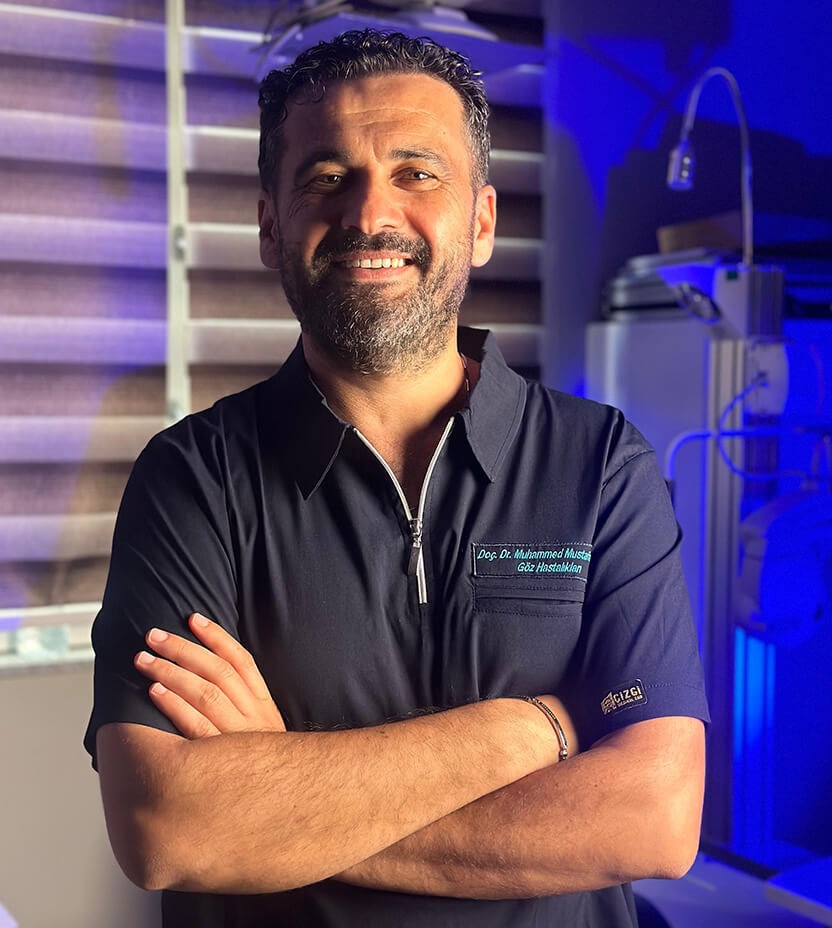
Examination and individual assessmentAssoc. Prof. Muhammed Mustafa Kurt, MD
Ophthalmologist · Atakum, Samsun
- Content preparation
- Editorial information prepared using medical sources.
- Medical review
- The content update date does not indicate that a medical review has been performed by the physician.
Source: the article “Hyperopia Treatment in Samsun” on the practice’s existing website. No additional medical references were specified in the original article.
This article is for general information and does not replace a medical examination. Diagnosis, suitability for treatment and follow-up are determined individually after an eye examination.