

Presbyopia Treatment in Samsun includes managing age-related loss of near focusing and reading difficulty with glasses, contact lenses or surgical options in suitable people.
Difficulty seeing up close, or needing a brighter light, may be a sign of a change in the eye’s focusing ability. Near and distance vision should be evaluated together to select a correction suitable for daily life. Assoc. Prof. Muhammed Mustafa Kurt, MD : assessment can address reading, computer use and other visual needs.

Why does near focusing decline in presbyopia?
Presbyopia is the condition resulting from the decreased flexibility of the natural eye lens with age, leading to a reduction in near focusing ability. It is typically noticed from the forties onward, and the timing and nature of the difficulty experienced can vary from person to person. It becomes difficult to discern small details when the lens is unable to sufficiently change its shape when focusing on near objects.
Hyperopia is a different refractive error associated with the optical structure of the eye. It can be present in the same individual as other conditions. In individuals who can see distant objects clearly without glasses, presbyopia may develop. Using appropriate correction supports decreasing near focusing ability, and does not initiate natural aging.
Reading distance and symptoms
The inability to move the object being read, difficulty selecting small print, and fatigue during close work are common symptoms of presbyopia. Difficulty with dim lighting can be particularly noticeable. Because books, phones, and computer screens are used at different distances, it may not be possible to perform the same task with the same level of comfort using the same glasses.
Near vision may change gradually over time, but this does not normally explain sudden vision loss. New flashes of light, significant pain or a curtain-like shadow in the visual field require an eye assessment without delay. Do not assume that the problem is simply an increase in the reading prescription.
Assessing near and distance vision together
A presbyopia assessment examines distance and near vision in both eyes, refractive errors and overall eye health. The same reading prescription is not given to everyone based only on age. Current glasses, previous prescriptions, working distance and the tasks that bring on symptoms all help with the assessment.
Eye examination : examination may investigate cataract in the natural lens or other problems affecting vision. Cataract is loss of lens transparency and is different from presbyopia. Further investigations are selected according to the findings. Samsun eye doctor : the aim of assessment is to understand visual needs throughout the day, not just the ability to read small print.
Reading glasses and multifocal spectacle lenses
Reading glasses for close-up vision; multifocal lenses can combine different visual needs at various distances. A single vision reading lens may not provide the same clarity for distance. Individuals who require separate correction for distance can use two separate glasses or an appropriate multifocal design.
Bifocal lenses contain two areas for near and distance vision. Progressive lenses provide support for intermediate vision with a gradual change in optical power; there is no distinct line separating the areas. The placement of the frames, and the user’s established wearing habits are important. If discomfort persists, the lenses and prescription should be reevaluated.
The power of reading glasses should also be determined through examination. If accompanying myopia, hyperopia, or astigmatism are present, the lenses selected solely for near vision may not meet the entire visual need. Suitability for computer distance cannot be determined simply by whether a held book appears clear.
Near vision with contact lenses and lens care
Multifocal contact lenses can provide support for both near and distance vision, utilizing different optical zones. The fit of the lens with the eye surface, clarity, and ease of use are all considered together. Each design does not guarantee the same image quality in every eye; if necessary, additional glasses are used for specific purposes.
Lens selection and maintenance are important for eye health. Hands should be washed and dried before touching lenses, and contact with water should be avoided. If redness, pain, or blurred vision develops, the lenses should be removed and an evaluation should be obtained. Daily work requirements do not replace safe usage conditions.
What is monovision and why is it trialled?
Monovision corrects one eye primarily for distance and the other for near vision. It can be used with contact lenses or as part of surgery in suitable individuals. Adapting to the different focus of the two eyes is not equally easy for everyone.
Depth perception and vision may be affected in low light. Tasks such as driving, nighttime vision, and delicate handwork should be discussed during decision-making. Before a permanent procedure, testing with contact lenses can help to understand the suitability of this type of vision for daily life. In some tasks, glasses may still be required.
How are laser and lens surgery assessed?
Surgical options for presbyopia are planned based on individual factors, including eye structure and alternative eyewear choices. Corneal laser surgery alters the shape of the cornea, but does not restore the flexibility of the natural lens that is characteristic of younger eyes. Goals and limitations of techniques such as monovision are explained in advance.
When lens replacement is performed, the natural lens is removed and a synthetic intraocular lens is placed in its place. The presence of cataracts, corneal and retinal health, other refractive errors, and the patient’s expectations all influence the decision-making process. This irreversible procedure does not become necessary solely due to reaching a certain age.
Multifocal intraocular lens surgery refers to multifocal lens procedures that aim to reduce dependence on glasses. The lens’s marketing name does not replace a suitability assessment. Expected gains should be discussed alongside possible risks such as residual refractive error, infection, retinal problems and further intervention.
Vision quality and follow-up expectations
Multifocal lenses may reduce the need for glasses, but do not guarantee perfect vision at every distance or complete freedom from glasses. Halos around lights, glare or reduced contrast may occur. Additional support may be needed to see detail in low light or read small print.
Near vision requirements may change over time even with glasses or contact lenses. Better lighting and larger text can improve everyday comfort. Follow-up after surgery depends on the procedure; do not wait for a scheduled appointment if pain, redness or vision loss increases. Follow-up allows results to be assessed against individual needs.
Presbyopia Treatment Costs in Samsun in 2026
The cost of presbyopia evaluation and correction varies depending on the chosen method and the scope of the examination. Spectacle lenses, progressive lenses, contact lens adaptation, and surgery all represent different processes. The scope can be affected by the choice of lenses and any additional eye problems, as well as the need for ongoing monitoring. Cost information becomes clear following a personal evaluation.
Conclusion
Presbyopia Treatment in Samsun aims to support age-related changes in near vision in a way suited to working distance and eye health. Glasses, contact lenses and surgery address the same need with different limitations. Decisions consider expected vision quality and follow-up needs together.
Frequently Asked Questions
Do reading glasses weaken the eyes?
Appropriate reading glasses do not weaken the eyes. They help correct age-related loss of focusing ability. Needing a different prescription over time does not mean glasses have damaged the natural lens.
Could I need reading glasses despite clear distance vision?
A person with clear distance vision may still develop a need for reading glasses. Presbyopia is reduced near focusing ability. The correction required is determined by measuring near vision.
I have had laser surgery; why can’t I read up close?
Although corneal laser surgery has been performed in the past, the natural lens continues to age. Subsequent refractive errors may be related to presbyopia. The cause must be determined through examination; it does not necessarily prove that the previous procedure was unsuccessful.
Do multifocal lenses remove the need for glasses at every distance?
Multi-focus intraocular lenses do not eliminate the need for glasses at all distances in everyone. Small print, dim environments, or certain tasks may require glasses. Lens selection is considered together with visual quality expectations.
About this article
Last updated 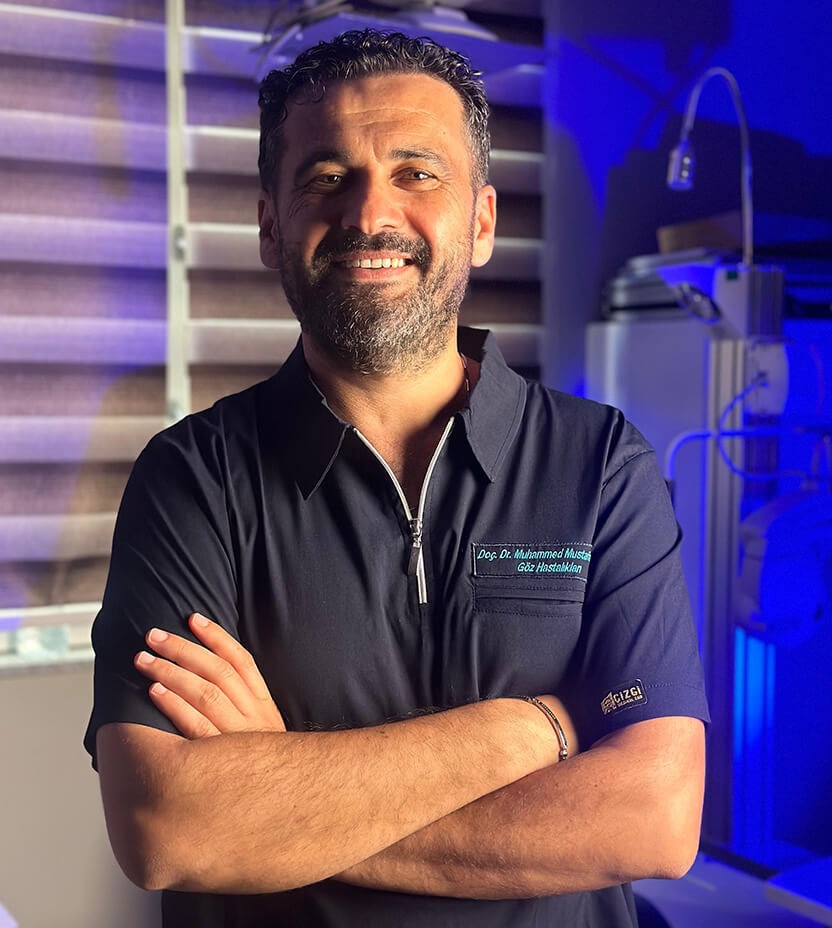
Examination and individual assessmentAssoc. Prof. Muhammed Mustafa Kurt, MD
Ophthalmologist · Atakum, Samsun
- Content preparation
- Editorial information prepared using medical sources.
- Medical review
- The content update date does not indicate that a medical review has been performed by the physician.
Source: the article “Presbyopia Treatment in Samsun” on the practice’s existing website. No additional medical references were specified in the original article.
This article is for general information and does not replace a medical examination. Diagnosis, suitability for treatment and follow-up are determined individually after an eye examination.