

Paediatric Eye Surgery in Samsun includes surgical options selected according to examination findings for conditions that impair children’s visual development or eye structure.
The decision to perform surgery in childhood is made after considering the nature of the condition and its effect on visual development. As important as the timing of the surgery is, so too is the post-operative visual support. Assoc. Prof. Muhammed Mustafa Kurt, MD : the consultation can address the method, alternatives and the child’s individual follow-up needs.
Which childhood eye conditions may require surgery?
Surgery may be considered for strabismus, certain types of cataract and glaucoma, and persistent tear drainage problems. A drooping eyelid that obstructs vision may also fall into this group. The diagnosis is clarified first, because the same symptom can occur in different conditions.
Not all childhood eye conditions are treated with surgery. Glasses, or monitoring with applications supporting vision development, may be sufficient. The purpose of surgery can be to improve eye alignment, remove an obstruction in the visual pathway, or to preserve the structure of the eye. These methods cannot be used interchangeably.
The decision to operate and appropriate timing
The timing of the surgery is determined by considering the impact on visual development caused by the condition, the child’s overall health status, and whether there are any other visual problems that require earlier intervention. There is no single age limit that applies to all procedures. In some cases, it may be appropriate to wait, while in other situations, a visual problem that is hindering vision may necessitate earlier intervention.
During the examination, each eye’s vision, eye movements, and related eye structures are examined. In some young children, evaluation under anesthesia may be required for a detailed examination. This requirement is explained to the family; it is not routinely applied to every child. Previous reports and the response to treatment contribute to the decision-making process.
During the surgical consultation, it should be discussed what benefits are expected, what risks would arise if the procedure is not performed, and non-surgical options. The family’s expectation of simply correcting the appearance of the eyes may not be the same as the physician’s goal of promoting vision development. This difference should be clarified before surgery.
What is done in strabismus surgery?
Surgery for strabismus adjusts the effect of the muscles outside the eye to change the direction of the eyes. Strabismus is when the two eyes do not focus on the same point simultaneously. The attachment point or length of the relevant muscle is adjusted according to the surgical plan; the eyeball is not removed.
The muscles and which eye to be operated on depend on the measurements of the shift. Multiple muscles or both eyes can be evaluated together. Following surgery, spectacle correction or amblyopia monitoring may continue. Having the eyes appear more aligned does not necessarily mean that the vision in both eyes will automatically become equal.
Childhood cataract and optical support
Cataract surgery aims to remove the natural lens, which has lost its transparency within the eye. Cataract is the condition where this lens becomes cloudy. If the cataract affects a child’s vision development due to its density and location, surgery can be planned; however, even small cloudiness does not necessarily require the same approach.
Following the removal of the lens, optical support is needed to focus the image. Intraocular lens, or spectacle or contact lens options, are evaluated based on age and eye structure. In particular, the immediate placement of intraocular lens in infants may not be suitable for everyone.
Contact lens care should be taught to the family; materials and usage plans should be selected according to the individual. Following surgery, amblyopia, which is a deficiency in vision development in one eye, may require additional treatment. Optical correction and monitoring of vision are considered a continuation of the surgery.
Glaucoma and tear drainage procedures
Congenital glaucoma surgery aims to reduce eye pressure and protect the optic nerve. Glaucoma is a group of diseases in which the optic nerve can be damaged. Surgical procedures that regulate the outflow of aqueous humor are frequently considered in congenital forms of glaucoma. Approaches for other childhood glaucoma may differ.
Lowering eye pressure does not necessarily reverse existing damage. Medication, additional procedures and long-term monitoring may be needed. Watering accompanied by marked light sensitivity or clouding of the clear front of the eye must not be assumed to be a blocked tear duct alone.
With a tear drainage obstruction, tears do not drain properly into the nose. In many babies, the problem may resolve on its own. Persistent or significant symptoms may lead to consideration of probing, which opens the duct with a fine instrument. Other supporting methods may be selected when needed; this is entirely different from glaucoma surgery.
Health assessment before surgery
Before the surgery, the child’s conditions, medications, and previous anesthesia experiences are evaluated. If there is a history of serious reaction to anesthesia in the family, the team must be informed. Any new fever, cough, or other symptoms should not be concealed; the team will determine whether to delay the surgery.
The timing of fasting should be determined based on the child’s age, the type of food, and the planned anesthesia. General fasting durations found online do not replace individual instructions. Medications should not be discontinued or changed by the family.
The process can be explained to a child in a way they can understand; frightening details and promises of absolute comfort are not used. Samsun eye doctor : the consultation considers the current childhood eye conditions, previous treatments and the expected surgical outcome together.
Anaesthesia and the day of surgery
In pediatric eye surgery, general anesthesia is frequently used to control movement and pain. General anesthesia is a procedure in which the child’s awareness is closed during the operation, and the surgical team monitors vital functions. Other options can also be considered depending on the child’s age and the specific procedure.
The anesthesiologist develops a plan based on the child’s overall health. Nausea, throat discomfort, or restlessness may be observed during the awakening period. More significant risks, such as respiratory problems and severe allergic reactions, are also considered. Risk assessment is not the same for every child, and there is no guarantee of risk-free outcomes.
The first days and family support
Post-operative care is adjusted according to the type of procedure performed and the findings in the eye. Some procedures may result in redness or discomfort, and the degree of this and when it should be evaluated should be explained during discharge. Returning home on the same day is not suitable for every child.
The drops and protective measures should be applied as described. Rubbing or applying pressure to the eye should be avoided. Personal recommendations are obtained for returning to school, sports, swimming, and play. A calm environment at home and the support of the caregiver will help in the implementation of the recommended plan.
Rapidly increasing severe pain, unexpected vision loss, obvious discharge, or rapidly worsening redness should be reported to the clinic immediately. General symptoms such as difficulty breathing following anesthesia require urgent medical attention. The unit that will be contacted and the scheduled follow-up time should be documented in writing.
Long-term follow-up and possible limitations
Following pediatric eye surgery, visual development and the likelihood of the condition recurring can be monitored for a prolonged period. Examinations are not solely conducted to evaluate wound healing. The need for spectacles, the alignment of the eyes, and any intraocular pressure are also monitored.
Risks are evaluated based on infection, bleeding, inflammatory response, or failure to achieve the desired effect. Some children may require additional surgery. Following cataract surgery, problems such as increased pressure can occur, so, even if symptoms subside, recommended follow-up appointments should not be discontinued.
Paediatric Eye Surgery Costs in Samsun in 2026
The cost of pediatric ophthalmology can vary depending on the method used, the anesthesia applied, and the hospital and follow-up requirements. The evaluation of one or both eyes, as well as the materials used and additional tests, also affect the scope of the procedure. It is not appropriate to state a fixed fee or an estimated price range without a thorough examination.
Conclusion
Paediatric Eye Surgery in Samsun includes different procedures selected according to the diagnosis and the child’s visual development. The reasons for surgery, alternatives and risks should be discussed with the family. Continuing optical support and follow-up after surgery is an important part of the plan.
Frequently Asked Questions
Should surgery wait until the child grows older?
It is not appropriate to expect growth in every disease. In conditions that prevent vision development, early surgery may be necessary. The timing of surgery is determined by considering diagnostic findings, examination results, and anesthesia evaluation.
Can glasses be stopped after strabismus surgery?
Strabismus surgery does not always eliminate the need for glasses. Muscle correction and the correction of vision with glasses are intended for different purposes. Glasses or patching regimens are maintained based on the findings of an eye examination.
Is one operation enough for both eyes?
The procedure can be performed in a single session or over multiple sessions, depending on the diagnosis and surgical plan. The plans for strabismus and cataract surgeries are not the same. It should not be assumed that all problems can be solved with a single operation.
Can surgery be postponed if a child is ill?
New symptoms of the disease should be reported to the surgical and anesthesia team. A decision is made after evaluating the urgency of the procedure and the patient’s overall health status. The patient or their family should not attempt to conceal symptoms or change medications on their own.
About this article
Last updated 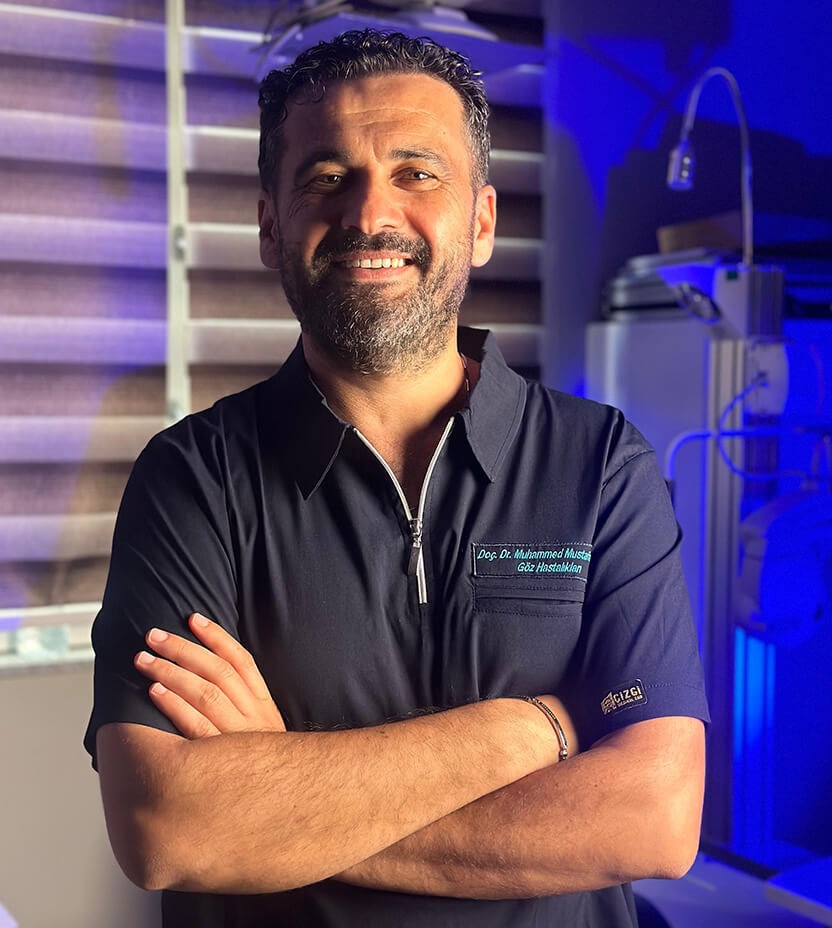
Examination and individual assessmentAssoc. Prof. Muhammed Mustafa Kurt, MD
Ophthalmologist · Atakum, Samsun
- Content preparation
- Editorial information prepared using medical sources.
- Medical review
- The content update date does not indicate that a medical review has been performed by the physician.
Source: the article “Paediatric Eye Surgery in Samsun” on the practice’s existing website. No additional medical references were specified in the original article.
This article is for general information and does not replace a medical examination. Diagnosis, suitability for treatment and follow-up are determined individually after an eye examination.