

Laser Vision Correction in Samsun is refractive surgery that reshapes the cornea with a laser for errors such as myopia, hyperopia and astigmatism.
The main aim is to establish the appropriate diagnosis or treatment plan from the person’s eye examination findings. Samsun eye doctor : an examination is the first step in assessing the eye’s structure, the existing condition and possible risks together.
Assoc. Prof. Muhammed Mustafa Kurt, MD : assessment considers the patient’s symptoms, examination findings and necessary measurements together. After explaining expected benefits and possible risks, treatment is planned individually.
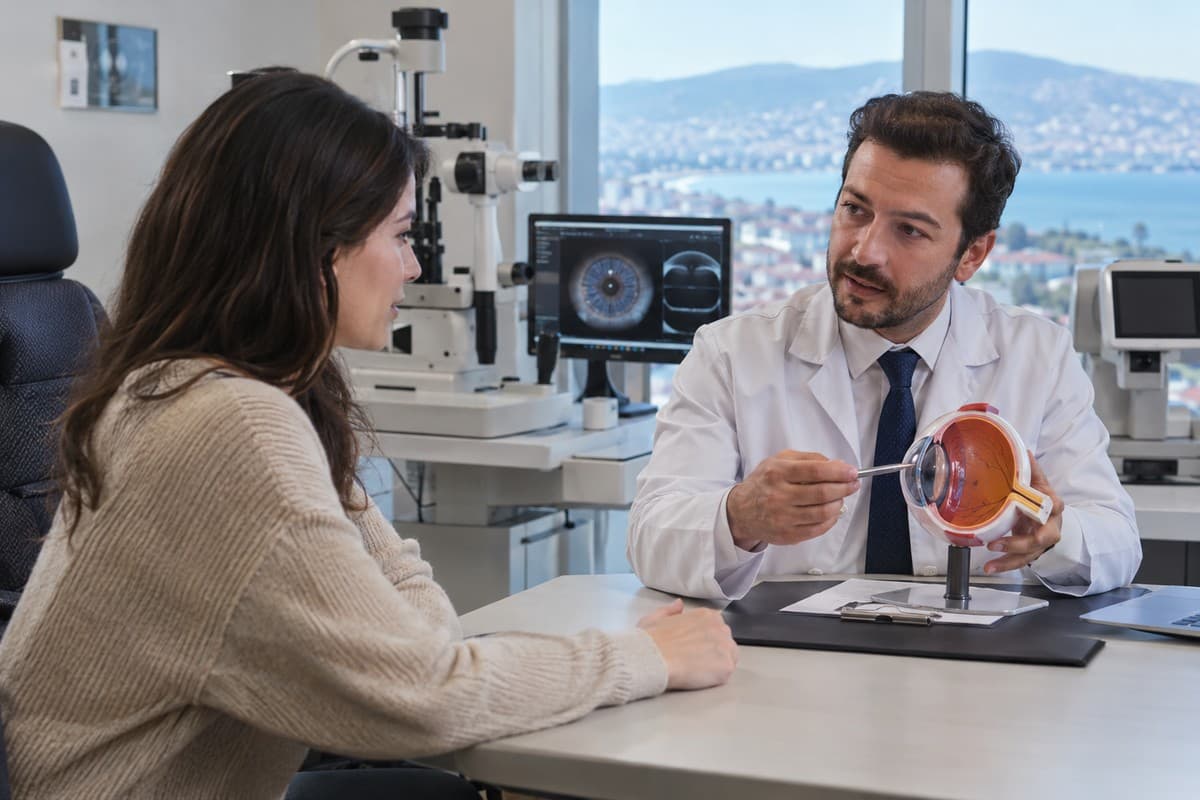
What Is Laser Vision Correction?
Laser eye surgery is the general term for refractive surgery procedures that reshape the cornea in a controlled manner, with the aim of changing the eye’s refractive power, and thereby assisting light to focus more accurately on the retina, and reducing the need for glasses or contact lenses in suitable patients.
There is not a single laser method. Considering corneal thickness, corneal mapping, the type and degree of refractive error, the ocular surface, age, and daily life needs, one of the options such as Femto-LASIK, SMILE, PRK, or TransPRK is planned, after evaluating which is suitable.
How Are Myopia, Hyperopia and Astigmatism Corrected?
In myopia, the refractive power of the cornea is reduced; in hyperopia, the central and peripheral curvature of the cornea are regulated in different ways. In astigmatism, an attempt is made to balance the refractive power of the cornea along different axes. The amount of correction applied depends not only on the refractive error, but also on the safe tissue limits of the cornea.
Who May Be Suitable for Laser Vision Correction?
Laser treatment may generally be considered for adults with a prescription that has been stable for a certain period, suitable corneal structure and no contraindication on a detailed eye examination. Age alone is not sufficient; corneal biomechanics and the condition of the eye surface also inform the decision.
Keratoconus or suspected corneal irregularity, a very thin cornea, active ocular surface disease and certain systemic conditions may change the laser treatment plan. Prescription limits found online therefore cannot replace an individual assessment of suitability.
Who May Be Unsuitable for Laser Eye Surgery?
If there are irregularities in corneal topography, an active infection or inflammation, uncontrolled dry eye, progressive refractive error, or some issues related to the retina and optic nerve, the procedure may be postponed or a different method may be considered. Furthermore, due to the possibility of changes in refractive error measurements during pregnancy and breastfeeding, the timing is also evaluated separately.
Examination and Tests Before Laser Vision Correction
Visual acuity and refractive error are measured before treatment; topography or tomography examines the front and back corneal surfaces. Pachymetry measures corneal thickness. Pupil size, the tear film, intraocular pressure and fundus examination also inform planning.
For patients who use contact lenses, it may be advisable to take a break from wearing the lenses prior to an examination in order to allow the cornea to return to its natural shape. The duration of this break should be determined based on the type of lens and the condition of the eyes, and the recommendation of the team performing the examination should be followed, rather than a standard duration.
Why Are Corneal Topography and Pachymetry Important?
Topography and tomography help identify corneal irregularities, such as keratoconus, that may make laser treatment risky. Corneal thickness measurements help determine whether enough corneal tissue can safely remain after treatment. A method should not be selected solely on the basis of a glasses prescription without these measurements.
What Are the Types of Laser Vision Correction?
In Femto-LASIK, a thin flap is created on the cornea, and the excimer laser shapes the deeper stromal tissue. In SMILE, a small tissue fragment created within the cornea is removed through a small incision. PRK and TransPRK are techniques applied directly on the surface of the cornea.
The speed of the methods, the surgical changes created on the cornea, and the suitability criteria vary. Instead of “the best laser,” it is necessary to select the method that has the most appropriate risk-benefit balance for a specific eye.
Differences Between Femto-LASIK, SMILE and PRK
Femto-LASIK typically provides faster visual recovery, but a corneal flap is created. SMILE is performed through a smaller incision and may be preferred for certain refractive errors. In PRK and TransPRK, there is no flap; discomfort and slower visual recovery may be observed in the initial days as the corneal epithelium heals.
How Is Laser Vision Correction Performed?
Prior to the procedure, the surface of the eyes is anesthetized with eye drops, and the eyelids are kept open under controlled observation. According to the chosen method, the cornea is precisely shaped with a laser at a micron level in the selected area. In modern devices, systems that monitor eye movements assist with focusing during treatment.
During the procedure, the patient is asked to look at the target light in the device. Although surgical steps differ by method, the aim is to apply the planned correction to the cornea within safe limits.
How Long Does Laser Eye Surgery Take?
The duration for which the laser is active is typically quite short in most applications; however, the preparation, positioning of the eye, and evaluation of both eyes can extend the total time. It is not correct to evaluate the duration as a sole measure of quality.
Recovery After Laser Vision Correction
Recovery depends on the method. Vision usually recovers earlier after LASIK and SMILE, while blurring, stinging, watering and light sensitivity may be more noticeable in the first days after surface laser treatment because the epithelium needs to heal.
Fully settled vision is different from vision adequate for daily tasks. Fluctuation and dryness may occur in the first days; the final assessment is made at follow-up examinations.
When Can Daily Activities and Screen Use Resume?
Return to desk work, screens and light activity depends on the method and individual recovery. Take frequent breaks early on, avoid rubbing the eye and avoid environments that dry the ocular surface. A doctor should confirm that vision is safe for driving.
What Should I Consider After Laser Vision Correction?
The prescribed drops should be used as instructed, and contact with the eyes, pressure, and impact should be avoided. The waiting times specified by the physician should be observed in situations such as swimming, the sea, intense exercise, use of eye makeup, and dusty environments.
Do not miss checks even if you feel well. Dry eye symptoms may temporarily increase, and recommended ocular surface treatments can support visual comfort during this period.
What Are the Risks of Laser Vision Correction?
Temporary dryness, light scattering, halos or glare at night, a result that differs from the intended refractive target, and fluctuating vision may occur. Less commonly, there may be problems with corneal healing or complications specific to the surgical technique. The level of risk depends on the eye’s initial characteristics.
Severe pain, obvious redness, sudden vision loss, or progressively worsening symptoms should not be considered normal and must be evaluated promptly.
Is There a Prescription Limit for Laser Surgery?
The range of correction depends more on corneal safety than on the capabilities of the device. Two people with the same prescription may have different corneal thickness, topography and pupil characteristics. Suitability for laser surgery therefore cannot be determined solely from the degree of myopia, hyperopia or astigmatism. Other refractive surgery options may need to be considered for high prescriptions.
How Does Dry Eye Affect Laser Planning?
Eye surface health affects both the accuracy of measurements and post-operative comfort. If there is pronounced dry eye, firstly, a tear film is examined and issues with the eyelids are evaluated. Controlling dry eye can contribute to more reliable corneal measurements and better management of complaints such as discomfort, burning, or fluctuating vision following surgery.
What Do Wavefront and Personalised Laser Treatment Mean?
Some laser systems can use measurements of higher-order optical aberrations or corneal mapping, in addition to standard refractive measurements, to plan the treatment profile. These technologies are not required for every patient. The value of a particular customised approach depends on the device and the patient’s optical characteristics.
How May Night Vision Be Affected After Laser Surgery?
In the first few weeks, halos, light scattering or glare may occur around lights. Ocular surface dryness and large pupils may affect these symptoms. They are expected to decrease over time in most people. Persistent symptoms or those affecting daily life require reassessment of the ocular surface, residual refractive error and corneal structure.
When Can Sport and Swimming Resume After Laser Surgery?
Light exercise may be resumed earlier, while swimming, contact sports and activities with a risk of eye injury may require a longer wait. Timing depends on the method used. Protection from injury is especially important early after procedures that create a corneal flap.
Laser Vision Correction Costs in Samsun in 2026
Samsun laser eye surgery prices can vary depending on the method selected in 2026, the necessary measurements, and the scope of the surgical plan. It is not correct to create a personalized treatment and price plan for an individual without undergoing an examination.
This content does not provide fees, promotional offers or discounts. Treatment suitability and scope should be explained after the examination as part of the healthcare provider’s information process.
Conclusion
Laser Vision Correction in Samsun is an eye care service that requires appropriate patient selection and regular follow-up. Suitability should be determined by assessing all structures of the eye, rather than symptoms or a single measurement alone.
This content is intended for general informational purposes only and should not be used as a substitute for personal diagnosis or treatment. Results and the healing process may vary from person to person. If you have any concerns or require treatment, it is essential to consult with an eye specialist.
Frequently Asked Questions
Is laser vision correction permanent?
The change made to the cornea is permanent. However, age-related eye changes and, in some people, regression of the refractive correction may lead to a need for glasses over time.
Can the prescription increase again after laser surgery?
Some patients may have small prescription changes over time. Risk relates to age, the initial prescription, corneal features and how stable the prescription was before the procedure.
Can laser eye surgery be performed after age 40?
It may be performed in suitable eyes, but near vision needs due to presbyopia are assessed separately. Correcting the distance prescription may not remove the need for reading glasses.
Can both eyes receive laser treatment in the same session?
With many refractive laser methods, both eyes can be treated in one session. Whether this is appropriate depends on the method and individual eye findings.
About this article
Last updated 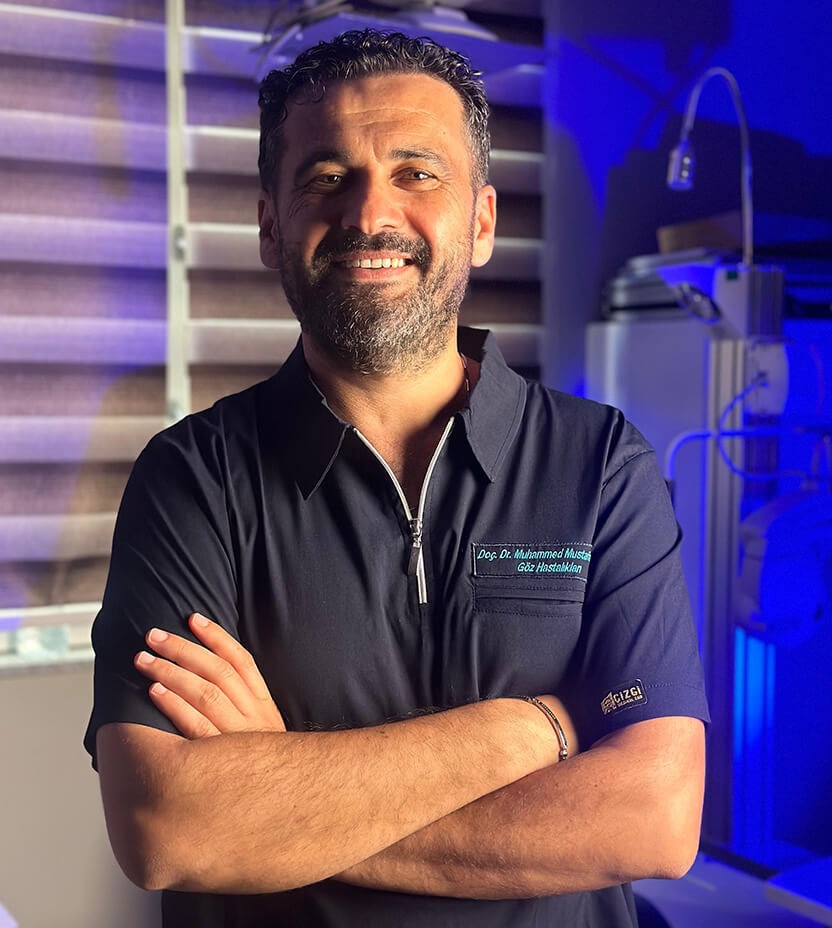
Examination and individual assessmentAssoc. Prof. Muhammed Mustafa Kurt, MD
Ophthalmologist · Atakum, Samsun
- Content preparation
- Editorial information prepared using medical sources.
- Medical review
- The content update date does not indicate that a medical review has been performed by the physician.
This article is for general information and does not replace a medical examination. Diagnosis, suitability for treatment and follow-up are determined individually after an eye examination.