

Paediatric Ophthalmology in Samsun assessment examines visual development, eye alignment and eye health in babies and children using appropriate methods.
The child stating that they see well does not necessarily indicate that both eyes are equally effective. The examination involves considering the patient’s complaints, developmental characteristics, and any existing eye conditions within the family. Assoc. Prof. Muhammed Mustafa Kurt, MD : assessment can address the child’s examination and follow-up needs.
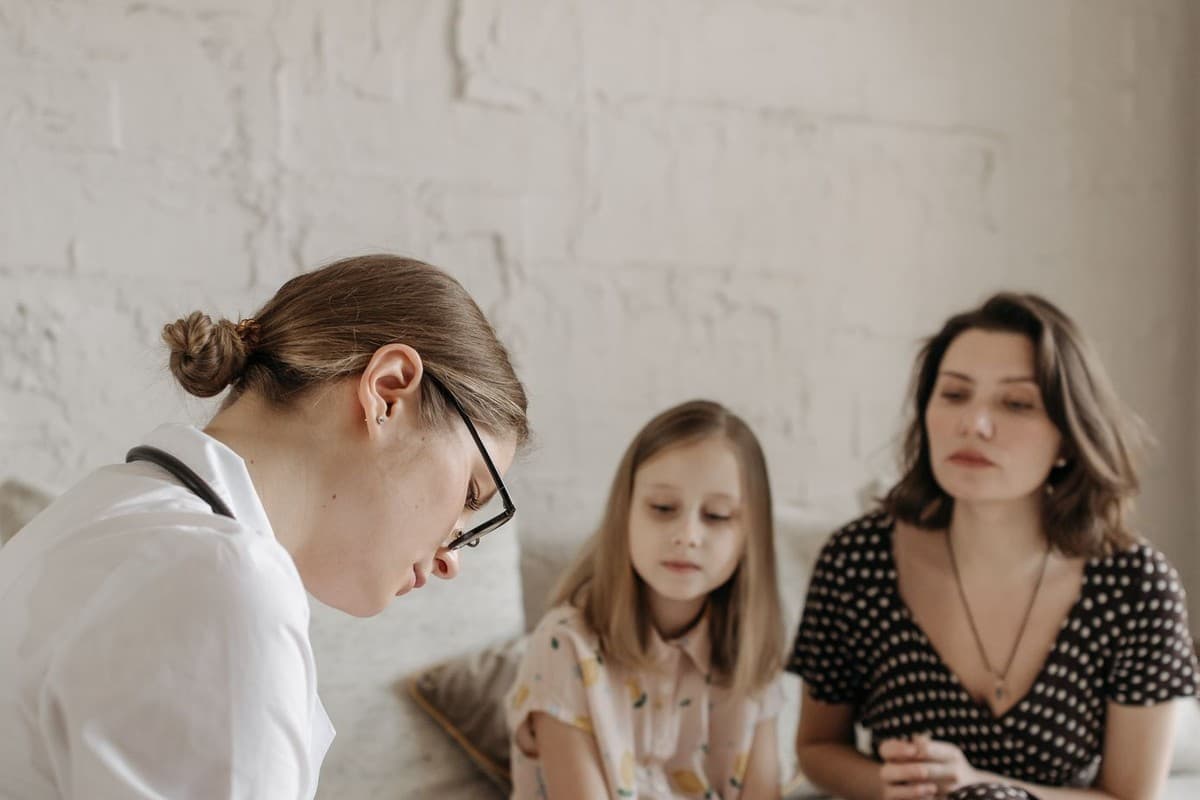
What a children’s eye assessment covers
A paediatric eye assessment examines vision as well as the structure, movements and coordination of the eyes. It involves more than measuring a glasses prescription. The eyelids, pupil responses and internal eye structures are also assessed according to the findings.
During the initial examination, a detailed medical history is taken, including information about premature birth, previous eye treatments, and whether there is a history of strabismus or amblyopia in the family. The scope of the examination is not the same for all children; the method of administration is adapted according to developmental differences or communication difficulties.
Vision problems that can develop without symptoms
Children, especially, may not notice or be able to describe a decrease in vision in one eye. Amblyopia is a condition where the brain is unable to adequately use the image coming from one eye during visual development. This can occur even when the eyes appear normal from the outside.
Different prescriptions between the eyes, a significant need for glasses or misaligned eyes can affect visual development. Strabismus means the eyes do not point at the same target together. Not all strabismus causes amblyopia, but they are assessed together. An absence of symptoms is not sufficient reason to disregard risk history.
Signs a family may notice
Eye misalignment, persistent head tilting or getting very close to objects may require an eye assessment. Frequent eye rubbing, fatigue while reading or closing one eye to look should also be reported. These signs alone do not diagnose a particular disease.
If a white reflection is observed in the pupil, it should be reported to an ophthalmologist immediately. Although some photographs may produce similar images under certain shooting conditions, families should not automatically consider this to be normal. Sudden vision loss, noticeable eye pain, or eye trauma require urgent evaluation.
Assessing vision in a baby who cannot speak
Babies’ vision can be assessed before they can speak or recognise letters. Looking at and tracking an object and movements of both eyes are examined using age-appropriate methods. Pupil responses to light and the red reflex also help assessment.
Toys or attention-catching shapes may be used to direct a baby’s gaze. These are not home diagnostic tests. A premature baby’s recommended specialist eye follow-up must not be postponed to wait for general screening.
Examining each eye separately and measuring refraction with drops
Each eye should be evaluated separately to prevent one eye’s visual impairment from being masked by the other. Age-related visual tasks, such as matching images, shapes, or letters, can be used. A failure to cooperate during a test does not necessarily mean the child is seeing things badly.
Children’s focusing ability can affect measurements. Drops used when needed temporarily relax focusing, allowing more reliable measurement of refractive error—the prescription problem affecting how images focus in the eye. Pupil dilation also helps examine internal structures.
Drops may cause brief stinging, blurred vision when looking at near objects, and sensitivity to light. The duration of the effect varies depending on the product used and the individual. Previous medication reactions should be reported to the doctor. The name, quantity, and time of application of the drops should not be determined by the family themselves.
Considering glasses and other treatments
The need for glasses depends on the measured refractive error, the child’s vision and how the eyes work together. Prescribed glasses do not make the eyes lazy. A frame that fits the face and lenses positioned correctly in front of the eyes are important for use.
For amblyopia, patching the better-seeing eye for specified periods may be considered alongside glasses. Patching time differs between children and is monitored according to visual response. For structural problems or certain forms of strabismus, paediatric eye surgery may be considered. Surgery is not a universal treatment for all childhood vision problems.
How families can prepare for the examination
Providing information about previous eyeglasses, prior reports, and details on medications used supports the evaluation. It is important to describe when the symptoms began, whether they are constant or intermittent, and under what circumstances they increase. Any previous eye surgeries or drop reactions should also be noted.
It may be helpful to provide the child with an age-appropriate, brief explanation and a calming toy. It should not be stated that the examination will not cause any discomfort. Samsun eye doctor : family observations matter in assessment but do not replace examination findings.
Monitoring vision at school and in daily life
Difficulty in seeing the blackboard or working up close at school may require a review of vision assessment. The teacher’s observations can assist the family. However, any reading difficulty or attention problem does not necessarily stem from an eye condition.
The fit of eyeglasses, the movement of eyeglasses, and reports of discomfort while using them should be discussed during follow-up appointments. If fatigue is present during close work, the working conditions and visual findings should be evaluated together. Creating artwork or playing games at home provides an opportunity to observe a child’s behavior; however, it does not provide definitive results regarding measured visual acuity.
Why is follow-up planned individually?
Follow-up intervals depend on the child’s age, diagnosis, vision and treatment response. Receiving a glasses prescription does not remove the need for follow-up. Changes in the difference between the eyes and their alignment are monitored together.
The family should clearly communicate any difficulties they experience with glasses or patching. If the plan is concealed and cannot be implemented, the treatment response may be misinterpreted. Simply waiting for the pre-determined follow-up date when a new symptom appears may not be appropriate.
Children’s Eye Examination Costs in Samsun in 2026
The cost of a pediatric eye examination can vary depending on the scope of the examination and any necessary additional tests. The initial assessment, follow-up, and any required supplementary tests may not constitute a single service item. Spectacle provision or surgical planning are also considered separately. It is not accurate to provide a fixed price or an estimated price range.
Conclusion
Paediatric Ophthalmology in Samsun assessment considers visual development and eye health using methods suited to the child’s age. The absence of reported symptoms does not establish that both eyes are healthy. Examination findings, family history and changes during follow-up help determine an appropriate approach.
Frequently Asked Questions
Can my child be examined before learning letters?
Yes, vision assessments can be performed using methods that do not require letter recognition. In infants, looking and tracking behavior is used, while in older children, shape or picture matching is utilized. The tests applied are selected according to the developmental level.
Does wearing glasses weaken a child’s eyes?
Glasses with an appropriate prescription do not weaken the eyes. They help focus images more accurately. Changes in the prescription may be related to growth and the eye’s characteristics; they should not be assumed to result from wearing glasses.
Will a child notice a problem if one eye sees well?
The child may not be able to perceive the difference because they can still perform daily tasks with one eye. Therefore, both eyes are evaluated separately. The absence of any observed problems by the family does not mean that there are no issues detected during the examination, where both eyes appear equal.
Can my child study after a dilated eye examination?
Temporary blurred near vision may make reading and writing difficult. Parents and teachers should be informed about this effect. The return to daily activities depends on how long the drops affect the child and the doctor’s advice for that child.
About this article
Last updated 
Examination and individual assessmentAssoc. Prof. Muhammed Mustafa Kurt, MD
Ophthalmologist · Atakum, Samsun
- Content preparation
- Editorial information prepared using medical sources.
- Medical review
- The content update date does not indicate that a medical review has been performed by the physician.
Source: the article “Paediatric Ophthalmology in Samsun” on the practice’s existing website. No additional medical references were specified in the original article.
This article is for general information and does not replace a medical examination. Diagnosis, suitability for treatment and follow-up are determined individually after an eye examination.