

Dry eye is a chronic ocular surface disease in which an insufficient quantity or quality of the tear film leaves the surface of the eye inadequately lubricated and protected. The tear film is a thin layer covering the cornea and conjunctiva, and it plays critical roles in maintaining the optical quality of the eye, defending against infection and nourishing the ocular surface. Disruption of this film leads to drying, inflammation and tissue damage on the ocular surface, causing symptoms that significantly affect the patient's quality of life. Dry eye has become one of the most common eye diseases today, and its prevalence is steadily increasing, particularly as digital screen use becomes more widespread.
The tear film consists of three main layers that work together. The outermost oil (lipid) layer prevents tear evaporation, the middle watery (aqueous) layer lubricates and nourishes the ocular surface, and the innermost mucin layer allows tears to spread evenly across the surface of the eye. Insufficient production or impaired quality of any of these layers can lead to dry eye. Identifying the affected layer and the underlying mechanism is essential for treating the condition correctly.
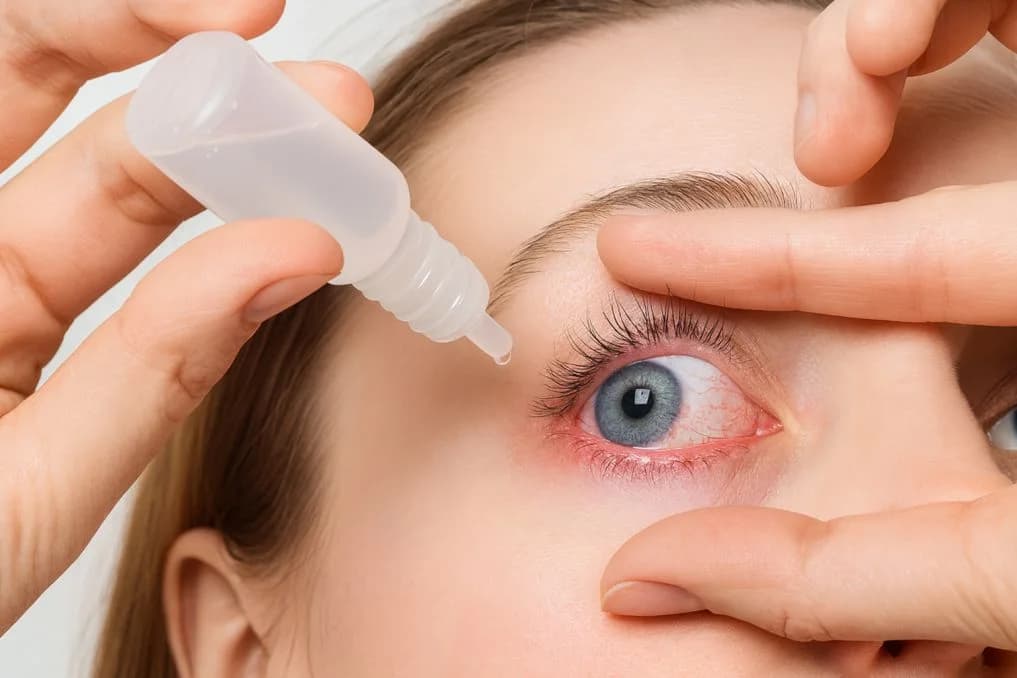
Causes of Dry Eye
The causes of dry eye are considered under two main mechanisms: reduced tear production and increased tear evaporation. The best-known cause of dry eye resulting from reduced tear production is ageing. The secretory capacity of the lacrimal glands gradually declines with age. Autoimmune diseases such as Sjögren's syndrome, rheumatoid arthritis and lupus can directly affect the lacrimal glands, causing severe dry eye. Certain medications can also reduce tear production. Antihistamines, decongestants, antidepressants, beta blockers, oral contraceptives and isotretinoin used for acne are among the medications commonly associated with this effect.
The most common cause of dry eye resulting from increased tear evaporation is meibomian gland dysfunction. The meibomian glands in the eyelids produce the oil layer of the tear film, and blockage of these glands or deterioration in the quality of their secretions causes tears to evaporate rapidly. Prolonged screen use significantly reduces blinking frequency, extending the time during which the ocular surface dries out. Dry and windy weather, air-conditioned or heated indoor environments, contact lens use and previous laser eye surgery are also important contributing factors. As prolonged screen use has become more widespread, the prevalence of dry eye has also increased significantly in younger age groups.
Symptoms of Dry Eye
Although dry eye symptoms vary from patient to patient, the most common complaints include stinging, burning, redness and a foreign body sensation in the eyes. Patients may describe a gritty feeling or a sensation that something is stuck in the eye. Symptoms tend to become more pronounced in windy environments, after prolonged screen use and in air-conditioned spaces. A feeling that the eyes are stuck together or dried out on waking in the morning is also a common complaint.
A paradoxical symptom of dry eye is excessive watering (reflex tearing). When the ocular surface is not adequately lubricated, a reflex mechanism prompts the lacrimal glands to release a sudden, large quantity of tears. However, these reflex tears are of poor quality and rich in the watery component, so they cannot adequately protect the ocular surface. Blurred vision is another common symptom of dry eye. An irregular tear film causes optical irregularities on the corneal surface, producing fluctuating blurriness, particularly during reading and screen use. This blurriness, which temporarily improves with blinking, is a characteristic reflection of the effect of dry eye on visual quality. In contact lens wearers, reduced lens tolerance, discomfort while wearing lenses and shorter wearing times may also be important indicators of dry eye.
How Is Dry Eye Diagnosed?
Dry eye is diagnosed by assessing the clinical examination, the patient's symptoms and specific tests together. The severity of the patient's complaints and their effect on daily life can be objectively scored using standard questionnaires such as the OSDI and DEQ-5. Slit-lamp examination assesses tear meniscus height, damage to the corneal and conjunctival epithelium on the ocular surface, and tear film stability. Damage to the ocular surface becomes more apparent when stained with vital dyes such as fluorescein and lissamine green, revealing its extent and severity.
The tear break-up time (TBUT) test is a basic diagnostic test that measures how long the tear film remains stable on the ocular surface. After fluorescein is instilled, the patient is asked to keep the eye open without blinking, and the time until the first dry spot appears in the tear film is recorded. A time of less than 10 seconds indicates tear film instability. The Schirmer test measures tear production using a special strip of filter paper placed inside the lower eyelid. The amount of wetting on the paper is assessed after five minutes. Meibography imaging can be used to assess the structural condition of the meibomian glands in the eyelids and the extent of gland loss. Evaluating these tests together helps the physician determine the underlying mechanism and severity of dry eye.
Types of Dry Eye
Dry eye is broadly divided into two types according to its underlying mechanism. In aqueous-deficient dry eye, the lacrimal glands cannot produce a sufficient quantity of tears. This type accounts for a smaller proportion of dry eye cases. Its most prominent cause is an age-related decline in lacrimal gland function. Sjögren's syndrome causes one of the most serious forms of this type, with severe dry eye developing as a result of autoimmune damage to the lacrimal glands. Markedly low values on the Schirmer test are an important indicator in diagnosing this type.
Evaporative dry eye accounts for the vast majority of all dry eye cases. In this type, tear production may be sufficient, but a disorder of the oil layer of the tear film causes tears to evaporate from the ocular surface faster than normal. Meibomian gland dysfunction is the most common cause. Blepharitis, rosacea, prolonged screen use and contact lens use are among the other factors that increase evaporation. Many patients have mixed dry eye, in which both mechanisms are present. Effective treatment requires the predominant mechanism to be correctly identified and the treatment approach to be tailored accordingly.
Meibomian Gland Dysfunction (MGD)
The meibomian glands are specialised oil glands located within the inner surfaces of the upper and lower eyelids that produce the oil layer of the tear film. Each eyelid contains approximately 25 to 40 meibomian glands. The lipid secretion produced by these glands forms the outermost layer of the tear film, preventing tears from evaporating from the ocular surface. In meibomian gland dysfunction, the gland ducts become blocked, the quality of the secretion deteriorates or the amount of secretion decreases. As a result, the lipid layer of the tear film becomes insufficient, and tears evaporate faster than normal, leading to dry eye.
MGD is usually a slowly progressing chronic process and may not cause noticeable symptoms in its early stages. In advanced cases, redness, thickening and irregularity of the eyelid margin and plugs at the gland openings may be observed. When secretions are expressed (squeezed out) from a meibomian gland, the material, which should normally be clear and fluid, may appear cloudy, granular or toothpaste-like. Eyelid hygiene and warm compresses are the basic approaches to treating MGD. A warm compress helps melt the hardened oil in the meibomian glands, supporting the opening of blocked ducts. Eyelid massage after the compress helps the secretions drain from the glands. In resistant cases, advanced treatment options such as IPL laser treatment and thermal pulsation devices such as LipiFlow may be considered.
The Relationship Between Blepharitis and Dry Eye
Blepharitis is chronic inflammation of the eyelid margins. It frequently occurs alongside dry eye, with the two conditions reinforcing each other. Anterior blepharitis involves bacterial colonisation and flaking near the bases of the eyelashes, while posterior blepharitis involves inflammation and dysfunction of the meibomian glands. Posterior blepharitis directly overlaps with MGD. Chronic inflammation caused by blepharitis disrupts the composition and stability of the tear film, triggering or worsening dry eye. Surface inflammation caused by dry eye can, in turn, increase eyelid margin inflammation and worsen blepharitis, creating a vicious cycle.
Treating blepharitis is a critical component of dry eye management. Daily eyelid hygiene is the foundation of this treatment. After the eyelids have been warmed with a clean compress, the lid margins are gently wiped with special cleansing solutions or diluted baby shampoo to remove debris and flakes at the bases of the eyelashes. Maintaining this routine regularly makes a substantial difference in keeping symptoms under control. Topical antibiotic ointments may be used when bacterial infection is prominent. In chronic and resistant posterior blepharitis, the physician may consider low-dose oral antibiotics such as doxycycline or azithromycin for their anti-inflammatory effects. In patients with rosacea, inflammation of the facial skin also contributes to eyelid margin inflammation, so concurrent dermatological treatment may be beneficial.
Dry Eye Treatment
Dry eye treatment is planned in a stepwise manner according to the type, severity and underlying cause of the condition. Artificial tear drops are the cornerstone of treatment in mild cases. They help relieve symptoms by lubricating the ocular surface and supporting the tear film. Preservative-free formulations in single-dose containers are preferred, particularly for patients who need frequent use, to avoid damage to the corneal surface. Lipid-based artificial tear preparations may provide longer-lasting relief in evaporative dry eye by supporting the oil layer.
Anti-inflammatory treatment becomes a priority in moderate to severe dry eye. Eye drops containing cyclosporine A or lifitegrast aim to increase tear production and improve ocular surface health by suppressing chronic inflammation on the surface of the eye. These drops are long-term treatment agents that may take several weeks to take effect. Inserting punctal plugs made of silicone or collagen is a mechanical method that blocks the tear drainage channels, allowing existing tears to remain on the ocular surface for longer. Autologous serum eye drops are a special preparation made from the patient's own blood, containing growth factors similar to those in natural tears, and may be used in severe and resistant cases. The treatment plan is individualised according to the patient's examination findings, and the response to treatment is assessed at regular follow-up appointments so that any necessary adjustments can be made.
Ways to Prevent Dry Eye
Lifestyle changes play an important role in preventing dry eye and keeping existing symptoms under control. During prolonged screen use, consciously increasing blinking frequency and looking away from the screen at a distant point for 20 seconds every 20 minutes is an effective practice for reducing drying of the ocular surface. Positioning the computer screen slightly below eye level narrows the eyelid opening, reducing the surface area exposed to evaporation, and may alleviate dryness.
Adjusting the air quality in working and living environments significantly affects dry eye symptoms. Using a room humidifier in air-conditioned or heated spaces helps maintain moisture in the air. Wearing protective glasses in windy and dry weather can protect the ocular surface from environmental effects. Avoiding cigarette smoke and air pollution is important for reducing irritation of the ocular surface. Adequate water intake may indirectly support tear production by contributing to overall body hydration. There is scientific evidence that eating foods rich in omega 3 fatty acids, such as oily fish, walnuts and flaxseed, may positively affect meibomian gland function and tear quality. For contact lens wearers, carefully following lens hygiene rules and avoiding wearing lenses beyond the recommended durations are also important in preventing dry eye from worsening.
Frequently Asked Questions
Is dry eye a permanent condition?
Dry eye is usually a chronic condition, and it may not always be possible to eliminate it completely. However, appropriate treatment and lifestyle changes can bring symptoms largely under control and significantly improve the patient's quality of life. Temporary dry eye caused by medication use or environmental factors may resolve completely when the cause is removed.
Does dry eye affect vision?
Dry eye can negatively affect visual quality. Irregularities in the tear film can cause optical distortion on the corneal surface, producing fluctuating blurriness, particularly during reading and screen use. In severe, untreated dry eye, damage to the corneal surface may develop, creating the conditions for more persistent vision problems.
Can dry eye develop after laser eye surgery?
Temporary dry eye is common after laser eye surgery. Cutting nerves on the corneal surface during surgery can temporarily reduce the blinking reflex and tear production. This usually resolves on its own within a few months, but some patients may continue to experience long-term dry eye symptoms. Assessing dry eye before surgery is important for anticipating this risk.
About this article
Last updated 
Examination and individual assessmentAssoc. Prof. Muhammed Mustafa Kurt, MD
Ophthalmologist · Atakum, Samsun
- Content preparation
- Adapted from an information article on the practice’s existing website.
- Medical review
- The content update date does not indicate that a medical review has been performed by the physician.
Source: the article “Dry Eye” on the practice’s existing website. No additional medical references were specified in the original article.
This article is for general information and does not replace a medical examination. Diagnosis, suitability for treatment and follow-up are determined individually after an eye examination.