

Lazy Eye (Amblyopia) Treatment in Samsun supports use of the weaker eye in amblyopia affecting childhood visual development, with appropriate glasses and additional methods when needed.
Amblyopia occurs when the brain does not adequately learn to process images from one or both eyes. A child may report no symptoms; the better-seeing eye can conceal the difficulty in everyday tasks. Assoc. Prof. Muhammed Mustafa Kurt, MD : assessment can examine visual measurements, prescription differences and the structural condition of the eye.
Why can visual development be disrupted?
Amblyopia develops when the brain does not receive sufficiently clear, balanced images during visual development. A significant prescription difference between the eyes, a high refractive error or strabismus can cause this. High prescriptions in both eyes may affect vision in both.
Cataract, an eyelid covering the pupil or corneal clouding can obstruct the visual image and require early assessment. Amblyopia is not a child’s lack of attention or willingness; simply strengthening the glasses prescription does not improve vision in every case.
Signs that are not visible externally
Amblyopia, can be present even if the eyes appear normal and a child says they see clearly. This can be detected through a preference for looking with one eye, a tilted head, or covering one eye. However, the absence of symptoms does not indicate normal vision.
Childhood eye conditions : testing each eye separately is therefore important. Share any family history of amblyopia, childhood cataract or strabismus. Sudden vision loss, pain or new light sensitivity should be assessed separately rather than attributed to existing amblyopia.
Which examination establishes the diagnosis?
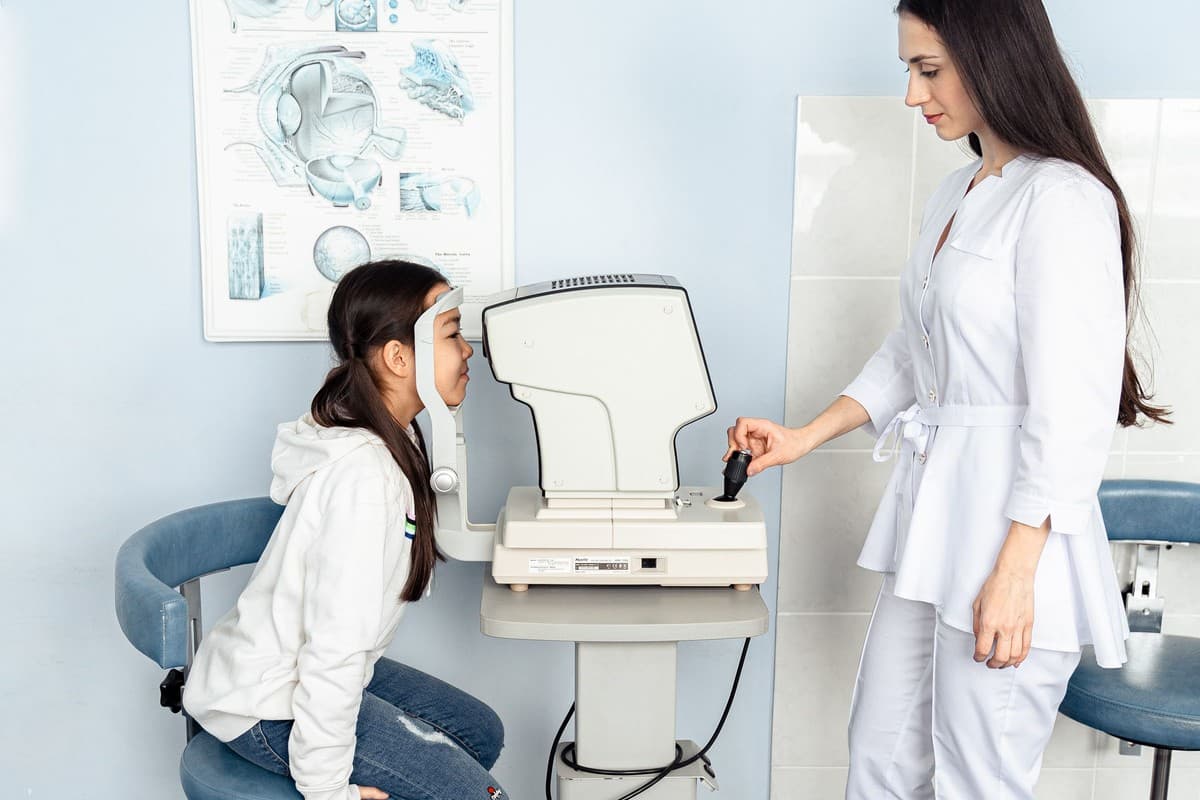
Diagnosis combines age-appropriate vision testing, a measurement of refractive error after eye drops and examination of the eye’s structures. Children who do not yet know letters may use picture or matching tests. When testing one eye, the other eye must be properly covered.
Measurements using drops reduce the masking effect of a child’s focusing effort on the prescription. Eye alignment, the fundus and structural causes of impaired vision are investigated. An automated reading from one device does not diagnose amblyopia. Tests may be repeated under suitable conditions if the child’s participation is limited.
The first-line role of glasses
Appropriate eyeglasses are the initial treatment step for amblyopia caused by refractive errors, providing clearer vision to the eyes. In some children, an increase in vision can be achieved through regular eyeglasses use alone. Improvement is measured through serial examinations; however, it is not expected to occur at the same rate in all children.
Proper positioning of the frame on the face, correct placement and usage of the glasses are important. Because children are not accustomed to wearing glasses, the prescription should not be reduced by the family. After reviewing the remaining vision difference with glasses and the fit and usage, additional methods are considered.
How is patching treatment planned?
In patching treatment, the better-seeing eye is covered to encourage use of the weaker-seeing eye. The doctor determines which eye to cover and for how long. The child’s age, initial vision and previous treatment affect the plan; no single number of hours applies to everyone.
Use appropriate material that prevents peeking around the patch. A hand-held occluder for vision testing does not replace the adhesive patch prescribed for home use. Patching the wrong eye or for too long can cause problems, so the technique should be demonstrated to the family.
Skin irritation, removing the patch and difficulties using it at school can be discussed at follow-up. Games or colouring activities consistent with medical advice may help cooperation. Patching is not a punishment; periods when it could not be used should be reported honestly.
The scope of drops and digital methods
For some children, drops that temporarily reduce near vision in the better-seeing eye may be considered as an alternative to patching. The choice of drops and how they are used depend on the examination. The family is informed about light sensitivity, difficulty with near vision and possible side effects.
Certain digital treatments, conducted using specialized software or imaging systems, are being evaluated in selected children. These are not the same as playing ordinary tablet games. The age limit, evidence supporting the application, access within our country, and its relationship to other treatments must be examined separately; each method is not suitable for all types of amblyopia.
The influence of surgery and age on treatment
The surgery can be added to the treatment plan to address cataracts or specific structural problems that are preventing vision. Strabismus surgery can alter eye alignment; it does not directly eliminate amblyopia. Glasses, patching, or another vision-enhancing plan may be required after surgery.
Early intervention generally provides more benefit; however, diagnosing it during school age does not render the evaluation unnecessary. Some older children may also benefit from treatment. In adults, the response is more limited and uncertain; new visual impairment should not be assumed to result solely from amblyopia during childhood.
Follow-up and reducing treatment
Follow-up monitors vision in both eyes, prescription changes and adherence to treatment. Samsun eye doctor : bringing glasses and patching records to the consultation helps evaluate the plan. If visual improvement stops, the diagnosis, prescription and adherence are reviewed first.
Good vision does not require the treatment to be suddenly discontinued by the family. Reduction plans and follow-up are maintained because amblyopia may recur. The expected outcome varies from child to child; complete vision cannot be guaranteed in all patients.
Amblyopia Treatment Costs in Samsun in 2026
Amblyopia follow-up depends on examinations, prescription measurements and any additional methods selected. Glasses, patches, drops or specialised systems involve different requirements. Ask the relevant institution which assessments are included in the plan; no fixed fee or session count is specified.
Conclusion
Lazy Eye (Amblyopia) Treatment in Samsun aims to correct the cause affecting visual development and support use of the weaker eye. Early examination, appropriate glasses and consistent treatment complement one another. Visual improvement and any reduction in treatment should be assessed using serial measurements of both eyes.
Frequently Asked Questions
Could my child have amblyopia without reporting symptoms?
Amblyopia may be present without symptoms. A child may not notice difficulty because they use the better-seeing eye. Each eye needs to be tested separately.
Can we decide ourselves which eye to patch at home?
The family should not choose which eye to patch or for how long. Usually the better-seeing eye is patched; the decision is based on examination and vision measurements.
Is it too late to start treatment at school age?
Being of school age does not mean treatment is useless. Previous treatment and visual acuity are assessed. Although early treatment retains an advantage, individual responses vary.
Can a phone game replace all amblyopia treatments?
An ordinary phone game does not replace prescribed amblyopia treatment. Specialised digital methods require separate suitability assessment and follow-up; do not stop existing glasses or patching on your own.
About this article
Last updated 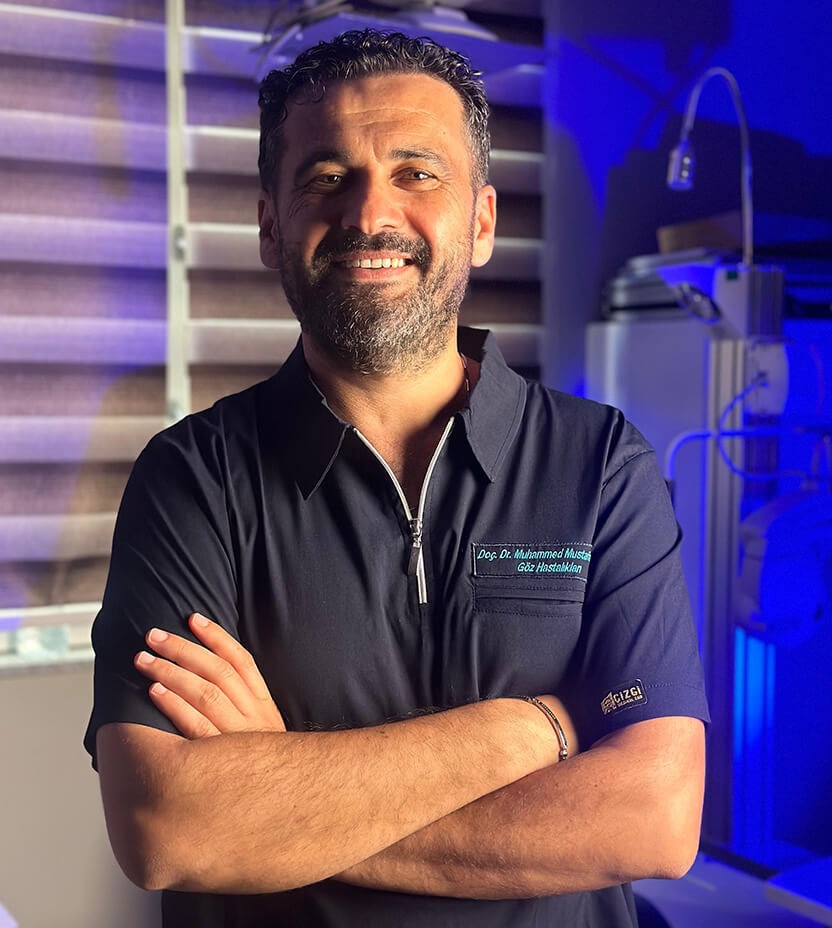
Examination and individual assessmentAssoc. Prof. Muhammed Mustafa Kurt, MD
Ophthalmologist · Atakum, Samsun
- Content preparation
- Editorial information prepared using medical sources.
- Medical review
- The content update date does not indicate that a medical review has been performed by the physician.
Source: the article “Lazy Eye (Amblyopia) Treatment in Samsun” on the practice’s existing website. No additional medical references were specified in the original article.
This article is for general information and does not replace a medical examination. Diagnosis, suitability for treatment and follow-up are determined individually after an eye examination.