

EDOF Intraocular Lenses in Samsun is a specialised intraocular lens designed to provide an extended focal range for distance and intermediate vision and reduce the need for glasses in daily life.
When selecting an EDOF lens in Samsun, its optical design is assessed alongside the person’s everyday visual needs. These lenses aim for more continuous vision between distance and intermediate ranges, but do not produce the same result for everyone. Samsun eye doctor : the decision should take findings from the cornea, retina, optic nerve, ocular surface and biometry into account.
Assoc. Prof. Muhammed Mustafa Kurt, MD : during the examination, the cataract, corneal measurements, axial length of the eye, retinal and macular health, and the patient’s expectations for distance, intermediate and near vision are considered together. Lens power and the target focal distance are planned using these findings.
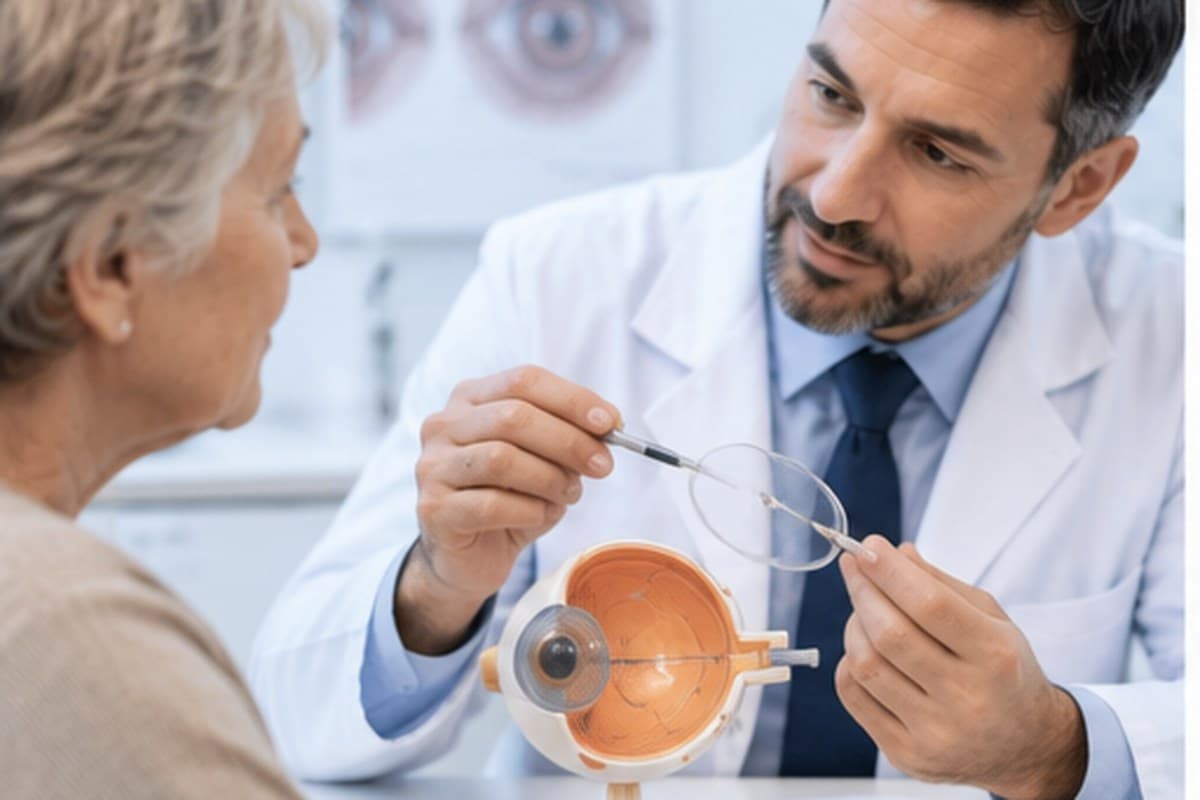
What is an EDOF lens?
An EDOF lens is an intraocular lens option implanted in place of the natural lens during cataract surgery or, in suitable patients, refractive lens exchange. Its optical design extends the focal range, aiming to provide more continuous vision, particularly between distance and intermediate ranges.
Intraocular lens selection is not based solely on a desire to avoid wearing glasses. The eye’s anatomy, existing conditions, expected optical effects after surgery and the person’s daily life need to be considered together.
How does the EDOF lens work?
The optical design of the lens determines how light is focused on the retina. By extending the focal range, the design aims to provide more continuous, functional vision, particularly between distance and intermediate ranges. However, problems in the eye’s own tissues can limit its optical performance.
Who May Be Suitable for an EDOF Lens?
This type of lens may be considered particularly for patients who prioritise distance and intermediate vision, use computers extensively, and accept wearing glasses when needed for very close work. Whether a cataract affects vision or refractive lens exchange is planned in a suitable patient determines the surgical context of lens selection.
Advanced macular disease, significant optic nerve damage, an irregular cornea, active ocular surface problems or unrealistic visual expectations may make certain lens designs less suitable. Definitive suitability is determined by examination.
How is cataract and presbyopia assessed in patients?
When a cataract is present, the optical properties of the new lens can be planned as the cloudy natural lens is removed. In some people without a cataract, refractive lens exchange may be considered for age-related near vision problems and high refractive errors; the irreversible nature of this approach must be clearly explained to the patient.
Eye Measurements Before EDOF Lens Surgery
Visual acuity, biometry, corneal curvature, the ocular surface, intraocular pressure and the retina are assessed before surgery. The axial length of the eye and corneal measurements are among the key data used to calculate lens power.
Anyone who has previously had corneal laser surgery must tell their doctor, as the earlier operation can affect corneal measurements and lens calculations. If dry eye is present, the ocular surface may need treatment first to obtain reliable measurements.
How Are Lens Power and the Visual Target Determined?
Lens power is calculated using biometry data. The target is set according to the patient’s visual priorities; however, no matter how precise the calculations, a zero prescription after surgery cannot be guaranteed.
How Is an EDOF Lens Implanted?
In cataract or refractive lens surgery, the natural lens is removed through a small incision, and the lens capsule is preserved, allowing a new artificial lens to be implanted into this area. The surgeon ensures the lens is centered and its position within the eye is controlled.
The procedure is typically planned for a single day. However, the surgical method can vary depending on the structure of the eye and accompanying conditions. It should not be assumed that every patient will have the same incision, the same duration, or the same rate of recovery.
What type of anesthesia is used in the surgery?
In cataract and lens surgeries, eye drops are often preferred as a method of local anesthesia for most patients. The anesthesia plan is personalized based on the patient’s overall health condition and their ability to remain still during the surgery.
How long does a lens surgery take?
The duration of the procedure varies depending on the structure of the eye and the surgical details. Preparation and post-operative observation are separate from the surgical time itself, which means the total time spent in a healthcare facility can be longer.
EDOF Lenses for Distance, Intermediate, and Near Vision
EDOF lenses mainly aim to provide a broader functional range from distance to intermediate tasks, such as computer screens and vehicle displays. Compared with trifocal designs, glasses may be needed more often for very small print at close range.
Halos and glare may be less pronounced with EDOF designs than with some multifocal lenses; however, this is not the same for every lens model or every patient. Expectations for night vision should also be discussed before surgery.
Might I Need Reading Glasses with an EDOF Lens?
Yes. EDOF lenses do not completely exclude close distances, but their greatest advantages are typically found at distances and intermediate ranges. For tasks such as long-term reading or examining very small text, reading glasses with a low prescription for near vision may be necessary.
Recovery After EDOF Lens Surgery
Fluctuating vision, mild stinging, watering or light sensitivity may occur in the first days. Although vision becomes clearer early on for many patients, the final result settles over time according to corneal healing, the condition of the ocular surface and the target refraction.
When does vision become clear?
Recovery varies between individuals. Good vision may be achieved in the first few days, but more time is needed for the final glasses prescription and visual quality to settle. Persistent, new or increasing blurring requires follow-up assessment.
Can halo and glare be observed in nighttime lights?
Yes. Depending on the optical design of the intraocular lens, halos, dazzle or glare may appear around lights. Their frequency and severity vary between people; those who drive frequently at night should discuss their expectations before surgery.
What Should I Consider After EDOF Lens Surgery?
Use prescribed post-operative drops as directed by your doctor, do not rub the eye, and avoid risks from impacts, strenuous exertion, dust and dirty water during early recovery. The timing of a return to daily activities depends on the individual’s follow-up findings.
Follow-up Examinations and Eye Drops
Follow-up examinations assess vision, intraocular pressure, the cornea, the capsular bag and the lens position. Do not reduce or stop drops on your own. Scheduled checks should not be missed even if vision is good.
What are the risks associated with EDOF lenses?
Cataract and lens surgery may involve infection, changes in intraocular pressure, corneal or retinal swelling, capsule-related problems, retinal tears or detachment, a difference from the target prescription, and problems with lens position. Serious complications are less common, but no operation is entirely without risk.
Which symptoms should prompt a visit to the doctor?
A sudden decrease in vision, severe or increasing pain, marked redness, new flashes of light, many new floaters or a curtain-like shadow in the visual field require assessment without waiting for the scheduled follow-up.
Samsun EDOF Lens Prices for 2026
The cost for Samsun EDOF lenses can vary depending on factors such as the lens’s specifications, toric requirements, eye measurements, and surgical plans. It is not accurate to determine a personalized price for an individual without a thorough examination.
Under healthcare advertising and information rules, this page does not provide prices, discounts, campaigns or promotions. The scope of surgery and the lens to be used should be explained after the examination.
Conclusion
EDOF Intraocular Lenses in Samsun is an intraocular lens option that can be planned around visual needs through appropriate patient selection and accurate lens calculations. The expected result also depends on the health of the eye’s other structures and realistic expectations.
This content is intended for general informational purposes only and should not be considered a substitute for personal diagnosis or treatment recommendations. Lens selection should be made following a thorough eye examination.
Frequently Asked Questions
Is an EDOF Lens Different from a Trifocal Lens?
Yes. Trifocal lenses create three distinct focal points, whereas EDOF lenses aim for more continuous vision by extending the depth of focus. Their advantages and limitations differ for near and night vision.
Are Reading Glasses Used with an EDOF Lens?
Some patients may need reading glasses, particularly for small print or prolonged close work. This does not mean the lens has failed; it relates to the focal priorities of its design.
Are EDOF Lenses Suitable for People Who Drive at Night?
In some patients, EDOF designs may offer advantages in terms of visual effects at night. However, nighttime driving habits, corneal structure, and other ocular findings should be considered together.
Will I No Longer Need Glasses After an EDOF Lens Procedure?
The aim is to reduce the need for glasses, but completely spectacle-free vision at every distance and in every situation cannot be guaranteed.
About this article
Last updated 
Examination and individual assessmentAssoc. Prof. Muhammed Mustafa Kurt, MD
Ophthalmologist · Atakum, Samsun
- Content preparation
- Editorial information prepared using medical sources.
- Medical review
- The content update date does not indicate that a medical review has been performed by the physician.
This article is for general information and does not replace a medical examination. Diagnosis, suitability for treatment and follow-up are determined individually after an eye examination.