

Childhood is a critical period during which the visual system continues to develop. During this time, certain eye conditions can affect not only the appearance of the eyes, but also the child’s process of learning to see. If some diseases are not diagnosed and treated in a timely manner, there is a risk of developing amblyopia and permanent vision loss.
Not every eye condition requires surgery. In many cases, glasses, patching, medication or regular monitoring may be sufficient. Surgery may be considered when visual development is threatened, permanent damage to an eye structure is possible, or other treatments have not provided sufficient benefit.
Eye conditions in children that may most commonly require surgery include strabismus, congenital cataract, congenital glaucoma, tear duct obstruction and ptosis. Timing depends on the condition, its severity and its effect on visual development.
Why Is Visual Development Important in Childhood?
Newborn babies do not arrive with the same visual capacity as adults. Although the eyes perceive the image, the brain gradually develops the ability to interpret these images and learn to use the information received from both eyes together.
If one eye does not receive a sufficiently clear image during this developmental period, the brain may start using it less. This condition is commonly known as amblyopia (lazy eye) is the term for this condition, which can cause permanent vision loss if not treated early.
Congenital cataracts, obvious strabismus, or advanced eyelid droop can negatively affect vision development. Therefore, not only the success of the surgery, but also the timing of its application is of great importance.
Glasses or contact lenses, patching treatment and regular follow-up are also integral parts of treatment after surgery.
When Is Strabismus Surgery Performed in Children?
Strabismus is the condition where one of the eyes cannot focus on the same point as the other, resulting in a displacement of one eye inward, outward, upward, or downward. In some cases of strabismus, treatment with spectacles can be used to control the condition. In children with amblyopia, patching treatment is applied to support the visual development of the weaker eye.
Surgical treatment may be considered when deviations continue despite treatment with spectacles and patching, or when a clear misalignment indicative of strabismus is present.
In strabismus surgery, intervention is directed at the eye muscles located on the outer part of the eyeball. The eye is not entered. Depending on the direction and degree of the misalignment, some muscles are relaxed, while others are strengthened, with the aim of achieving more balanced alignment of the eyes.
The aim of surgery is not only to improve appearance. In suitable patients, improving the eyes’ ability to work together and reducing the risk of amblyopia are also goals.
One operation may be sufficient for some children, while others may need a second procedure. Glasses and patching treatment may continue for a time after surgery.
Why Should Congenital Cataract Be Treated Early?
A congenital cataract is loss of transparency of the natural lens from birth or early life. Clouding of the lens obstructs light reaching the retina and makes clear vision difficult.
Specifically in cases of dense cataracts that significantly obscure vision, early treatment is of great importance. Because prolonged lack of clear vision can negatively affect visual development and lead to permanent amblyopia.
For dense congenital cataracts affecting one eye, surgery may need to be planned in the first weeks of life. When both eyes are affected, intervention is aimed at the earliest possible stage.
Cataract surgery in children is performed under general anaesthesia. The cloudy natural lens is removed, and implantation of an intraocular lens may be considered according to age and eye structure.
Does Congenital Glaucoma Require Surgery?
Congenital glaucoma is a serious eye disease that arises due to a developmental abnormality in the drainage system, which is responsible for the outflow of fluid within the eye, leading to elevated intraocular pressure. Prolonged elevated intraocular pressure can result in permanent damage to the cornea and optic nerve.
In babies, excessive light sensitivity, persistent watering, corneal clouding and eyes appearing larger than normal may be signs of congenital glaucoma.
In adult glaucoma, eye drops are an important treatment option; however, in congenital glaucoma, they are often not sufficient on their own. Therefore, surgical treatment is typically considered.
Goniotomy and trabeculotomy are among the most frequently applied surgical methods in the treatment of congenital glaucoma. If the initial surgery is not sufficient, different surgical options can be considered. Regular monitoring of intraocular pressure after surgery is of great importance.
Can Tear Duct Obstruction Improve Without Surgery?
Blocked tear ducts are common in babies. If the duct does not fully open after birth, persistent watering and discharge may occur.
Many infants’ tear ducts can open spontaneously within the first year, with appropriate massage and adherence to hygiene rules.
Probing may be performed if the blockage persists despite massage. A fine probe is used to open the duct and allow tears to drain normally.
If the initial probing is insufficient, the procedure may need to be repeated, or a silicone tube may be inserted into the drainage channel.
Can a Drooping Eyelid Affect Vision in Children?
Congenital eyelid drooping may result from underdevelopment of the muscle that lifts the lid. Mild cases may not affect visual development, and surgery may be planned at a later age.
However, if the eyelid partially or completely covers the pupil, the visual axis may be obstructed. This can increase the risk of amblyopia, potentially necessitating surgery at an earlier stage.
The surgical method to be applied is determined according to the level of activity of the muscle that opens the eyelid. Following the surgery, the position of the eyelid is regularly monitored, along with symmetry between the two eyes and visual development.
When Do Premature Babies Need Eye Treatment?
Retinopathy of prematurity is an important retinal disease that can affect premature babies with low birth weight. Mild cases may regress spontaneously, but advanced stages can cause serious problems, including retinal detachment.
Premature babies therefore need fundus examinations at the specified times. Cases requiring treatment may receive laser treatment or intraocular medication injections. Vitrectomy may also be considered when necessary.
At What Age Is Children’s Eye Surgery Performed?
There is no single age limit for eye surgery in children. Timing depends on the type and severity of the condition and how much it affects visual development.
Dense congenital cataract may require surgery in the first weeks.
Surgery may be planned after congenital glaucoma is diagnosed.
Retinopathy of prematurity is treated without delay when intervention is needed.
Tear duct probing is generally considered around one year of age.
The timing of strabismus surgery depends on the type of deviation, its control with glasses and visual development; there is no single age limit for all children.
For a drooping eyelid, timing depends on whether the visual axis is affected.
Why Is Follow-up After Surgery Important?
Following a childhood eye surgery, it is necessary to regularly monitor not only the surgical healing process, but also the development of vision.
Depending on the operation, glasses or contact lenses, patching, regular use of drops and attendance at follow-up examinations can directly affect treatment success.
Frequently Asked Questions
Is eye surgery safe for children?
Child eye surgeries performed by experienced surgeons in appropriate operating room and anesthesia conditions adhere to high safety standards. However, as with any surgical procedure, certain risks may be present.
Does strabismus surgery fully correct amblyopia?
Strabismus surgery aims to align the eyes. Treating amblyopia may require glasses, patching or other visual rehabilitation after surgery.
Does every blocked tear duct require probing?
No. In many babies, the tear duct may open spontaneously during the first year with massage and regular care. Probing is considered when the obstruction persists.
Why should congenital cataract be operated on early?
A dense congenital cataract can prevent a clear image from reaching the retina, increasing the risk of amblyopia and permanent vision loss. Early surgery is therefore important in suitable cases.
Will glasses be needed after surgery?
Some children may need glasses or contact lenses after surgery. Although surgery corrects the structural problem, existing refractive errors may need separate correction.
The decision regarding eye surgery in children, and the most appropriate timing for treatment, should be determined following a thorough eye examination by an ophthalmologist. Early diagnosis, timely treatment, and regular follow-up play an important role in preserving healthy vision development in children.
About this article
Last updated 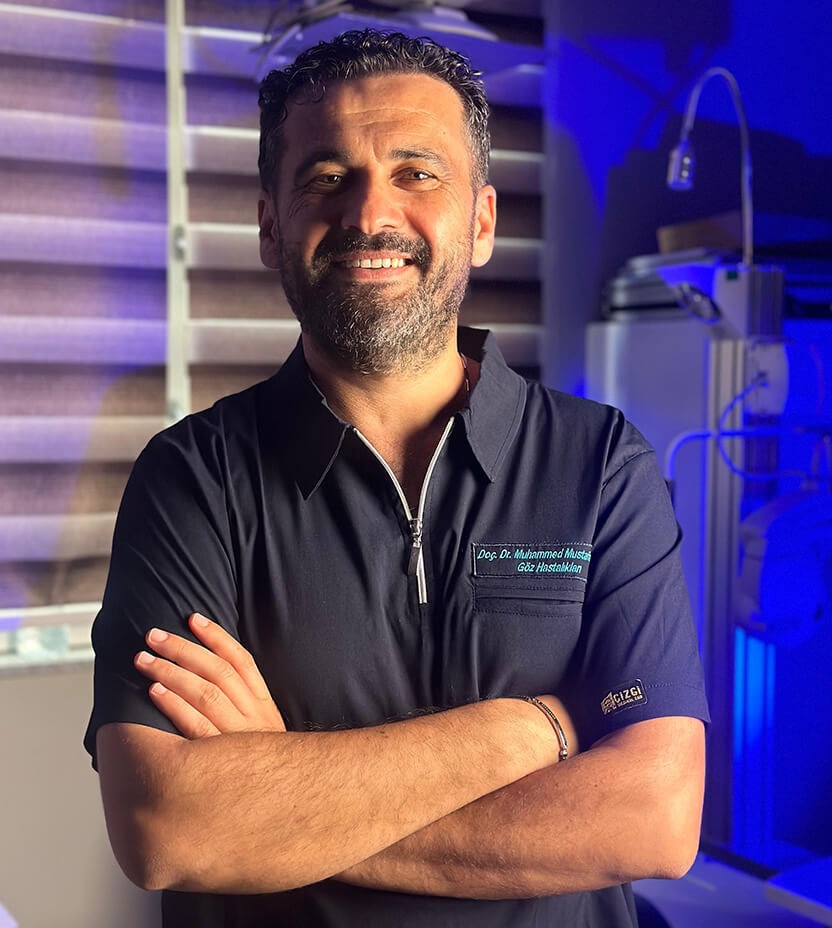
Examination and individual assessmentAssoc. Prof. Muhammed Mustafa Kurt, MD
Ophthalmologist · Atakum, Samsun
- Content preparation
- Editorial information prepared using medical sources.
- Medical review
- The content update date does not indicate that a medical review has been performed by the physician.
This article is for general information and does not replace a medical examination. Diagnosis, suitability for treatment and follow-up are determined individually after an eye examination.