

The families who are being advised to have surgery on their child are most concerned about what the surgery involves, whether general anesthesia is safe, and how the recovery process will proceed.
Pediatric eye surgeries are planned differently than adult eye surgeries. This is because children are still developing their eye structure and vision system. Therefore, surgery aims not only to treat the existing condition, but also to preserve healthy vision development.
After surgery, glasses, patching or other visual rehabilitation may be planned according to the child’s needs. Preparation and recovery vary with the operation, but regular follow-up and following medical advice are important for treatment success.
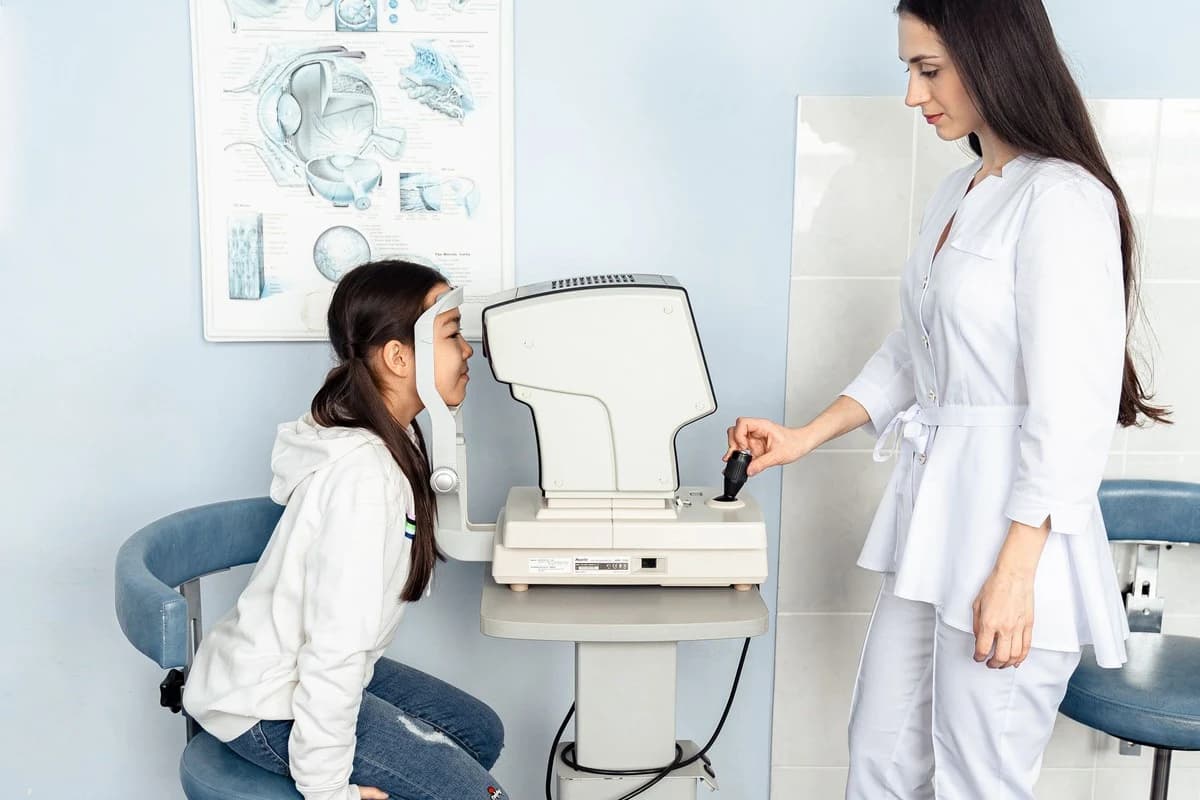
Which Examinations Are Performed Before Children’s Eye Surgery?
Before a surgical decision is made, the child undergoes a comprehensive eye examination. The scope of the examination is planned according to the child’s age and any existing eye conditions. Because visual acuity cannot be assessed using standard letter charts in infants and young children, tests appropriate for their age group are utilized.
The following assessments may be performed before surgery:
Age-appropriate visual acuity measurement
Assessment of eye movements
Assessment of strabismus or eye misalignment
Measurement of refractive error
Assessment of intraocular pressure
Examination of the cornea and front of the eye
Retinal examination after pupil dilation
Assessment for amblyopia
In children scheduled for strabismus surgery, the direction and degree of misalignment are measured in detail. Congenital cataract assessment considers the lens and need for an intraocular lens, while congenital glaucoma assessment examines intraocular pressure, corneal structure and the optic nerve in detail.
Is Amblyopia Treated Before Surgery?
For children with amblyopia, improving vision before surgery may be a goal where possible. Particularly in amblyopia associated with strabismus, patching the better-seeing eye for specified periods can encourage use of the weaker eye.
Patching alone does not correct strabismus. However, it may help improve the quality of vision achieved after surgery.
Conditions such as congenital cataract that completely obstruct the visual axis are treated surgically first. Visual rehabilitation with glasses, contact lenses and patching may be planned afterwards.
Is Children’s Eye Surgery Performed Under General Anaesthesia?
In children undergoing eye surgery, the majority of procedures are performed under general anesthesia. Due to the difficulty of ensuring that young children remain still for extended periods during surgery, general anesthesia is preferred for safe and precise surgical techniques.
General anesthesia allows the child to sleep throughout the procedure, without feeling pain, and ensures the surgery can be performed safely. During the operation, respiration, heart rhythm, blood pressure, and blood oxygen levels are continuously monitored.
Like any medical procedure, general anaesthesia can carry certain risks. However, pre-operative assessment and modern anaesthetic methods allow it to be used safely in children.
How Is a Child Prepared for Anaesthesia?
General anesthesia will be applied, so the child needs to be fasting for a specific period before the surgery. The fasting period can vary depending on the child’s age and the food consumed. The exact duration will be informed to the family by the anesthesia team.
Before surgery, families must share the following information with the healthcare team:
Current medicines
Known medicine or food allergies
Previous operations
Previous experiences with anaesthesia
Chronic conditions
Recent illnesses with fever
Cough, a runny nose or signs of respiratory infection
For safety, surgery may need postponement in children with an active upper respiratory infection.
How Should Surgery Be Explained to a Child?
For children who can communicate verbally, the surgical process should be explained in language appropriate to their age and understanding. Reassuring explanations may help reduce anxiety.
It can be said that the doctors will assist in helping the child see better, and that the child can sleep during the procedure. The family’s calm and reassuring approach also supports the child’s smoother experience during the surgical process.
How Is Strabismus Surgery Performed?
In strabismus surgery, intervention is directed at the eye muscles located on the outer part of the eyeball. The surgeon aims to restore the balance of the muscles causing the misalignment in the eyes, with the goal of achieving better alignment of both eyes focusing on the same point.
The procedure can be applied to a single eye or to both eyes. The specific muscles to be addressed is determined according to the type of strabismus and the detailed measurements taken. The procedure is usually completed within 1–2 hours.
Mild redness, watering and a stinging sensation after surgery are considered normal. In most children, these symptoms begin to decrease within a few days.
How Is Congenital Cataract Surgery Performed?
In congenital cataract surgery, the natural lens that has lost its transparency is removed using specialised surgical techniques. Because children’s eyes differ from adults’ eyes, the procedure is planned with particular care.
During surgery, whether an intraocular lens will be implanted is determined based on the child’s age and eye development. In some infants, because eye growth continues, spectacles or contact lenses may be preferred in the initial period.
To ensure clear vision after surgery, it is important to begin optical correction and vision rehabilitation as soon as possible.
How Is Tear Duct Probing Performed?
In tear duct probing, a fine probe is used to open any blockage within the tear duct. This procedure is typically performed under short-term general anesthesia or sedation, and most children are discharged the same day.
Brief watering, slightly blood-stained tears or a nosebleed may occur after the procedure. If the first probing is insufficient, repeat probing or silicone tube placement may be considered.
When Does a Child Wake Up After Surgery?
Following surgery, the child is taken to the pediatric observation room and monitored by the healthcare team until the effects of the anesthesia have passed.
Some children may exhibit restlessness, crying, or brief disorientation during their initial awakening period. Transient complaints related to anesthesia, such as nausea and vomiting, may also occur. Children in generally good condition are usually discharged on the same day.
Recovery After Children’s Eye Surgery
Recovery time varies with the type of operation. Because children’s tissues heal quickly, recovery may be shorter than in adults for many patients.
Following strabismus surgery, redness and mild swelling may decrease over a period of a few days to two weeks.
After tear duct probing, children can often return to normal activities the same day.
Recovery after congenital cataract surgery may take several weeks.
Eye pressure should be monitored regularly after congenital glaucoma surgery.
How Are Eye Drops Given After Surgery?
To reduce the risk of infection and inflammation, eye drops prescribed by a doctor should be used regularly for the recommended duration.
Wash your hands before applying eye drops and do not let the dropper tip touch the eye. If more than one eye drop is used, leave enough time between applications.
How Can a Child Be Kept from Rubbing the Eye?
Scratching or rubbing the eye after surgery may increase infection risk. Close supervision by the family is important, especially for young children.
A protective eye shield may be used during sleep when needed. Keeping nails short and hands clean also supports recovery.
When Can a Child Return to School or Nursery?
The recovery time after surgery can vary depending on the type of surgery performed. Children who undergo minor procedures may be able to return to their daily lives within a few days, whereas, for more extensive surgeries, a slightly longer period of rest may be recommended according to the doctor’s advice.
In the initial stages, it is recommended to avoid swimming, sand pools, environments with heavy dust, and physical activities with a risk of collision.
When Should a Doctor Be Consulted?
Although slight redness and watering are considered normal after surgery, it is important to seek medical attention without delay if the following symptoms are observed.
Severe or increasing eye pain
Marked swelling of the eye
Heavy purulent discharge
High fever
A sudden change in vision
An impact to the eye
The child being unable to open the eye
Increasing discomfort despite medication
Severe nausea and vomiting
Widespread eyelid redness
Why Are Follow-up Examinations Important After Surgery?
Follow-up does more than assess healing at the surgical site. It also monitors the child’s visual development, need for glasses, amblyopia treatment and the long-term outcome of surgery.
Keeping follow-up appointments is very important for identifying possible problems early.
Frequently Asked Questions
Is there pain after children’s eye surgery?
Mild or moderate discomfort may occur depending on the operation. Severe or increasing pain is not considered normal and should prompt contact with the doctor.
Why is the eye red after strabismus surgery?
Due to intervention on the eye muscles, temporary redness may occur after surgery. This appearance usually decreases within a few weeks in most children.
Can a child watch television after surgery?
Short-term screen use is generally possible as long as the child feels comfortable. However, it is recommended to take breaks when there is a feeling of fatigue in the eyes.
Does patching treatment continue after surgery?
Children with amblyopia may still need patching after surgery. While surgery corrects the structural problem, supporting visual development remains an important part of treatment.
Do some children need a second operation?
One operation may not be sufficient for some eye conditions. Further surgery may be planned for recurrent strabismus, glaucoma that cannot be brought back under control, or other reasons.
The process of eye surgery in children can yield successful outcomes in terms of healing and healthy vision development when planned with proper preparation, an experienced surgical team, regular follow-up appointments, and active participation from families in the treatment.
About this article
Last updated 
Examination and individual assessmentAssoc. Prof. Muhammed Mustafa Kurt, MD
Ophthalmologist · Atakum, Samsun
- Content preparation
- Adapted from an information article on the practice’s existing website.
- Medical review
- The content update date does not indicate that a medical review has been performed by the physician.
Source: the article “What to Expect from Eye Surgery in Children” on the practice’s existing website. No additional medical references were specified in the original article.
This article is for general information and does not replace a medical examination. Diagnosis, suitability for treatment and follow-up are determined individually after an eye examination.