

Strabismus in babies means that both eyes do not point towards the same target together. One eye may turn inward, outward, upward or downward. Types of strabismus that affect how the eyes work together, a high glasses prescription and conditions that reduce vision in one eye may cause misalignment. Sometimes the eyes are actually straight but appear misaligned because of the shape of the face.
Misalignment seen only in photographs or occurring intermittently is not necessarily unimportant. Persistent misalignment needs assessment at any age. Do not postpone examination for newly apparent misalignment, a white pupil reflection or a baby not using one eye.
When Is Eye Misalignment in Babies Considered Normal?
Small, brief and intermittent inward eye turns may occur in the first few months of life. Constant inward turning, however, is not considered normal. AAPOS recommends assessment of inward eye turning that persists after four months of age. An eye examination is also appropriate when the family is unsure whether the misalignment is real.
It is incorrect to assume that every eye misalignment resolves by six months of age. Frequency, recurrence in the same eye and visual responses matter as well as the baby’s age. Note when it began, how long it lasts and when it becomes more apparent to help the examination.
How Are Pseudostrabismus and True Strabismus Distinguished?
A broad nasal bridge and folds of skin at the inner corners of a baby’s eyes may make the eyes appear turned inward, particularly when looking to the side. This is called pseudostrabismus. Eye alignment is normal in pseudostrabismus, but it is not always possible to distinguish it reliably from true strabismus using family photographs.
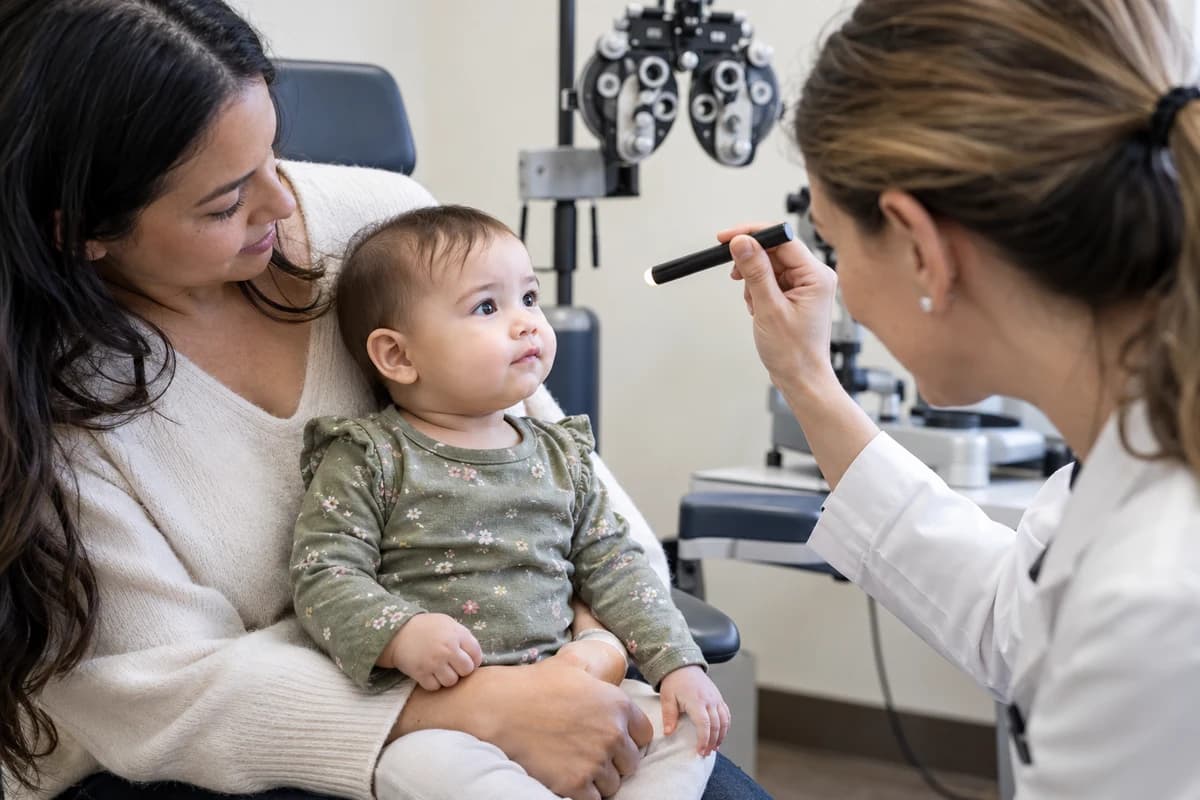
The examination assesses light reflections in the eyes, eye movements and age-appropriate cover tests. If needed, refractive measurements after eye drops and an examination of the back of the eye are performed. A finding of pseudostrabismus does not guarantee that true strabismus will never develop; recommended follow-up should continue.
What Causes Eye Misalignment in Babies?
Some shifts begin in early infancy and are associated with developmental characteristics related to the coordinated movement of the eyes. In cases of refractive errors such as hyperopia, the attempt to see clearly can lead to inward drift. In this situation, spectacles may be important.
Congenital cataracts, retinal diseases, or other problems affecting vision can affect the alignment of the eyes. In rarer cases, disorders affecting the nerves controlling eye movements are investigated. The presence of strabismus in the family should be reported to the physician; however, the absence of a family history does not rule out strabismus.
Which Signs Require an Eye Examination?
One eye frequently or constantly turning in the same direction.
The baby closing one eye, turning the head to the same side or tilting it.
A difference between the eyes when following faces and objects.
Involuntary eye movements, marked light sensitivity or a white pupil reflex.
New, marked misalignment in eyes that previously looked straight.
Sudden eye misalignment accompanied by vomiting, imbalance, eyelid drooping or other neurological symptoms requires urgent assessment. A white pupil reflection must not be dismissed as a photographic error.
Does Eye Misalignment Affect Visual Development?
During childhood, the brain learns to use the image from both eyes together. If one eye is consistently drifting, the brain may suppress the image from that eye. This can lead to the development of amblyopia and impaired binocular vision. Visual acuity is monitored in both eyes, not just the outward appearance.
Amblyopia and strabismus are not the same condition. Correcting misalignment with surgery does not mean that amblyopia will disappear on its own. Amblyopia treatment continues separately, with measures such as glasses and patching when needed.
How Is Eye Misalignment in Babies Treated?
Treatment depends on the cause, type and angle of the eye misalignment and on visual development. Appropriate glasses may be used for a refractive error. If amblyopia is present, patching or another treatment is planned by the doctor. Families should not decide to patch an eye themselves; the eye to be patched and the duration are individual decisions.
Surgery may be considered for strabismus that is not adequately controlled with glasses or for types requiring surgery. There is no single operating age for every baby. Surgery, glasses and amblyopia treatment serve different purposes and may be needed together. Details are available in strabismus treatment guide discusses this process.
How Should We Prepare for the Examination?
The date when the drifting was noticed should be specified, whether it is continuous or intermittent, and which eye it is more frequently observed in. Previous photographs and short videos may help to demonstrate intermittent drifting that is not apparent during the examination. These will not replace the examination.
When applying for a pediatric eye evaluation in Samsun, information regarding the baby’s birth week, previous eye examinations, glasses used, and any known history of eye disease within the family may be requested. It is not necessary for the baby to be able to read or speak; a children’s eye examination : age-appropriate methods are used.
Frequently Asked Questions
Can eye misalignment in babies resolve on its own?
The appearance of pseudostrabismus may lessen as the face develops; the same cannot be said for true strabismus. Persistent or continuing deviation should be examined rather than left waiting.
Does wearing glasses mean surgery will not be needed?
Some deviations are controlled with glasses, while others improve only partially. The need for surgery is assessed from measurements during follow-up with glasses and the type of strabismus.
Is patching used for every eye misalignment?
No. Patching is primarily planned for amblyopia. It is not a general treatment for all strabismus; the duration and eye to be patched are determined by examination.
About this article
Last updated 
Examination and individual assessmentAssoc. Prof. Muhammed Mustafa Kurt, MD
Ophthalmologist · Atakum, Samsun
- Content preparation
- Editorial information prepared using medical sources.
- Medical review
- The content update date does not indicate that a medical review has been performed by the physician.
This article is for general information and does not replace a medical examination. Diagnosis, suitability for treatment and follow-up are determined individually after an eye examination.