

Eyelid swelling can have various causes, including allergy, a stye, a chalazion, inflammation of the eyelid margin or infection. It may affect one eyelid or both eyes. Whether it is painful must be assessed alongside itching, redness, fever and changes in vision.
If there is pain with eye movement, a decrease in vision, obvious fever, or rapid swelling, urgent evaluation is required. If there is swelling of the lips or tongue and difficulty breathing, 112 should be called. In such a situation, simply applying a compress to the eyelid is not appropriate.
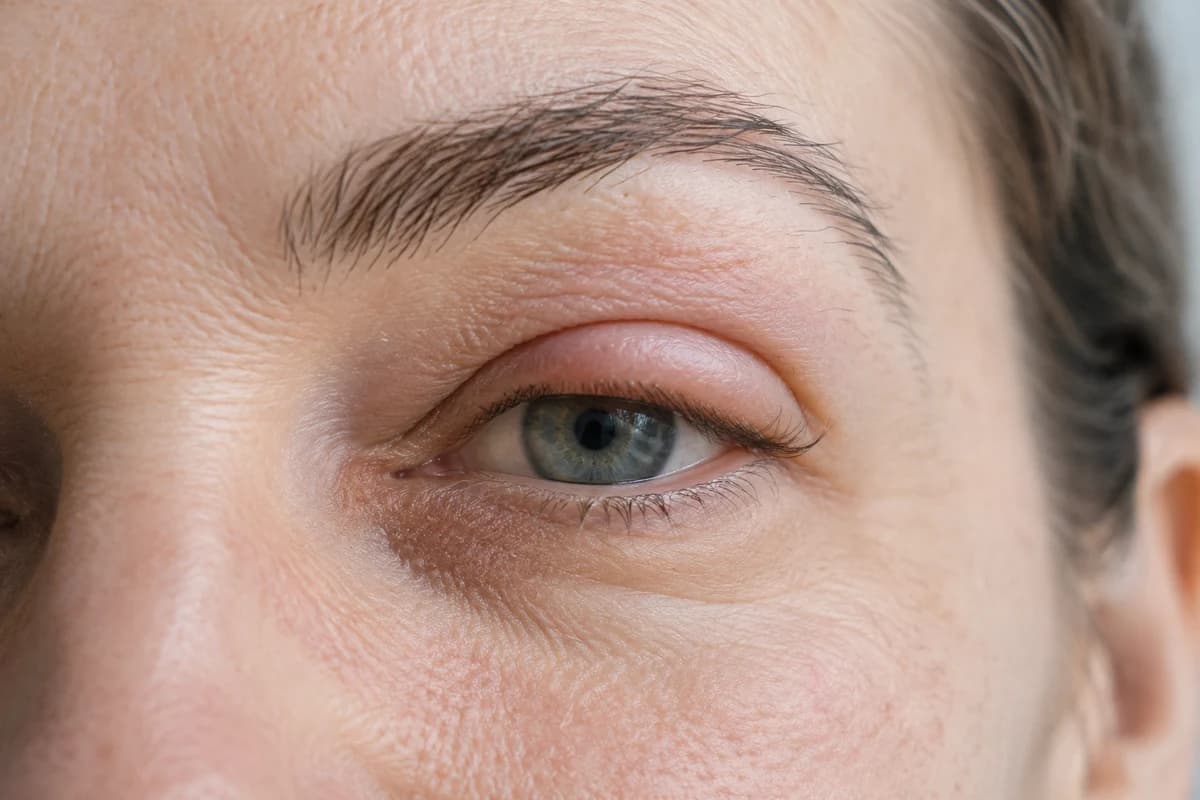
Why Does One Eyelid Swell?
Swelling in one eyelid may be related to a stye at the base of the eyelashes or a chalazion inside the lid. Insect bites, local irritation and injury can also cause this appearance. With lacrimal sac problems, swelling may be more noticeable at the inner corner of the eye near the nose.
Swelling on one side alone does not establish its cause. Infection is investigated particularly if redness spreads over the whole lid, with marked tenderness and warmth. A change in vision after an injury also requires examination.
What Is the Difference Between a Stye and a Chalazion?
A stye is usually a painful, red swelling that develops quickly from an infection associated with an eyelash follicle or eyelid gland. A chalazion is a longer-lasting lump caused by a blocked oil gland and may become less painful over time.
Not every eyelid lump is a stye. Lumps that recur in the same place, persist or occur with other changes such as eyelash loss need separate assessment. Information about styes article discusses this distinction in more detail.
Could Swelling with Itching Be an Allergy?
Itching, watering, and swelling in both eyes may be related to allergies. Pollen, cosmetic products, or other substances that come into contact with the eyes can trigger these symptoms. Scratching and rubbing can increase swelling. It is useful to note the use of new products and when the symptoms began.
Every swelling of the eyelids is not an allergy. If there is pain and intense redness, an infection or another cause should be investigated. Corticosteroid creams and eye drops should not be used around the eyes without the advice of a physician. The fact that a product is “for skin” does not automatically make it safe for use near the eyes.
Why Are Eyelids Swollen on Waking?
Swelling that is more noticeable in the morning may relate to rubbing the eyes at night, allergy, eyelid margin problems or changes in fluid distribution. Crusting at the eyelash roots and sticky lids prompt assessment for blepharitis or ocular surface disease.
If swelling is recurring on both sides, or if swelling is present in the face and legs in addition to the eyes, a general health-related reason may be investigated. The presence of conditions such as thyroid, kidney, or other systemic diseases cannot be determined solely from the appearance of the eyelids. The physician will decide whether an additional evaluation is needed in addition to the eye examination.
What Can Help Eyelid Swelling?
Care depends on the cause of the swelling. A cool compress may soothe mild allergic symptoms, while a clean, warm compress may be recommended for a stye or chalazion. Do not apply ice directly to the skin or use very hot compresses. Applying a compress must not delay assessment of significant pain or changes in vision.
Do not squeeze the swelling, puncture it with a needle or massage it forcefully. A break from contact lenses and eye makeup may be needed until symptoms settle. Do not choose antibiotics or corticosteroids on your own based on appearance.
When Is Eyelid Swelling Dangerous?
It is important to differentiate between infection on the eyelids and infection within the eye socket. Pain with eye movements, restriction of movement, double vision, decreased vision, or a noticeable prominence of the eye are all signs that require urgent evaluation. In children, eyelid swelling accompanied by fever should be carefully evaluated.
If the eyes cannot be opened, if swelling is growing rapidly, or if there is obvious pain in the eye itself, it should not be ignored. Similarly, redness and discharge in a newborn baby should be evaluated on the same day. If the swelling is associated with shortness of breath, emergency assistance should be called.
What Is Assessed During the Examination?
When swelling begins, previous episodes, new cosmetic products used, lens usage, and any history of trauma are inquired about. The vision, eye movements, eyelid margins, and eye surface are examined. If necessary, a systemic evaluation or imaging may be planned for patients requiring treatment; the same tests are not performed for every swelling.
When applying for eye lid evaluation in Samsun, it is beneficial to share the medications used and previous attack photographs. Eyelids and tear drainage section contains the relevant treatment guides.
Frequently Asked Questions
How many days does eyelid swelling take to settle?
The duration depends on the cause of swelling. Simple irritation, a stye and a chalazion do not resolve in the same time. Do not wait if pain, redness or changes in vision increase.
Should a warm or cold compress be used for swelling?
The same approach is not suitable in every case. A warm compress may be recommended for a stye and a cool compress for allergic symptoms. Unexplained, painful or rapidly increasing swelling needs assessment first.
Should painless eyelid swelling be taken seriously?
Being painless does not always mean it is unimportant. Swelling that persists, recurs in the same place or changes the shape of the eyelid should be examined.
About this article
Last updated 
Examination and individual assessmentAssoc. Prof. Muhammed Mustafa Kurt, MD
Ophthalmologist · Atakum, Samsun
- Content preparation
- Editorial information prepared using medical sources.
- Medical review
- The content update date does not indicate that a medical review has been performed by the physician.
This article is for general information and does not replace a medical examination. Diagnosis, suitability for treatment and follow-up are determined individually after an eye examination.