

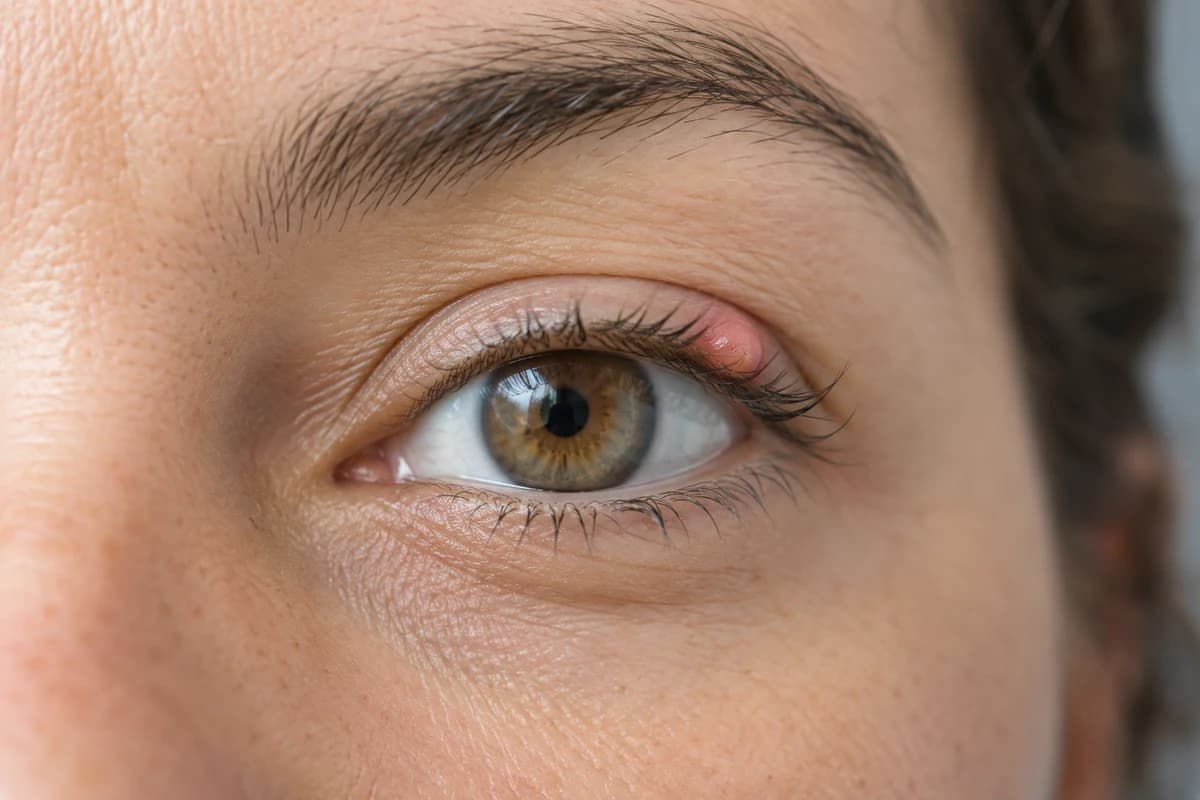
A stye is a usually painful, red swelling associated with an eyelash follicle or an oil gland in the eyelid. Its medical name is hordeolum. It may occur at the eyelid edge or further inside the lid. Not every eyelid lump is a stye; other conditions, such as a chalazion, are considered especially for persistent, painless swelling.
Do not squeeze a stye or puncture it with a needle. A clean, warm compress may provide relief, but spreading swelling, significant eye pain or affected vision requires examination. Treatment is not selected solely from the size of the swelling.
What Causes a Stye?
A stye is usually associated with a bacterial infection of an eyelid gland or eyelash follicle. Lid margin inflammation and gland dysfunction may encourage recurrence. Touching the eyes without washing hands, not removing eye makeup and neglecting lens hygiene are also habits to assess.
A stye does not necessarily mean poor hygiene. In recurrent cases, the overall condition of the eyelid margin is examined as well as the visible swelling. Tell the doctor about cosmetic products and previous treatments.
What Are the Symptoms of a Stye?
Tenderness and redness may initially appear at one point on the eyelid, followed by a small lump. Watering and a stinging sensation may also occur. With an external stye, the swelling is near the base of the eyelashes; with an internal stye, it may be felt deeper inside the eyelid.
Significant vision loss is not expected with a simple stye. Reduced vision, severe eye pain or widespread lid swelling must not be left untreated on the assumption that it is a stye. These may indicate another eye disease or spreading infection.
Are a Stye and a Chalazion the Same?
No. A chalazion is associated with a blocked eyelid oil gland and the resulting inflammation. It may form a firmer, longer-lasting lump that becomes less painful over time. A stye usually develops pain and redness more quickly.
These two conditions can resemble each other; sometimes, a mass may remain on the lid after a painful period. If a mass recurs or does not improve as expected in the same area, reassessment of the diagnosis is necessary. Particular attention should be given if there is eyelash loss, bleeding, or distortion at the lid margin.
What Can Be Done for a Stye at Home?
A clean cloth can be moistened with water at a temperature that won’t burn, and gently applied to the closed eyelids. The NHS recommends applying warm compresses for 5–10 minutes, 2–4 times a day. During application, no pressure should be applied to the eyes, the cloth should remain clean, and it should not be shared with others.
Avoid eye makeup and contact lenses until recovery. Do not rub the eye and keep hands clean. Trying to burst a stye can spread infection. Pulling out an eyelash or puncturing the swelling is not a procedure to perform at home.
Should Tea, Garlic or Herbal Products Be Used?
Tea bags, garlic, lemons, and similar products should not be applied to the eye area for treatment purposes. These are not sterile products specifically designed for the eye and can cause irritation or allergies. The purpose of a warm compress is to support lid care, and therefore tea should not be added.
A method applied at home resulting in short-term relief does not indicate that an infection is being treated. Particular attention should be paid to warm applications, especially in children and with sensitive skin. If pain and redness increase, evaluations should be obtained without delay.
Does Stye Treatment Require Medication or a Procedure?
Many styes may improve with appropriate eyelid care. The need for antibiotics depends on findings such as accompanying lid inflammation, discharge or spreading infection. Antibiotic drops are not necessary for every stye.
In lesions that have lasted for a long time or exhibit noticeable discomfort, an ophthalmologist may consider additional treatment or a controlled drainage procedure. Corticosteroid eye drops and creams should not be used without a prior examination. The duration of treatment and follow-up intervals are determined individually for each patient.
When Should a Doctor Be Consulted?
If swelling and pain are increasing, if they are spreading over the entire lid, if fever develops, or if vision is affected, evaluation should not be delayed. Pain with eye movement, double vision, or a noticeable protrusion of the eye are considered emergency findings.
Swelling that does not improve within a few weeks or recurs in the same place requires examination. Why do eyelids swell? article explains other possibilities. Guides to assessing the eyelids and tear drainage system can be found in the oculoplastics section .
Frequently Asked Questions
Is a stye contagious?
A stye is not considered a readily spreading ocular surface infection in the same way as conjunctivitis. Even so, avoid sharing towels and eye makeup and keep hands clean to reduce transfer of bacteria.
How many days does a stye last?
Many styes may settle within about a week, but recovery varies. A persistent lump may be a chalazion. Do not wait if pain increases or vision changes.
What should I do if a stye recurs?
Inflammation of the eyelid margin and the condition of the glands should be assessed. Swelling recurring in the same place needs diagnostic reassessment; reusing an old prescription is not enough.
About this article
Last updated 
Examination and individual assessmentAssoc. Prof. Muhammed Mustafa Kurt, MD
Ophthalmologist · Atakum, Samsun
- Content preparation
- Editorial information prepared using medical sources.
- Medical review
- The content update date does not indicate that a medical review has been performed by the physician.
This article is for general information and does not replace a medical examination. Diagnosis, suitability for treatment and follow-up are determined individually after an eye examination.